

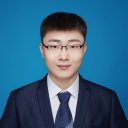
 Ziyao Li
· 5 previous affiliations
- WeRideSince 2024
- AI Engineer · Since 2024
- Peking University2015–2024
- PhD student · 2019–2024
- Research Assistant · 2017–2020
- Undergrad student · 2015–2019
- DPTechnology2019–2024
- AI Researcher · 2019–2024
- ubiquant2024
- Quantitative Researcher · 2024
- Research Intern · 2019
Research Overview
Ziyao Li focuses on graph neural networks, molecular representation learning, and computational protein design. His early research addressed structural bottlenecks and noise robustness in large-scale network embeddings. More recently, his work centers on integrating physical priors into deep learning models to predict molecular conformations, design functional proteins, and improve structure-based drug discovery.
Research Trajectory
Li's early research investigated the structural limitations of graph neural networks (GNNs) and network embedding techniques. He introduced GCN-LASE: Towards Adequately Incorporating Link Attributes in Graph Convolutional Networks, an architecture designed to incorporate link attributes into GCNs. While previous models often simplified graph links into binary or scalar values, this approach treated links as hypostatic relationships with descriptional attributes to better capture local neighborhood information. Addressing the computational bottlenecks of large-scale graphs, he developed SepNE: Bringing Separability to Network Embedding.. This work formalized separated matrix factorization to learn representations for specific subsets of nodes, avoiding the need to process entire networks simultaneously—a method he later helped expand in the journal analysis Large Scale Network Embedding: A Separable Approach.
Collaborating on graph robustness, Li contributed to Learning Node Representations from Noisy Graph Structures, which proposed a framework featuring graph and noise generators to learn noise-free node representations. He also co-developed Learning Discrete Adaptive Receptive Fields for Graph Convolutional Networks, which tackled the over-smoothing problem by learning to discretely select important nodes for convolution. This work advanced the broader research direction of Overcoming Long Range Dependency Bottlenecks in Graph Networks.
By 2021, Li's focus shifted toward the intersection of deep learning and molecular science, specifically addressing how 3D geometry and physical priors can improve molecular representations. He proposed Conformation-Guided Molecular Representation with Hamiltonian Neural Networks, a model that preserves 3D conformations by simulating the implicit positions and momentums of atoms through discretized Hamiltonian equations, supervised by translation- and rotation-invariant losses. In parallel, he co-developed the PhysChem architecture in Deep Molecular Representation Learning via Fusing Physical and Chemical Information. This dual-network approach combined a neural physical engine for simulating molecular dynamics with geometry-aware message passing for chemical properties, contributing to several key areas including Size Extensibility for Molecular Machine Learning, the field of Bridging the Molecular Geometric Representation Gap, and the area of Distilling Structural Knowledge into Protein Sequence Models.
To address the computational overhead of graph-based models in high-throughput virtual screening, Li contributed to Stepping Back to SMILES Transformers for Fast Molecular Representation Inference, an end-to-end framework for deriving representations directly from SMILES strings. He also participated in refining conformation generation through Equivalent Distance Geometry Error for Molecular Conformation Comparison, which introduced a loss function to better preserve local geometry during optimization by ensuring equivalent treatment of different structural factors.
In his subsequent work, Li has concentrated on computational protein design and structure-based drug discovery. He co-developed Amalga: Designable Protein Backbone Generation with Folding and Inverse Folding Guidance, an inference-time technique that incorporates "folded-from-inverse-folded" structures to guide the generation process toward conformations likely to yield viable, functional sequences. In the domain of protein-ligand interactions, he contributed to UMD-fit: Generating Realistic Ligand Conformations for Distance-Based Deep Docking Models. By optimizing ligand poses through internal degrees of freedom (torsions) rather than raw atomic coordinates, this method significantly reduces invalid geometries. This research intersects with the areas of Modeling Protein Flexibility for Structure-Based Drug Design and Physics-Informed Generative Models for Molecular Structures. Finally, he participated in the development of Uni-Fold MuSSe: De Novo Protein Complex Prediction with Protein Language Models, which leverages pre-trained protein language models like ESM-2 to predict complex structures directly from primary sequences, bypassing the need for traditional homology search and pairing.
Current Directions
The most recent papers in the evidence indicate a strong focus on generative models for protein engineering and structural biology. Li's current work investigates methods to improve the physical realism and functional viability of generated molecular structures. This includes developing techniques to guide protein backbone generation toward highly designable conformations and refining protein-ligand docking models by parameterizing internal degrees of freedom to prevent invalid geometries. Additionally, his recent collaborations explore the use of large protein language models to predict multimeric protein complexes directly from primary sequences, streamlining structure prediction pipelines by removing the dependency on homology searches.
Profile updated
Loading new papers…
Other researchers whose papers cluster into the same research directions — a proxy for overlapping technical interests and shared intellectual neighborhoods.
See something wrong? Report a mistake