

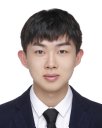
 Zixin Yin
· 2 previous affiliations
- PhD student · Since 2021
- Xi'an Jiaotong University2017–2021
- Undergrad student · 2017–2021
1 other author named Zixin Yin: Zixin Yin (Beihang University · 9 papers)
Research Overview
Zixin Yin focuses on image and video generation, visual editing, and talking head synthesis. His work addresses the challenges of maintaining structural consistency and geometric precision in generative models without relying on test-time optimization. Recently, his research emphasizes training-free control mechanisms for multi-modal diffusion transformers and the development of synchronized audio-visual generation systems.
Research Trajectory
During his doctoral studies at the Hong Kong University of Science and Technology, and alongside his tenure as co-founder of Morph Studio, Yin's research has centered on advancing the precision and consistency of generative models. In 2025, he introduced ConsistEdit: Highly Consistent and Precise Training-free Visual Editing, an attention control method for Multi-Modal Diffusion Transformers (MM-DiTs). This work enables structure-aware image and video editing with strong consistency across multiple rounds of modification, notably achieving these results without requiring manual design or test-time tuning.
In parallel with his core focus on visual editing, Yin has collaborated on broader animation and multimodal generation challenges. He contributed to Motion2Motion: Cross-topology Motion Transfer with Sparse Correspondence, a training-free framework designed to transfer motion between characters with differing skeletal topologies. By leveraging sparse correspondences between bones and a patch-based motion matching approach, the method overcomes topological inconsistencies without relying on large datasets. Expanding into the area of Scaling Unified Multimodal Large Language Models, he was part of the team that developed UniVerse-1: Unified Audio-Video Generation via Stitching of Experts. This project addressed a critical gap in the field by focusing on the research direction of Synchronized Audio and Video Synthesis with Unified Diffusion, aiming to resolve the jarring misalignments often seen in post-hoc audio generation for video. Additionally, he participated in ReasonEdit: Towards Reasoning-Enhanced Image Editing Models, which explores the area of Closed Loop Visual Feedback for Multimodal Generation. By implementing a "thinking–editing–reflection" loop rather than relying solely on frozen multimodal large language models, this work trains systems to decompose abstract instructions and audit their own outputs, contributing to the broader domain of Grounding Generative Models in Discrete Quantities and Space.
Moving into 2026, Yin's work increasingly emphasizes training-free control mechanisms for diffusion models. He developed Training-Free Text-Guided Color Editing with Multi-Modal Diffusion Transformer, a method that surgically manipulates transformer attention mechanisms to alter colors while perfectly preserving complex physical details like reflections and refractions. This contribution advances the area of High Fidelity Latent Space Inversion for Image Editing and generalizes effectively to instruction-based editing frameworks. Building on this theme of efficient, precise control, he also introduced LazyDrag: Enabling Stable Drag-Based Editing on Multi-Modal Diffusion Transformers via Explicit Correspondence. By replacing unreliable implicit attention matching with an explicit correspondence map, this framework eliminates the need for costly test-time optimization. This work represents a significant step forward in the research direction of Accelerating Interactive Image Editing without Test-Time Optimization, allowing for stable, full-strength inversion and complex edits such as inpainting new objects and precise text-guided transformations.
Further extending his interest in interactive and synchronized media, Yin collaborated on SpeakerVid-5M: A Large-Scale High-Quality Dataset for Audio-Visual Dyadic Interactive Human Generation. This work provides a foundational dataset and benchmark, VidChatBench, for evaluating autoregressive models designed to generate interactive virtual humans, tying back to his ongoing interest in talking head synthesis and audio-visual alignment.
Current Directions
The most recent papers in the evidence indicate a strong focus on refining the control mechanisms of Multi-Modal Diffusion Transformers (MM-DiTs) for complex visual editing tasks. Recent work investigates how to bypass computationally expensive test-time optimization by leveraging explicit correspondence maps and targeted attention manipulation. This approach allows for highly precise, training-free interventions—such as drag-based geometric manipulation and localized color adjustments—while strictly preserving the underlying physical properties and structural integrity of the original media. Additionally, ongoing collaborative efforts address the generation of interactive virtual humans, focusing on the datasets and autoregressive architectures required to achieve high-fidelity, synchronized audio-visual dyadic interactions.
Profile updated
Loading new papers…
Other researchers whose papers cluster into the same research directions — a proxy for overlapping technical interests and shared intellectual neighborhoods.
See something wrong? Report a mistake