

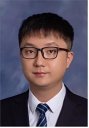
 Ziwei Wang
· 3 previous affiliations
- Nanyang Technological UniversitySince 2024
- Assistant Professor · Since 2024
- Carnegie Mellon University2023–2024
- Postdoctoral Fellow · 2023–2024
- Tsinghua University2014–2023
- PhD student · 2018–2023
- Undergrad student · 2014–2018
5 other authors named Ziwei Wang: Ziwei Wang (Southern University of Science and Technology · University of Birmingham · 10 papers), Ziwei Wang (Zhejiang University · 4 papers), Ziwei Wang (Beihang University · 3 papers), Ziwei Wang (Tencent (China) · Peking University · 2 papers), Ziwei Wang (1 paper)
Research Overview
Ziwei Wang focuses on foundation models for robotic manipulation, embodied artificial intelligence, and efficient neural network architectures. His trajectory spans from early work on deep hashing and model quantization to developing vision-language-action models that enable robots to reason and plan in complex physical environments. Currently, he investigates safe trajectory optimization and robust error recovery for autonomous agents.
Research Trajectory
Wang’s early research concentrated on efficient multimedia retrieval and model quantization. In 2018, he introduced GraphBit: Bitwise Interaction Mining via Deep Reinforcement Learning, an unsupervised framework that modeled binary image descriptors as directed acyclic graphs. By using reinforcement learning to mine interactions between bits, the method allowed reliable bits to provide prior knowledge to ambiguous ones, improving the accuracy of binary codes. This work, later expanded in the journal article Learning Deep Binary Descriptors via Bitwise Interaction Mining, contributed to the broader area of Maximizing Bit Entropy for Compact Binary Representations. Continuing this focus on efficient representations, he developed Deep Hashing with Active Pairwise Supervision to minimize the annotation budget required for discriminative hash codes through active learning. He also proposed BiDet: An Efficient Binarized Object Detector, which utilized information bottleneck principles to remove redundancy and significantly reduce false positives in binarized neural networks.
By 2022, his focus expanded to neural architecture search (NAS) and model explainability, leveraging cooperative game theory. He developed Shapley-NAS: Discovering Operation Contribution for Neural Architecture Search, which evaluated the true marginal contributions of network operations by treating them as players in a cooperative game, discovering highly accurate architectures with low search costs. Applying similar game-theoretic principles to interpretability, he introduced Shap-CAM: Visual Explanations for Convolutional Neural Networks Based on Shapley Value. This gradient-free visualization method calculated the marginal contribution of individual pixels to produce theoretically sound saliency maps, advancing research directions such as Approximating Shapley Values for Scalable Model Explanation and Polynomial Time Algorithms for Shapley Value Estimation.
In 2023, Wang continued to push the boundaries of model compression. He proposed an ultrafast automated framework in Learning Accurate Performance Predictors for Ultrafast Automated Model Compression, which directly optimized compression policies using an accurate performance predictor rather than exhaustively training lightweight models. He also addressed the unique architectural properties of transformers with Quantformer: Learning Extremely Low-Precision Vision Transformers, enforcing self-attention rank retention to mitigate severe quantization errors. In the 3D domain, he developed Binarizing Sparse Convolutional Networks for Efficient Point Cloud Analysis, introducing shifted sparse convolutions and a differentiable search strategy to achieve 1-bit quantization with minimal performance degradation.
Concurrently, Wang’s trajectory shifted significantly toward embodied artificial intelligence and robotic manipulation. He developed the TaPA framework in Embodied Task Planning with Large Language Models, which aligned large language models with visual perception to generate physically executable plans based strictly on objects actually present in the environment, reducing hallucinations. Building on this, he introduced a hierarchical framework in Embodied Instruction Following in Unknown Environments. By combining fine-tuned multimodal models with dynamic region attention semantic maps, the system helped robots navigate and follow complex instructions, a contribution that aligned with the research direction of Frontier Based Exploration for Autonomous Mapping.
In 2025, Wang’s research heavily emphasized the integration of generative AI, vision-language-action (VLA) models, and safety in robotics. He outlined the intersection of these fields in the workshop proposal Generative Models for Robot Learning. To improve the reasoning capabilities of embodied agents, he collaborated on ThinkBot: Embodied Instruction Following with Thought Chain Reasoning, a modular framework that utilizes a multimodal object localizer with Bayesian uncertainty to infer missing subgoals from sparse human instructions. He also participated in developing MAP-VLA: Memory-Augmented Prompting for Vision-Language-Action Model in Robotic Manipulation, which retrieves stage-specific soft prompts from expert demonstrations to enhance multi-step task success without retraining massive underlying models.
Addressing robustness and safety in physical deployment, Wang contributed to RESample: A Robust Data Augmentation Framework via Exploratory Sampling for Robotic Manipulation. By identifying "confident mistakes," the system generates targeted failure-and-recovery data to handle out-of-distribution states, advancing the area of Learning Error Recovery from Failed Robotic Trajectories. His research also addressed physical safety constraints with SafeBimanual: Diffusion-based trajectory optimization for safe bimanual manipulation, which imposes strict safety boundaries on pre-trained diffusion policies to prevent dangerous robotic behaviors. Finally, returning to his foundational interest in robust neural networks, he co-authored Enhancing Certifiable Semantic Robustness via Robust Pruning of Deep Neural Networks, demonstrating that pruning unstable neurons via a Wasserstein distance-based regularization can improve a model's certifiable resilience to semantic perturbations.
Current Directions
Recent work investigates the deployment of foundation models for complex, safe, and robust robotic manipulation. The most recent papers in the evidence address the integration of reasoning capabilities into vision-language-action models, enabling robots to infer missing subgoals and utilize memory-augmented prompting for multi-step tasks. Additionally, current research focuses heavily on the physical safety of these systems, exploring diffusion-based trajectory optimization for bimanual manipulation and automated data augmentation strategies that teach robots to recover from execution errors. A parallel theme involves ensuring the certifiable semantic robustness of the underlying neural architectures through targeted pruning techniques.
Profile updated
Loading new papers…
Other researchers whose papers cluster into the same research directions — a proxy for overlapping technical interests and shared intellectual neighborhoods.
See something wrong? Report a mistake