

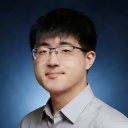
 Ziqi Gao
· 2 previous affiliations
- Tsinghua UniversitySince 2026
- Assistant Professor · Since 2026
- PhD student · 2022–2025
2 other authors named Ziqi Gao: Ziqi Gao (University of Washington · 12 papers), Ziqi Gao (1 paper)
Research Overview
Ziqi Gao focuses on graph neural networks, computational biology, and graph anomaly detection. His work spans the development of spectral methods for analyzing anomalous network structures to the design of geometric learning frameworks for modeling protein interactions and molecular optimization. Recently, he investigates robust representations and interaction priors for complex biological systems.
Research Trajectory
In 2022, Gao's research spanned foundational challenges in both computational drug discovery and graph anomaly detection. With collaborators, he contributed to ImDrug: A Benchmark for Deep Imbalanced Learning in AI-aided Drug Discovery, an open-source library providing 11 datasets, 54 tasks, and 16 specialized algorithms to address the skewed distributions typical of pharmaceutical data. This work intersects with the broader research direction of Generalizing Beyond Known Scaffolds in Molecular Graphs. Concurrently, he investigated the spectral properties of anomalous nodes in networks. In Rethinking Graph Neural Networks for Anomaly Detection, the authors demonstrated that anomalies cause a "right-shift" in a graph's spectral energy, moving information from low to high frequencies. To capture these signals—which standard models typically smooth away—they introduced BWGNN, a model utilizing flexible Beta wavelet filters. This contribution advanced several research areas, including High-Frequency Spectral Analysis for Graph Anomaly Detection, Polynomial Filter Approximation for Spectral Graph Neural Networks, and the direction of Mitigating Over-smoothing in Graph Anomaly Detection.
Building on these graph-theoretic foundations, Gao developed novel geometric learning frameworks for biological systems in 2023. He introduced the HIGH-PPI framework in Hierarchical graph learning for protein–protein interaction, a model that simultaneously captures "inside-of-protein" molecular structures and "outside-of-protein" network topologies. This approach provides high interpretability by identifying critical binding and catalytic sites without explicit supervision, contributing to the area of Robust Geometric Learning for Noisy Molecular Structures. In parallel, he addressed fundamental limitations in graph neural networks caused by spectral concentration, where learned spectra overly concentrate on low frequencies. He proposed MEGAE in Handling Missing Data via Max-Entropy Regularized Graph Autoencoder to improve imputation precision for attribute-incomplete graphs. Returning to network anomalies, he also participated in creating GADBench: Revisiting and Benchmarking Supervised Graph Anomaly Detection, a comprehensive evaluation tool for static graphs encompassing millions of nodes. The benchmark highlighted the efficacy of tree ensembles with simple neighborhood aggregation, supporting ongoing work in the research direction of Anomaly Detection in Dynamic Evolving Graphs.
By 2024, Gao's focus expanded to the structural modeling of large protein complexes and the stability of learned representations. He developed a deep reinforcement learning framework, GAPN, in Deep Reinforcement Learning for Modelling Protein Complexes, which predicts 3D structures by learning optimal assembly paths. Guided by domain-specific rewards and adversarial signals, the method achieved significant improvements in both accuracy and computational speed over existing approaches. Continuing this trajectory, he explored alternative learning paradigms for structural biology in Protein Multimer Structure Prediction via Prompt Learning. To address the "bound-unbound" gap in protein science, he introduced ATProt in Towards Stable Representations for Protein Interface Prediction. By treating protein flexibility as an adversarial attack, this framework enforces mathematical representation stability, maintaining accuracy even when relying on noisy structures predicted by systems like AlphaFold2 or ESMFold. Beyond biological applications, Gao also investigated core machine learning efficiency, proposing new methods in Parameter-Efficient Fine-Tuning with Discrete Fourier Transform.
In his most recent work, Gao has tackled multi-objective optimization and the integration of biological priors into deep learning models. He co-authored InversionGNN: A Dual Path Network for Multi-Property Molecular Optimization (2025), which introduces a dual-path graph neural network that inverts a property predictor to perform gradient-based Pareto searches in discrete chemical space. This approach significantly improves sample efficiency for generating candidate molecules that balance conflicting chemical properties. In 2026, he presented Learning the Interaction Prior for Protein-Protein Interaction Prediction: A Model-Agnostic Approach. This work introduces L3-PPI, a plug-and-play classification head that simulates shared neighbors (the "L3 rule") to embed biological common sense into existing models. This module boosts the generalization capabilities of diverse architectures, ranging from simple convolutional networks to massive protein language models.
Current Directions
The most recent papers in the evidence indicate a focus on integrating domain-specific priors and multi-objective optimization techniques into computational biology. Recent work investigates how to efficiently navigate discrete chemical spaces to generate molecules that balance conflicting properties, utilizing gradient-based Pareto searches and dual-path graph architectures to improve sample efficiency over traditional black-box methods. Additionally, Gao is exploring model-agnostic approaches to protein-protein interaction prediction. By embedding established biological interaction rules—such as shared-neighbor heuristics—directly into classification heads, this direction aims to improve the generalization and accuracy of diverse deep learning models, including large protein language models, without requiring fundamental architectural changes.
Profile updated
Loading new papers…
Other researchers whose papers cluster into the same research directions — a proxy for overlapping technical interests and shared intellectual neighborhoods.
See something wrong? Report a mistake