

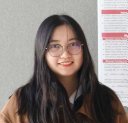
 Ziqi Chen
· 4 previous affiliations
- Google (United States)Since 2024
- Researcher · Since 2025
- Software Engineering Intern · 2024
- The Ohio State University2018–2024
- PhD, Computer Science and Engineering · 2019–2024
- Graduate Teaching Assistant · 2020
- Graduate Research Assistant · 2019–2020
- Master Student, Computer Science and Engineering · 2018–2019
- Software Engineer Intern, Machine Learning · 2022
- Research Intern · 2021
1 other author named Ziqi Chen: Ziqi Chen (East China Normal University · 40 papers)
Research Overview
Ziqi Chen focuses on the intersection of deep learning, computational chemistry, and precision immunology. His research develops generative models and reinforcement learning frameworks to optimize molecular structures, predict chemical reactions, and design therapeutic peptides. Recently, his work has expanded to specialized large language models for scientific domains and evolutionary search algorithms for autonomous agents.
Research Trajectory
Chen’s early work established methods for computational drug design by improving how neural networks guide molecular modifications. In 2021, he introduced A deep generative model for molecule optimization via one fragment modification, a framework that optimizes molecules one fragment at a time. This approach reduced the required parameters and training data while maintaining high optimization performance. This research advanced several interconnected fields, including the area of Scaffold Constrained Molecular Optimization and the research direction Bridging the Synthesizability Gap in Molecular Generation. It also provided insights relevant to the broader area of Differential Representations for Chemical Reaction Prediction and work in Hierarchical Molecular Representations.
Expanding into precision immunology, Chen applied reinforcement learning to the design of targeted biological sequences. He developed a framework for T-Cell Receptor Optimization with Reinforcement Learning and Mutation Polices for Precision Immunotherapy, formulating the search for optimized T-cell receptors (TCRs) as a reinforcement learning problem to better identify foreign peptides on cell surfaces. Returning to small-molecule drug design, he addressed ligand-based generation with Shape-conditioned 3D Molecule Generation via Equivariant Diffusion Models. This work presented ShapeMol, an equivariant generative model that maps molecular surface shapes into latent embeddings to generate novel, diverse 3D structures conditioned on known active molecules.
In 2024, Chen continued to bridge reinforcement learning and immunology by introducing PepPPO in Binding peptide generation for MHC Class I proteins with deep reinforcement learning. This framework generates binding peptides for MHC Class I proteins, accelerating the identification of potential neoantigens for personalized cancer immunotherapy even when experimental data is scarce. Concurrently, he collaborated on DiffER: Categorical Diffusion Models for Chemical Retrosynthesis, which utilizes diffusion models to predict entire reactant molecules simultaneously. By overcoming the limitations of sequential prediction methods, this work further contributed to the research direction Bridging the Synthesizability Gap in Molecular Generation.
More recently, Chen's research has explored the application of large language models (LLMs) to complex scientific and evolutionary tasks. He participated in the development of SMolInstruct, a massive instruction-tuning dataset detailed in LlaSMol: Advancing Large Language Models for Chemistry with a Large-Scale, Comprehensive, High-Quality Instruction Tuning Dataset. This project demonstrated how specialized instruction tuning can enable open-source LLMs to outperform generalist models on chemistry tasks, aligning with the research direction Bridging the Parameter Efficient Fine Tuning Performance Gap.
Building on these language model architectures, Chen contributed to PACEvolve: Enabling Long-Horizon Progress-Aware Consistent Evolution. This framework leverages LLMs for evolutionary search, addressing challenges such as context pollution and mode collapse to enable consistent self-improvement. This work advances the area of Hierarchical Memory Architectures for Language Agents.
Current Directions
The most recent papers in the evidence indicate a strategic shift toward integrating large language models and autonomous agents into scientific discovery and optimization workflows. Recent work investigates how specialized instruction tuning can adapt general-purpose LLMs for highly specific, domain-expert tasks in chemistry, bridging the gap between natural language processing and molecular science. Additionally, Chen is exploring the use of language models within evolutionary search algorithms, focusing on mechanisms that prevent context pollution and mode collapse during long-horizon tasks. This points to an ongoing interest in building robust, self-improving agent architectures capable of sustained reasoning and complex problem-solving.
Profile updated
Loading new papers…
Other researchers whose papers cluster into the same research directions — a proxy for overlapping technical interests and shared intellectual neighborhoods.
See something wrong? Report a mistake