

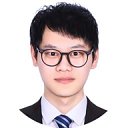
 Zipeng Qi
· 4 previous affiliations
- XYZ Embodied AISince 2026
- Researcher · Since 2026
- Baidu (China)Current
- Current
- Researcher · 2025–2026
- Intern · 2023–2024
- Beihang University2018–2025
- PhD student · 2020–2025
- MS student · 2018–2020
- Intern · 2023
Research Overview
Zipeng Qi focuses on video and image generation, 3D scene reconstruction, and remote sensing computer vision. His trajectory spans from implicit neural representations for multiview segmentation to advanced diffusion models and 3D Gaussian splatting techniques. Currently, his work addresses the acceleration and control of generative models alongside efficient large-scale novel view synthesis.
Research Trajectory
Qi’s early research centered on remote sensing and the application of deep learning to spatial-temporal and multiview data. In 2022, he explored token reduction for efficient vision transformers in Remote Sensing Image Change Detection With Transformers, representing images as compact semantic tokens to efficiently capture long-range contexts. Recognizing the limitations of pixel-wise annotations in multiview scenarios, he shifted toward 3D structural modeling. He introduced Remote-Sensing Image Segmentation Based on Implicit 3-D Scene Representation to generate accurate novel view segmentation from limited annotations. This approach was expanded in Implicit Ray Transformers for Multiview Remote Sensing Image Segmentation, which combined implicit neural representations (INRs) with transformer architectures to integrate 2D texture information for robust segmentation. Continuing this line of inquiry, he later incorporated visual foundation models into implicit neural fields to overcome inadequate scene-wide supervision in Multi-view Remote Sensing Image Segmentation With SAM priors, and further refined these techniques in Efficient Semantic Splatting for Remote Sensing Multiview Segmentation.
Concurrently, Qi expanded his focus into generative AI, particularly diffusion models and controllable synthesis. His work on DiffTalker: Co-driven audio-image diffusion for talking faces via intermediate landmarks addressed the challenge of audio-driven generation by using landmarks to bridge the audio and image domains. Investigating the fundamental properties of diffusion processes, he authored Not All Noises Are Created Equally:Diffusion Noise Selection and Optimization. This work introduced the concept of noise inversion stability, developing plug-and-play algorithms for latent noise projection to improve prompt alignment without altering model weights. He also contributed to generative classification via likelihood estimation in A Simple and Efficient Baseline for Zero-Shot Generative Classification, participating in the development of Gaussian Diffusion Classifiers that dramatically accelerated inference times by shifting computational loads to a preparation phase.
In the broader area of Training Free Guidance for Controllable Generative Models, Qi developed Layered Rendering Diffusion Model for Controllable Zero-Shot Image Synthesis. By treating objects as individual layers during early synthesis stages, this framework provides precise spatial control and prevents conceptual blending. He further advanced diffusion methodologies in the research direction of Reconciling Deterministic and Stochastic Diffusion Sampling with Zigzag Diffusion Sampling: Diffusion Models Can Self-Improve via Self-Reflection. This training-free method alternates between denoising and inversion steps, leveraging the guidance gap to inject semantic information and improve image quality. Additionally, he collaborated on navigating one-to-many mappings in image restoration, utilizing Bayesian Neural Networks to generate multiple plausible enhancements in Bayesian Neural Networks for One-to-Many Mapping in Image Enhancement.
Most recently, Qi has focused on the research direction of Mitigating the Volumetric Sampling Bottleneck in Neural Rendering, specifically advancing 3D Gaussian Splatting (3DGS) for complex and large-scale environments. In From Restoration to Reconstruction: Rethinking 3D Gaussian Splatting for Underwater Scenes, he bridged underwater image restoration with 3DGS, modeling illumination as a view-invariant latent space to eliminate floating artifacts caused by water's optical properties. To address the scalability limits of static scene assumptions, he introduced BlockGaussian: Efficient Large-Scale Scene Novel View Synthesis via Adaptive Block-Based Gaussian Splatting, tackling the memory constraints and visible seams associated with rendering massive aerial and urban scenes.
Current Directions
The most recent papers in the evidence indicate a strong ongoing focus on the efficiency and scalability of 3D rendering, alongside the refinement of generative diffusion models. Qi is actively investigating adaptive, block-based strategies for 3D Gaussian Splatting to enable real-time, high-fidelity novel view synthesis in massive environments without prohibitive memory costs. Simultaneously, his work addresses the fundamental sampling mechanisms of diffusion models, exploring training-free methods that allow models to self-correct during inference. Across both 3D reconstruction and 2D generation, a unifying theme is the development of efficient, controllable architectures that perform robustly in complex or degraded real-world conditions.
Profile updated
Loading new papers…
Other researchers whose papers cluster into the same research directions — a proxy for overlapping technical interests and shared intellectual neighborhoods.
See something wrong? Report a mistake