

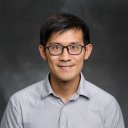
 Zining Zhu
· 6 previous affiliations
- Stevens Institute of TechnologySince 2024
- Assistant Professor · Since 2024
- University of Toronto2014–2024
- Doctor of Philosophy - PhD, Computer Science · 2019–2024
- Bachelor of Applied Science - BASc, Engineering Science (Robotics) · 2014–2019
- Applied Scientist · 2022
- Tencent (China)2019
- Research Intern · 2019
- Winterlight Labs2017–2018
- Software Engineer Intern · 2017–2018
- Tripadvisor2017
- Software Engineer · 2017
1 other author named Zining Zhu: Zining Zhu (Tencent (China) · 11 papers)
Research Overview
Zining Zhu focuses on natural language processing and explainable artificial intelligence, specifically investigating the internal mechanisms of large language models and developing methods to control their behavior. His trajectory spans from probing the layer-wise representations of early transformer models to designing techniques for steering modern agentic systems. Currently, his work emphasizes building safe, trustworthy, and efficient AI agents capable of operating in high-stakes domains like finance.
Research Trajectory
Zhu’s early research concentrated on the internal mechanics of transformer architectures, specifically contributing to the research area of Hierarchical Feature Abstraction Across Transformer Layers. He participated in early probing studies, such as Examining the rhetorical capacities of neural language models, which demonstrated that BERT-based models encode significant high-level rhetorical knowledge by leveraging bidirectional context. Building on this foundation, he led an investigation into how these models process linguistic anomalies in How is BERT surprised? Layerwise detection of linguistic anomalies. Using Gaussian density estimation to probe intermediate layers, this work revealed a clear internal hierarchy where grammatical errors are detected in early layers while semantic mismatches appear later, advancing the broader direction of Aligning Internal Model Knowledge with External Token Generation.
As large language models (LLMs) became more capable and widely deployed, Zhu’s focus expanded to the risks and interpretability of their outputs. He directed research uncovering the phenomenon of "adversarial helpfulness" in LLM-Generated Black-box Explanations Can Be Adversarially Helpful. This study highlighted how convincing but flawed LLM-generated explanations can employ specific persuasive strategies to mislead both human users and automated evaluators into trusting incorrect solutions.
In 2025, Zhu significantly advanced the mechanistic understanding of language models. In Truth Neurons (and its corresponding preprint Truth Neurons), he and his collaborators identified specific internal components that encode truthfulness in a subject-agnostic manner. By demonstrating that selectively suppressing these localized neurons consistently degrades accuracy across multiple benchmarks, the research confirmed that truthfulness is a mechanistically encoded property within transformer architectures. Complementing this focus on internal representations, Zhu developed methods to actively steer model behavior. In Feature-Guided SAE Steering for Refusal-Rate Control using Contrasting Prompts, he utilized sparse autoencoders to manipulate specific internal features, successfully improving model safety by nearly 19% while simultaneously boosting utility, effectively overcoming the traditional tradeoff between the two. He also introduced a novel interpretability framework in VERBA: Verbalizing Model Differences Using Large Language Models, which leverages LLMs to generate natural-language "diffs" based on how two models behave on the same data, making nuanced performance gaps more transparent than standard accuracy metrics allow.
Parallel to his work on interpretability, Zhu has investigated the efficiency and dynamics of interacting with and fine-tuning LLMs. He introduced a kernel-informed zeroth-order optimization method in KerZOO: Kernel Function Informed Zeroth-Order Optimization for Accurate and Accelerated LLM Fine-Tuning, which slashes training time by up to 74% compared to existing baselines by mathematically neutralizing gradient estimation bias without the massive memory overhead of traditional backpropagation. Additionally, he analyzed the iterative prompting process in Another Turn, Better Output? A Turn-Wise Analysis of Iterative LLM Prompting (published concurrently at NeurIPS as Another Turn, Better Output? A Turn-Wise Analysis of Iterative LLM Prompting). This research revealed a "Converge-Drift-Collapse" cycle, demonstrating that while early turns benefit ideation, complex mathematical reasoning requires highly specific feedback in later turns to avoid performance degradation.
Applying these insights to high-stakes domains, Zhu has recently developed comprehensive benchmarks for financial applications. In FinAudio: A Benchmark for Audio Large Language Models in Financial Applications, he evaluated audio language models on over 400 hours of earnings calls and financial speeches, highlighting their struggles with long-context precision and specialized terminology. Expanding into agentic systems, he designed INVESTORBENCH: A Benchmark for Financial Decision-Making Tasks with LLM-based Agent, which introduces a layered memory architecture to help LLM agents handle time-sensitive market data across stocks, cryptocurrencies, and ETFs.
Current Directions
The most recent papers in the evidence address the development of specialized, agentic AI systems and the mechanistic control of large language models. Recent work investigates how to build robust benchmarks and memory architectures for LLM agents operating in complex, time-sensitive environments like finance. Simultaneously, Zhu continues to explore representation engineering, focusing on how sparse autoencoders and targeted feature manipulation can steer model behavior to balance safety and utility. This dual focus on high-stakes domain application and fundamental mechanistic interpretability aims to produce AI systems that are both highly capable and transparently controllable.
Profile updated
Loading new papers…
Other researchers whose papers cluster into the same research directions — a proxy for overlapping technical interests and shared intellectual neighborhoods.
See something wrong? Report a mistake