

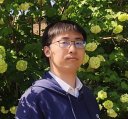
 Zihao Ye
· 4 previous affiliations
- Nvidia (United States)Since 2024
- Engineer · Since 2025
- Intern · 2024–2025
- University of Washington2021–2025
- PhD student · 2021–2025
- Amazon (United States)2019–2021
- Software Development Engineer · 2019–2021
- Shanghai Jiao Tong University2014–2018
- Undergrad student · 2014–2018
Research Overview
Zihao Ye focuses on machine learning systems, compiler abstractions, and efficient inference architectures for large-scale models. His trajectory spans early work on sparse attention mechanisms and graph neural network systems to foundational contributions in tensor compilation. Recently, his research emphasizes optimizing large language model serving, addressing memory bottlenecks, and developing dynamic scheduling frameworks for high-throughput autoregressive decoding.
Research Trajectory
Ye's early research addressed the computational bottlenecks of sequence modeling and graph processing. He introduced BP-Transformer: Modelling Long-Range Context via Binary Partitioning, which utilizes a binary partitioning tree to implement a fine-to-coarse attention mechanism. By allowing tokens to attend to closer contexts with fine granularity and distant contexts via coarser spans, this approach reduces computational complexity from quadratic to $O(k \cdot n \log(n/k))$. This work contributed to several research areas, including hierarchical inductive biases for sequence modeling, linear and sparse attention for long contexts, and sparse attention for long context scaling. He further explored these themes in Transformer on a Diet, developing lightweight architectures that use dilated and cascade connections to reduce parameter counts by up to 70%, advancing the broader areas of structural redundancy in transformer attention mechanisms and scaling transformers to long sequences with sparse attention.
Concurrently, Ye contributed to the optimization of graph neural network (GNN) systems. He collaborated on FeatGraph: a flexible and efficient backend for graph neural network systems, which accelerates workloads by co-optimizing graph traversal and feature dimension computation. He also participated in the development of DGL-KE: Training Knowledge Graph Embeddings at Scale, a high-performance library that optimizes data locality and overlaps communication with computation to handle massive graphs. This work aligned with research directions in communication efficient distributed graph processing and locality-aware graph partitioning for distributed systems.
Moving into compiler design and hardware-software co-design, Ye's focus shifted toward tensor optimization and sparse computation. He contributed to Graphiler: Optimizing Graph Neural Networks with Message Passing Data Flow Graph, further refining GNN execution. Addressing the complexities of sparse tensor operations in deep learning, he developed SparseTIR: Composable Abstractions for Sparse Compilation in Deep Learning. This framework leverages composable formats and transformations to simplify the development of high-performance sparse operators. He also collaborated on TensorIR: An Abstraction for Automatic Tensorized Program Optimization. Together, these projects advanced the research direction of Hierarchical Abstractions for Hardware Software Co-Optimization.
In recent years, Ye has concentrated heavily on the systems challenges of serving large language models (LLMs). He contributed to Punica: Multi-Tenant LoRA Serving and Atom: Low-Bit Quantization for Efficient and Accurate LLM Serving, addressing the memory and computational demands of deploying large models.
His work on compiler infrastructure continued with Relax: Composable Abstractions for End-to-End Dynamic Machine Learning, a compiler abstraction that unifies computational graphs, tensor programs, and external libraries. By enabling first-class symbolic shape annotations, this system tackles the area of Compiling Neural Networks with Dynamic Tensor Shapes.
To accelerate long-context LLM decoding, Ye collaborated on MagicPIG: LSH Sampling for Efficient LLM Generation, a heterogeneous system that replaces biased "TopK" attention with Locality Sensitive Hashing-based sampling and offloads the KV cache to CPU DRAM. This work intersects with research directions such as calibrating positional bias in transformer attention, KV cache compression for long-context inference, and sub-quadratic attention via locality sensitive hashing. He subsequently introduced FlashInfer: Efficient and Customizable Attention Engine for LLM Inference Serving, which utilizes a novel block-sparse format for KV-cache storage, a Just-In-Time compiler, and a dynamic load-balancing scheduler. This engine advances the areas of hardware aware design for on device deep learning and dynamic task scheduling for irregular parallel workloads.
Addressing retrieval-augmented generation (RAG), Ye participated in the design of TeleRAG: Efficient Retrieval-Augmented Generation Inference with Lookahead Retrieval. By prefetching required data from CPU to GPU in parallel with LLM generation, the system mitigates latency in memory-constrained environments. This contributes to the directions of overcoming the PCIe bottleneck in offloaded LLM inference and hiding memory latency with asynchronous software pipelining. Finally, he contributed to NanoFlow: Towards Optimal Large Language Model Serving Throughput, a framework that exploits intra-device parallelism by splitting operations into overlapping "nano-batches." Both TeleRAG and NanoFlow support the broader research direction of Eliminating Pipeline Bubbles in Distributed Model Training, while NanoFlow also advances the areas of accelerating hyperparameter optimization for efficient deep learning and The Memory Bandwidth Bottleneck in Transformer Decoding.
Current Directions
The most recent papers in the evidence indicate a strong focus on optimizing the inference and serving infrastructure for large language models. Recent work investigates highly customizable attention engines, such as block-sparse KV-cache storage and dynamic load-balancing schedulers, to maximize throughput and minimize latency. Additionally, ongoing research addresses the memory bottlenecks inherent in long-context decoding and retrieval-augmented generation by developing techniques like lookahead retrieval, asynchronous software pipelining, and intra-device parallelism. This is complemented by continued efforts in compiler abstractions that support dynamic tensor shapes and end-to-end machine learning optimization across diverse hardware environments.
Profile updated
| Paper | Venue | Year |
|---|---|---|
| BP-Transformer: Modelling Long-Range Context via Binary PartitioningGitHubyzh119/ | arXiv | 2019 |
Loading new papers…
Other researchers whose papers cluster into the same research directions — a proxy for overlapping technical interests and shared intellectual neighborhoods.
See something wrong? Report a mistake