

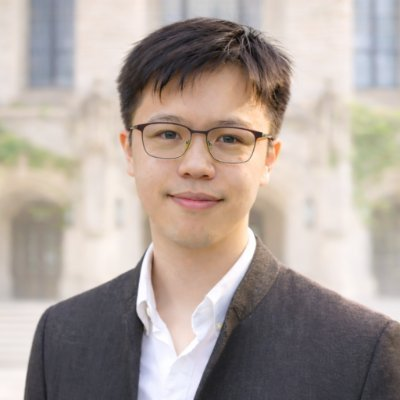
 Zihan Wang
· 3 previous affiliations
- Northwestern UniversitySince 2024
- PhD student · 2024–2029
- Current
- Renmin University of China2020–2024
- Undergrad student · 2020–2024
- Intern · 2023
24 other authors named Zihan Wang: Zihan Wang (Helmholtz Center for Information Security · 72 papers), Zihan Wang (University of California San Diego · 36 papers), Zihan Wang (National University of Singapore · 13 papers), Zihan Wang (University of Washington · 12 papers), Zihan Wang (New York University · 9 papers), and 19 more
Research Overview
Zihan Wang focuses on the autonomy, efficiency, and long-context understanding of foundation models. His early work explored retrieval-augmented generation and multi-turn evaluation, while his recent research investigates reinforcement learning for large language model agents. He currently addresses reasoning collapse, training stability, and resource constraints in multi-turn interactive environments.
Research Trajectory
Zihan Wang’s early research addressed structured reasoning and information retrieval. In 2023, he introduced methods for conditional question answering, developing approaches to handle complex formats and limited supervision in Learning on Structured Documents for Conditional Question Answering. He also explored model-based information retrieval by proposing learnable document identifiers in NOVO: Learnable and Interpretable Document Identifiers for Model-Based IR. To mitigate hallucination in foundation models, he collaborated on RETA-LLM: A Retrieval-Augmented Large Language Model Toolkit, which provided systems to ground generated text in external corpora.
In 2024, his focus shifted toward the evaluation and architectural efficiency of large language models. He contributed to the area of Dynamic and Interactive Evaluation of Large Language Models through his work on MINT: Evaluating LLMs in Multi-turn Interaction with Tools and Language Feedback, which assessed how models utilize tools and incorporate feedback over multiple turns. Concurrently, he participated in the development of highly efficient sparse architectures, notably DeepSeek-V2: A Strong, Economical, and Efficient Mixture-of-Experts Language Model. This large-scale collaborative effort advanced several broader research directions, including Shared Experts for Sparse Mixture of Experts Models, Scaling Transformer Context with Compressed Key Value Memory, Efficient Alignment Beyond the Four Model Bottleneck, and Group Relative Policy Optimization for Large Reasoning Models. Building on his expertise in sparse architectures, he subsequently led research into parameter-efficient fine-tuning for these models, investigating expert routing distributions in Let the Expert Stick to His Last: Expert-Specialized Fine-Tuning for Sparse Architectural Large Language Models.
By 2025, Wang expanded his research to encompass long-context multimodal understanding and agentic reinforcement learning. He investigated temporal search paradigms in Re-thinking Temporal Search for Long-Form Video Understanding, formulating the challenge of finding specific frames in extensive video contexts. Transitioning into the research direction of Reinforcement Learning for Structured Reasoning and Alignment, he explored how to improve decision-making in noisy, high-dimensional environments with VAGEN: Reinforcing World Model Reasoning for Multi-Turn VLM Agents.
His work in 2026 has concentrated heavily on the self-evolution and practical deployment constraints of autonomous agents. With collaborators, he examined whether models can estimate their own resource usage during execution in Towards Budget-Aware Agents: Do LLM Agents Know What They Will Spend?. To enable models to improve autonomously, he developed a framework for training agents in interactive environments via multi-turn reinforcement learning in RAGEN: Understanding Self-Evolution in LLM Agents via Multi-Turn Reinforcement Learning. He also investigated self-correction mechanisms, using Monte Carlo Tree Search to organize successes and failures in Weak-to-Strong Generalization with Failure Trajectories. Most recently, he diagnosed a critical failure mode in agentic reinforcement learning—where models learn input-agnostic reasoning patterns—and proposed signal-to-noise ratio filtering to mitigate this issue in RAGEN-2: Reasoning Collapse in Agentic RL.
Current Directions
The most recent papers in the evidence indicate a strong focus on agentic reinforcement learning and the reliability of multi-turn autonomous systems. A primary theme is diagnosing and resolving training instabilities, such as "template collapse," where agents generate generic reasoning that bypasses the actual input context. Recent work also investigates weak-to-strong generalization in complex decision-making tasks, exploring how models can leverage failure trajectories to self-correct and surpass their supervisors. Additionally, there is an emerging emphasis on budget-aware agents, addressing the practical challenges of deploying foundation models under strict resource constraints like token limits, time, and computational cost.
Profile updated
Loading new papers…
Other researchers whose papers cluster into the same research directions — a proxy for overlapping technical interests and shared intellectual neighborhoods.
See something wrong? Report a mistake