

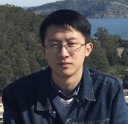
 Zifeng Wang
· 4 previous affiliations
- Google (United States)Since 2021
- Senior Research Scientist · Since 2025
- Research Scientist · 2023–2025
- Student Researcher · 2021–2022
- Research Intern · 2021
- Northeastern University2018–2023
- Research Assistant · 2018–2023
- Harvard Medical School2018–2021
- Collaborator · 2018–2021
- Tsinghua University2014–2018
- Research Assistant · 2017–2018
- Undergrad student · 2014–2018
1 other author named Zifeng Wang: Zifeng Wang (Keiji AI · 40 papers)
Research Overview
Zifeng Wang focuses on large language model adaptation, multi-agent systems, and continual learning. His early trajectory explored parameter-efficient techniques for lifelong learning without catastrophic forgetting, transitioning into his current emphasis on scaling test-time compute, reasoning distillation, and cost-effective inference for foundation models.
Research Trajectory
Wang’s early research addressed the fundamental challenges of catastrophic forgetting and parsimony in lifelong learning systems. He introduced an ADMM-based pruning strategy to split networks into task-specific partitions in Learn-Prune-Share for Lifelong Learning (2020), enabling adaptive knowledge sharing without forgetting. The following year, he investigated the Hilbert-Schmidt Independence Criterion (HSIC) bottleneck as a regularizer for deep neural networks in Revisiting Hilbert-Schmidt Information Bottleneck for Adversarial Robustness (2021), demonstrating that reducing redundant information in latent representations theoretically and experimentally enhances classifier robustness against adversarial attacks.
In 2022, his focus expanded to the efficiency and scalability of continual learning. To address the constraints of edge devices, he developed SparCL: Sparse Continual Learning on the Edge (2022), a framework combining weight, data, and gradient sparsity to accelerate training. Concurrently, he helped pioneer a new prompting paradigm for continual learning that eliminates the need for a rehearsal buffer or known task identities at test time. This was detailed in Learning to Prompt for Continual Learning (2022), which dynamically prompts a pre-trained model to learn sequential tasks. This work connects to several broader research areas, including the direction of Representational Constraints in Parameter Efficient Fine-Tuning, the area of Continual Learning Under Strict Data Privacy Constraints, and the broader area of Continual Learning via Frozen Backbones and Lightweight Adapters. He extended this prompting approach in DualPrompt: Complementary Prompting for Rehearsal-Free Continual Learning (2022), which attaches complementary prompts to a pre-trained backbone to properly instruct the model on sequentially arriving tasks.
Continuing his work on representation alignment, Wang returned to the HSIC bottleneck in DualHSIC: HSIC-Bottleneck and Alignment for Continual Learning (2023), formulating a loss function that filters out task-specific noise and aligns shared features to boost rehearsal-based continual learning. During this period, he also explored zero-shot capabilities for structured data extraction in QueryForm: A Simple Zero-shot Form Entity Query Framework (2023).
By 2024, working as a Research Scientist at Google Cloud AI Research, Wang’s trajectory shifted heavily toward large language models (LLMs), retrieval-augmented generation (RAG), and synthetic data. He developed frameworks to improve the reliability and latency of RAG systems. In CaLM: Contrasting Large and Small Language Models to Verify Grounded Generation (2024), he utilized a smaller verifier model to fact-check a larger generator model, improving citation quality without fine-tuning—a contribution to the research direction of Autonomous Self-Correction Loops for Generative Output Refinement. He also introduced a divide-and-conquer approach in Speculative RAG: Enhancing Retrieval Augmented Generation through Drafting (2024), delegating draft generation to a specialized model and using a larger model for final verification. For model adaptation in low-data regimes, he proposed Model Swarms: Collaborative Search to Adapt LLM Experts via Swarm Intelligence (2024), a tuning-free algorithm that optimizes model weights via a utility-guided swarm search rather than backpropagation. Additionally, he participated in research on instruction tuning via synthetic data generation in CodecLM: Aligning Language Models with Tailored Synthetic Data (2024).
In 2025 and 2026, Wang’s research increasingly addressed agentic workflows, reasoning capabilities, and efficient inference routing. He introduced Budget-Aware Tool-Use Enables Effective Agent Scaling (2025), a framework that provides AI agents with real-time budget awareness to dynamically adjust their search strategies at test time. To enhance fundamental reasoning, he developed Reverse Thinking Makes LLMs Stronger Reasoners (2025), which trains models to internalize bidirectional logic (from problem to solution and vice versa). Collaborating with larger teams, he contributed to memory frameworks for self-evolving agents in ReasoningBank: Scaling Agent Self-Evolving with Reasoning Memory (2026), explored the trade-offs between supervised fine-tuning and reinforcement learning for reasoning distillation in Supervised Reinforcement Learning: From Expert Trajectories to Step-wise Reasoning (2026), and investigated dynamic model routing for unseen LLMs in Universal Model Routing for Efficient LLM Inference (2026).
Current Directions
The most recent papers in the evidence address the scaling of test-time compute, reasoning distillation, and the efficiency of multi-agent systems. Recent work investigates how to equip LLM agents with budget-aware search strategies to optimize tool use dynamically, pushing the cost-performance Pareto frontier without additional training. Additionally, ongoing research focuses on improving the fundamental reasoning capabilities of foundation models—such as training models with bidirectional logic to bridge the gap between small and large models—and developing structured memory frameworks that allow autonomous agents to self-evolve by learning from both successful and failed trajectories. Finally, there is a sustained interest in cost-effective inference, demonstrated by recent contributions to universal model routing systems that can dynamically allocate queries across diverse, evolving LLM ecosystems based on prompt-specific error patterns.
Profile updated
Loading new papers…
Other researchers whose papers cluster into the same research directions — a proxy for overlapping technical interests and shared intellectual neighborhoods.
See something wrong? Report a mistake