

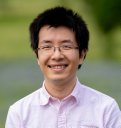
 Zichao Wang
· 2 previous affiliations
- Adobe Systems (United States)Since 2023
- Research Scientist · Since 2023
- Current
- Rice University2016–2023
- PhD student · 2016–2023
Research Overview
Zichao Wang focuses on human-centered artificial intelligence, educational technology, and the optimization of large language models for complex workflows. His early research established foundational methods for automated question generation and knowledge tracing in intelligent tutoring systems. Currently, he investigates scalable model routing, agent-user interaction, and personalized document assistance to build AI systems that collaborate effectively with human users.
Research Trajectory
Wang's early research concentrated on automating educational content generation and analyzing student interactions. In 2018, he developed QG-net: a data-driven question generation model for educational content, utilizing recurrent neural networks to automatically generate quiz questions from textbooks without requiring task-specific fine-tuning. He subsequently addressed the challenge of massive, sparse student answer data by introducing a Bayesian deep learning framework in Educational Question Mining At Scale: Prediction, Analysis and Personalization. This work advanced the broader research direction of Predicting Student Performance from Sparse Interaction Logs by proposing new metrics for question difficulty and enabling personalized question selection. Concurrently, he collaborated on foundational theoretical work regarding neural network architectures, co-authoring The Recurrent Neural Tangent Kernel. This paper provided mathematical insights into the infinite-width limit of overparametrized recurrent networks, characterizing how these models weight different time steps.
As large language models (LLMs) became prominent, Wang investigated their utility and reliability in educational settings. In Towards Human-Like Educational Question Generation with Large Language Models, he evaluated various prompting strategies to ensure generated assessment questions were both high-quality and content-relevant for high-stakes applications. He also expanded traditional knowledge tracing to generative tasks, proposing Open-ended Knowledge Tracing for Computer Science Education. This framework predicts the exact code a student will write, simulating misconceptions and coding styles to provide richer pedagogical feedback. Continuing his work on structured reasoning, he designed methods for Interpretable Math Word Problem Solution Generation via Step-by-step Planning, focusing on stepwise verification and faithfulness in multi-step logic.
Beyond educational domains, Wang applied generative modeling to drug discovery. He introduced Retrieval-based Controllable Molecule Generation, a framework that uses a small set of exemplar molecules to steer pre-trained models toward specific chemical properties. This work advanced the research direction of Retrieval-Augmented Molecular Generation and contributed to the broader area of Self-Supervised Molecular Pretraining.
At Adobe Research, Wang's focus broadened to include human-centered document interaction and workflow automation. To address the lack of datasets on reading behaviors, he created ATLAS: A System for PDF-centric Human Interaction Data Collection, an extensible toolkit that allows researchers to programmatically capture annotations and cognitive workflows from PDF readers. Building on this document-centric focus, he developed Persona-SQ: A Personalized Suggested Question Generation Framework For Real-world Documents. This framework synthesizes reader profiles to generate relevant questions and serves as a data engine to distill large models into highly efficient, on-device small language models. He further explored data synthesis in Synthetic Context Generation for Question Generation, demonstrating that using LLMs to back-fill missing background text for fine-tuning smaller models can outperform prompting massive models directly.
In parallel with his generation work, Wang participated in research on model security, co-authoring AutoDAN: Interpretable Gradient-Based Adversarial Attacks on Large Language Models. This whitebox attack method bypasses perplexity filters to generate coherent adversarial prompts, contributing to the field of Fluent Adversarial Attacks against Large Language Models.
Wang's most recent work emphasizes scalable model evaluation, agent-UX co-design, and context-aware AI. Returning to educational applications, he collaborated on Learning Context: A Unified Framework and Roadmap for Context-Aware AI in Education, which encodes a learner's cognitive and sociocultural state to transition AI tutors into personalized mentors, supporting the area of Affective Scaffolding for Intelligent Tutoring Systems. To optimize the deployment of reasoning models, he led the development of RADAR: Reasoning-Ability and Difficulty-Aware Routing for Reasoning LLMs. RADAR frames model routing as a multi-objective optimization problem, using psychometric modeling to match user queries with cost-effective reasoning budgets. Additionally, he contributed to reinforcement learning and agent optimization in Spinning Straw into Gold: Relabeling LLM Agent Trajectories in Hindsight for Successful Demonstrations, a post-training framework that recycles failed agent trajectories by relabeling them with achieved goals to improve sample efficiency.
Current Directions
Based on his most recent publications, Wang's current research investigates the efficient deployment of reasoning agents and the integration of deep contextual awareness into AI systems. A major focus is adaptive model routing, where he explores psychometric modeling to dynamically balance inference cost and reasoning capability for large language models. Additionally, he is actively researching methods to improve LLM agent performance through hindsight relabeling and trajectory recycling, enabling agents to learn from suboptimal demonstrations. In the educational domain, his ongoing work seeks to standardize the representation of learner contexts, ensuring that AI systems can adapt to the cognitive, affective, and sociocultural states of individual users.
Profile updated
| Paper | Venue | Year |
|---|---|---|
| Retrieval-based Controllable Molecule GenerationGitHubNVlabs/ | ICLR | 2023 |
Loading new papers…
Other researchers whose papers cluster into the same research directions — a proxy for overlapping technical interests and shared intellectual neighborhoods.
See something wrong? Report a mistake