

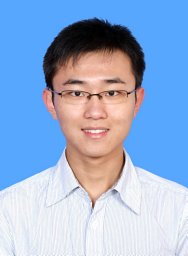
 Zibo Meng
· 6 previous affiliations
- Oppo AI centerSince 2018
- Principal Researcher · Since 2018
- OPPOSince 2020
- Principal Research Engineer · Since 2021
- Engineering Manager · 2020–2021
- University of South Carolina2013–2018
- Research Assistant · 2014–2018
- PhD student · 2013–2018
- Teaching Assistant · 2013–2014
- Philips2017
- Research Intern · 2017
- Here2016
- Intern · 2016
- Zhejiang University2010–2013
- Master's Degree · 2010–2013
Research Overview
Zibo Meng focuses on computer vision and affective computing, with a particular emphasis on facial expression analysis and action unit recognition. His research trajectory spans from early feature disentangling and deep belief networks to advanced convolutional architectures and audiovisual fusion techniques. Most recently, his work investigates omni-supervised learning methods to improve emotion recognition in unconstrained environments.
Research Trajectory
Meng's early research focused on the foundational challenges of facial analysis, particularly the accurate detection of facial action units (AUs) and expressions. In 2014, he contributed to the development of novel face registration techniques in Facial grid transformation: A novel face registration approach for improving facial action unit recognition, which sought to improve the spatial alignment of facial features prior to classification. Concurrently, he participated in work on feature selection, helping to introduce a method for isolating relevant expression features in Feature Disentangling Machine - A Novel Approach of Feature Selection and Disentangling in Facial Expression Analysis.
A significant focus during this period was unifying the traditionally separate stages of feature learning, feature selection, and classifier construction. With collaborators, he developed a unified loopy framework in Facial Expression Recognition via a Boosted Deep Belief Network. This architecture iteratively learned and selected features to characterize expression-related appearance and shape changes. This work contributed to several broader research directions, including the area of Modeling the Temporal Evolution of Facial Expressions and the Automated Recognition of Spontaneous Facial Expressions. The underlying methodologies also intersected with techniques used in areas such as Horizontal Spatial Partitioning for Robust Person Identification and the broader domain of Generalizing Person Re-Identification Across Unseen Camera Networks.
As deep learning became central to computer vision, Meng's focus shifted toward optimizing convolutional neural networks (CNNs) for the specific constraints of facial analysis. Recognizing that CNNs often overfit when trained on limited AU-coded datasets, he co-developed an architecture in Incremental Boosting Convolutional Neural Network for Facial Action Unit Recognition. This model integrated an incremental boosting layer to select discriminative neurons from lower layers, updating them on successive mini-batches. This approach advanced the research direction of Learning from Rare Signals in Extreme Class Imbalance by mitigating the errors from individual weak classifiers. Building on this momentum, he introduced Identity-Aware Convolutional Neural Network for Facial Expression Recognition in 2017, which aimed to decouple a subject's inherent facial identity from their transient expressions to improve generalization across different individuals.
Continuing his work on network architecture, Meng addressed the computational expense of empirically searching for optimal filter sizes in deep networks. In Optimizing Filter Size in Convolutional Neural Networks for Facial Action Unit Recognition, he and his colleagues proposed the Optimized Filter Size CNN (OFS-CNN). This network simultaneously learned both the weights and the filter sizes of all convolutional layers directly from the training data. This contribution aligned with the broader area of Continuous Learning of Receptive Fields and Spatial Scale, allowing the network to dynamically adapt its spatial processing to the scale of different facial action units.
In 2019, Meng's trajectory expanded into multimodal analysis, specifically leveraging audio signals to disambiguate difficult visual classifications. He developed a dynamic Bayesian network framework in Improving Speech Related Facial Action Unit Recognition by Audiovisual Information Fusion. This system explicitly modeled the physiological relationships between spoken phonemes and facial movements, significantly improving the detection of AUs that are visually obscured during speech. He further explored multimodal integration in Feature-Level and Model-Level Audiovisual Fusion for Emotion Recognition in the Wild. By fusing visual features extracted via CNNs and bi-directional LSTMs with audio features, this work addressed the complexities of recognizing human emotions in unconstrained, real-world environments.
Most recently in the provided evidence, Meng has investigated semi-supervised paradigms to overcome the bottleneck of labeled data in affective computing. He participated in the design of Omni-supervised Facial Expression Recognition: A Simple Baseline, which proposed an omni-supervised learning strategy. Rather than relying solely on the standard pretrain-and-finetune approach, this method sought to more effectively harness large volumes of unlabeled data to improve the robustness of facial expression classifiers.
Current Directions
The most recent papers in the evidence indicate a strong focus on robust, real-world affective computing through multimodal integration and advanced supervision strategies. A primary theme is the fusion of audiovisual information to capture the complex, synchronized physiological signals of human emotion and speech, moving beyond purely visual analysis. Additionally, there is a clear emphasis on overcoming data scarcity in unconstrained environments. By exploring omni-supervised learning and leveraging large-scale unlabeled datasets, this work aims to build emotion recognition systems that generalize reliably to "in the wild" conditions where perfectly annotated data is unavailable.
Profile updated
Loading new papers…
Other researchers whose papers cluster into the same research directions — a proxy for overlapping technical interests and shared intellectual neighborhoods.
See something wrong? Report a mistake