

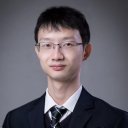
 Zhuosheng Zhang
· 6 previous affiliations
- Shanghai Jiao Tong UniversitySince 2016
- Assistant Professor · Since 2023
- Current
- PhD student · 2020–2023
- MS student · 2016–2020
- Amazon (United States)2022–2023
- Intern · 2022–2023
- Intern · 2022
- Intern · 2021
- Intern · 2019–2020
- Wuhan University2012–2016
- Undergrad student · 2012–2016
Research Overview
Zhuosheng Zhang focuses on natural language processing, complex reasoning in large language models, and the development of multimodal autonomous agents. His early work explored syntax-guided reading comprehension and efficient neural generation before shifting toward advanced prompting paradigms and logical reasoning architectures. More recently, his research centers on building robust generalist agents for graphical user interface navigation and establishing verifiable frameworks for model auditing and mathematical reasoning.
Research Trajectory
He began by addressing foundational challenges in natural language processing and conversational modeling. In Modeling Multi-turn Conversation with Deep Utterance Aggregation, he developed methods to better aggregate dialogue history for more coherent multi-turn conversations. He then introduced an online updated vocabulary mechanism in Open Vocabulary Learning for Neural Chinese Pinyin IME to resolve character ambiguities in input method engines. Advancing machine reading comprehension by integrating explicit linguistic constraints, he proposed a syntax-guided self-attention network in SG-Net: Syntax-Guided Machine Reading Comprehension that helps models filter out noise and focus on linguistically relevant word representations in lengthy passages.
As large language models emerged, his focus shifted toward eliciting and evaluating complex reasoning capabilities. He addressed the scalability bottleneck of manual demonstrations by proposing Automatic Chain of Thought Prompting in Large Language Models, which automates the generation of intermediate reasoning steps. Continuing to refine logical deduction, he designed a fact-driven architecture in Fact-Driven Logical Reasoning for Machine Reading Comprehension that extracts and organizes subject-verb-object triplets into hierarchical graphs to bridge general commonsense and text-specific facts. To optimize these interactions without relying on expensive human annotations, he introduced a novel evaluation framework in GLaPE: Gold Label-agnostic Prompt Evaluation for Large Language Models. He further developed Meta-Reasoning: Semantics-Symbol Deconstruction for Large Language Models, a paradigm that strips away semantic noise by mapping word problems into generic symbolic forms, significantly improving out-of-domain generalization and data efficiency.
A major subsequent phase of his trajectory involves the research direction of Generalist Agents for Graphical User Interface Navigation. He developed multimodal autonomous agents capable of interacting directly with digital environments. In CoCo-Agent: A Comprehensive Cognitive MLLM Agent for Smartphone GUI Automation, he combined a multi-faceted perception system with a hierarchical action prediction strategy to master smartphone interfaces. He further streamlined this process in You Only Look at Screens: Multimodal Chain-of-Action Agents, introducing an agent that operates directly on pixels—bypassing brittle intermediate parsing—using a chain-of-action technique that integrates past history and future plans.
Recently, his research group has addressed the ethical and operational challenges of deploying massive models. He investigated dataset provenance and copyright protection in Stealing Knowledge from Auditable Datasets by examining how models overfit to seen features. He extended this critical scrutiny to multimodal systems in Revisiting Data Auditing in Large Vision-Language Models, highlighting vulnerabilities in existing membership inference techniques used to determine if specific images were included in training corpora. To evaluate how well agents adhere to dynamic, domain-specific rules rather than general commonsense, his lab introduced GUIDEBENCH: Benchmarking Domain-Oriented Guideline Following for LLM Agents. He also participated in large-scale collaborative efforts to advance the area of General Purpose Reasoning from Specialized Reinforcement Learning, contributing to the curation of high-quality, decontaminated training environments in DeepMath-103K: A Large-Scale, Challenging, Decontaminated, and Verifiable Mathematical Dataset for Advancing Reasoning, which provides verifiable rewards to prevent models from memorizing test questions.
Returning to the domain of autonomous navigation, his latest work focuses on the reliability and continuous self-improvement of these systems. In Faithful Mobile GUI Agents with Guided Advantage Estimator, his team developed a framework that enables agents to abstain from actions when visual evidence is missing, drastically improving success rates in deceptive scenarios. He also introduced memory-augmented architectures to allow agents to learn from their own interactions over time, as seen in SE-GA: Memory-Augmented Self-Evolution for GUI Agents, which combines hierarchical memory systems with self-improving training pipelines to master multi-step tasks.
Continuing to expand agent capabilities across interaction modes, Zhang guided the development of Duopra: From Full-Duplex Conversation to Full-Duplex Agency, a full-duplex model that unifies conversational agency with timely task execution and backend tool delegation. In EvoViM: Recursively Self-Evolving Visual Agents for Exploration with Deferred Queries, Zhang's lab introduced a self-evolving framework where agents turn interaction experience into executable visual memory programs to handle exploration tasks where queries are deferred. Additionally, Zhang contributed to analyzing inference efficiency in On the Overscaling Curse of Parallel Thinking: System Efficacy Contradicts Sample Efficiency, which examines the mismatch between global sampling budgets and sample-specific needs and introduces latent budget prediction before parallel decoding.
Current Directions
The most recent papers in the evidence address the reliability, safety, and continuous self-evolution of autonomous agents operating in complex digital environments. Recent work investigates how to prevent mobile graphical user interface agents from relying on memorized shortcuts, emphasizing the ability of models to recognize missing visual evidence and safely halt or reverse actions in deceptive scenarios. Concurrently, his research explores memory-augmented architectures that allow agents to learn from their own interactions over time. By combining hierarchical memory systems with self-improving training pipelines, these current directions aim to move beyond static models, enabling agents to autonomously master dynamic, multi-step tasks in real-world interfaces.
Profile updated
Loading new papers…
Other researchers whose papers cluster into the same research directions — a proxy for overlapping technical interests and shared intellectual neighborhoods.
See something wrong? Report a mistake