

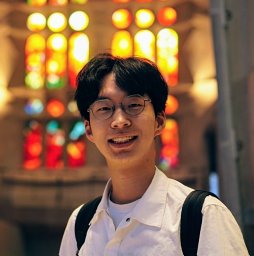
 Zhuoran Qiao
4 previous affiliations
- Chai Discovery2025
- Founding Scientist · 2025
- Iambic Therapeutics2023–2025
- Senior Machine Learning Scientist · 2024–2025
- Research Scientist · 2023–2024
- California Institute of Technology2019–2022
- Doctor of Philosophy - PhD, Theoretical Chemistry · 2019–2022
- Minor, Quantum Science and Engineering · 2021–2022
- Peking University2015–2019
- Research Assistant · 2017–2019
- Undergrad student · 2015–2019
Research Overview
Zhuoran Qiao focuses on the development of physics-informed machine learning architectures for quantum chemistry and structural biology. His work emphasizes the creation of efficient, high-fidelity models that bridge the gap between expensive first-principles simulations and the rapid requirements of drug discovery. By integrating symmetry-adapted features, generative diffusion processes, and flow-based sampling, he addresses fundamental challenges in predicting molecular properties and biomolecular interactions.
Research Trajectory
The early phase of Qiao’s research, beginning around 2020, was primarily concerned with the computational trade-offs inherent in quantum chemistry. Traditional methods like Density Functional Theory (DFT) provide high accuracy but suffer from poor scaling as molecular size increases. Qiao’s work in this period focused on developing Physics-Informed Generative Models for Molecular Structures and property prediction, specifically through the "OrbNet" series of models. These models utilized Graph Neural Networks (GNNs) and symmetry-adapted atomic orbital features to achieve DFT-level accuracy at a fraction of the computational cost, facilitating the exploration of molecular potential energy surfaces.
By 2022, Qiao’s focus expanded into structural biology and the modeling of complex biomolecular interactions. A significant portion of this work addressed the limitations of rigid-body docking by Modeling Protein Flexibility for Structure-Based Drug Design. Through the development of the NeuralPLexer framework, he introduced multiscale generative diffusion models capable of capturing "induced-fit" conformational changes—where both the protein backbone and the ligand adjust their structures upon binding. During this period, he also participated in collaborative efforts to bridge chemical structures with natural language, exploring multi-modal models for text-based molecular retrieval and editing.
In the most recent period (2024–2025), Qiao has shifted toward improving the efficiency and scalability of these generative frameworks. This involves a transition from diffusion-based methods to Deterministic Velocity Fields for Fast Generative Sampling, specifically utilizing Flow Matching to reduce the computational overhead of structure prediction. Furthermore, his work has begun to investigate Scaling Laws for Biological Sequence Modeling, contributing to the development of large-scale, multi-modal transformers that process heterogeneous biomedical data—including molecular graphs, protein sequences, and assay measurements—within a unified framework. This trajectory reflects an increasing emphasis on Domain Specificity for Specialized Protein Families and the generalization of models across sparse, multi-task datasets.
Representative Work
OrbNet: Deep Learning for Quantum Chemistry Using Symmetry-Adapted Atomic-Orbital Features In this first-author work, Qiao introduced a method for predicting electronic energy solutions by leveraging features derived from semi-empirical electronic structure calculations. By using symmetry-adapted atomic orbitals within a GNN architecture, the model outperformed existing machine learning methods in learning efficiency and transferability. The approach demonstrated that incorporating low-cost quantum mechanical features allows for the prediction of DFT-quality energies across diverse datasets of drug-like molecules.
UNiTE: Unitary N-body Tensor Equivariant Network with Applications to Quantum Chemistry As a lead researcher on this project, Qiao developed OrbNet-Equi, a physics-inspired equivariant neural network. The model learns molecular representations based on the electronic interactions among atomic orbitals, utilizing efficient tight-binding simulations to recover high-fidelity quantum chemical properties. The method achieved accuracy levels exceeding standard machine learning potentials while maintaining a significant speed advantage over traditional DFT calculations.
Dynamic-Backbone Protein-Ligand Structure Prediction with Multiscale Generative Diffusion Models In this lead-author paper, Qiao presented NeuralPLexer, a generative model designed to predict the 3D structures of protein-ligand complexes from sequence and molecular graph data. Unlike previous tools that often treated proteins as rigid structures, NeuralPLexer uses a diffusion-based approach to model the joint distribution of protein and ligand coordinates. This allows the model to capture the conformational flexibility of the protein backbone, improving the accuracy of binding site predictions.
Multi-modal Molecule Structure-text Model for Text-based Retrieval and Editing Qiao contributed to the development of MoleculeSTM, a multi-modal foundation model that aligns chemical structures with natural language descriptions. By training on a large dataset of structure-text pairs, the model enables the retrieval of molecules through descriptive queries and the "zero-shot" editing of chemical properties—such as increasing solubility or binding affinity—using natural language instructions. This work represents an early step in integrating linguistic context into molecular design.
NeuralPLexer3: Accurate Biomolecular Complex Structure Prediction with Flow Models As the first author, Qiao introduced NeuralPLexer3, which replaces the previous diffusion framework with a flow-based generative model. This iteration significantly improves training and sampling efficiency while achieving state-of-the-art accuracy across various biomolecular interaction types. The model is designed to be a robust tool for real-world drug discovery, providing a mechanistic understanding of disease-related protein-ligand interactions through efficient structural determination.
Scaling Multi-Modal and Multi-Task Transformers for Small Molecule Drug Discovery Participating in a large-scale collaborative effort, Qiao contributed to the development of Enchant v2, a multi-modal transformer designed to predict pharmacological properties from heterogeneous data. The model treats molecular graphs, protein sequences, and assay measurements as unified token sequences. The research demonstrated that these models follow established scaling laws, where performance predictably improves with increases in parameters, data volume, and compute, even in the presence of extreme data sparsity common in drug discovery.
Profile updated
| Title | Venue | Year |
|---|---|---|
| AI to rewire life’s interactome: Structural foundation models help to elucidate and reprogram molecular biology | Science | 2025 |
| NeuralPLexer3: Accurate Biomolecular Complex Structure Prediction with Flow Models | NeurIPS | 2025 |
| Scaling Multi-Modal and Multi-Task Transformers for Small Molecule Drug Discovery | AI4Science @ NeurIPS | 2025 |
| Biomedical data and AI | Science | 2025 |
| NeuralPLexer3: Accurate Biomolecular Complex Structure Prediction with Flow Models | arXiv | 2024 |
| State-specific protein-ligand complex structure prediction with a multiscale deep generative model | Nat. Mac. Intell | 2024 |
| Multi-Modal and Multi-Task Transformer for Small Molecule Drug Discovery | ML4LMS @ ICML | 2024 |
| #COVIDisAirborne: AI-enabled multiscale computational microscopy of delta SARS-CoV-2 in a respiratory aerosol | Int. J. High Perform. Comput. Appl | 2023 |
| Retrieval-based Controllable Molecule GenerationGitHub resource | ICLR | 2023 |
| Contents list | Journal of Materials Chemistry C | 2023 |
Loading new papers…
Other researchers whose papers cluster into the same research directions — a proxy for overlapping technical interests and shared intellectual neighborhoods.
See something wrong? Report a mistake