

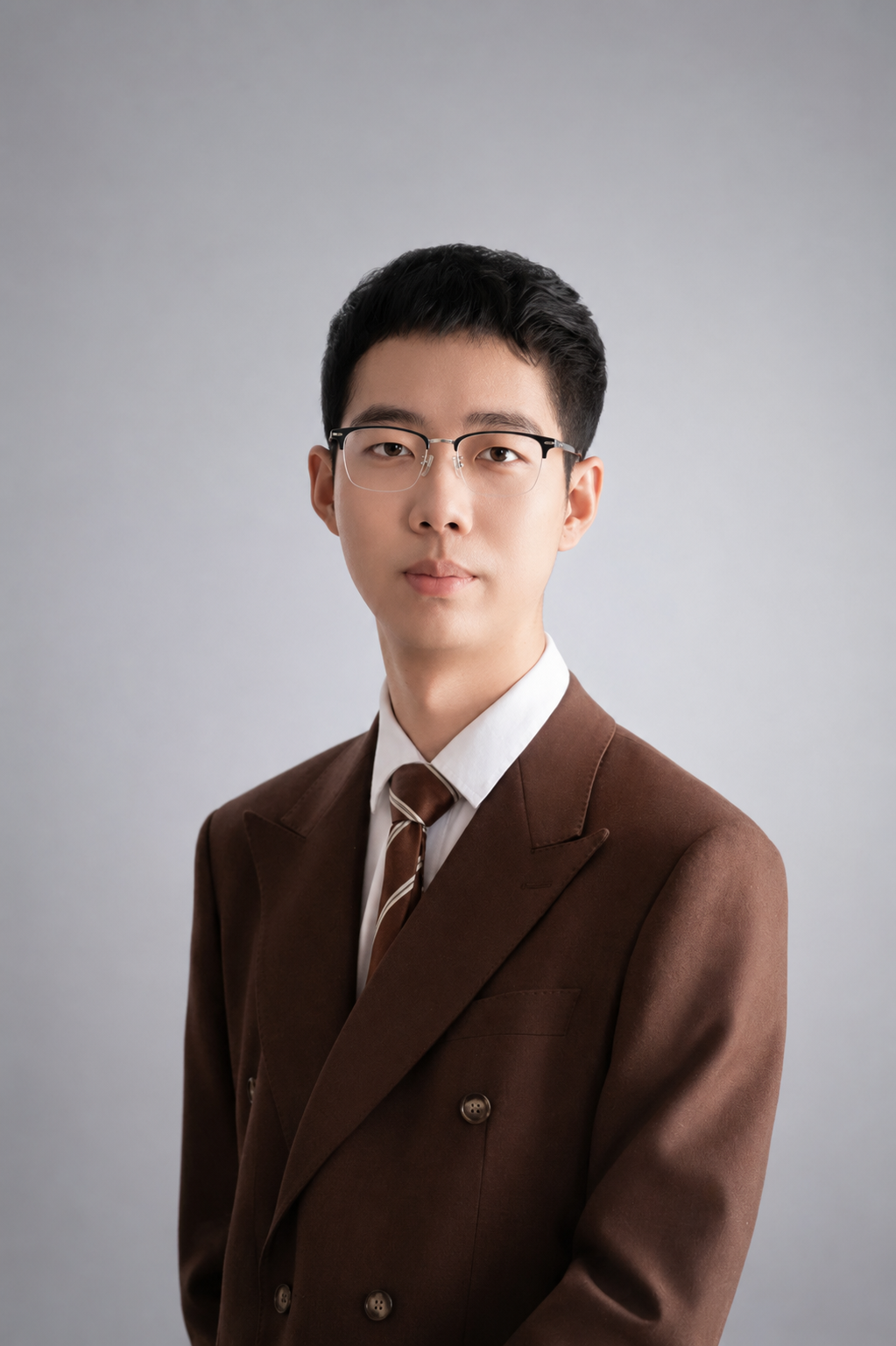
 Zhuoran Jin
· 1 previous affiliation
- Institute of AutomationSince 2021
- Assistant Professor · Since 2026
- PhD student · 2021–2026
Research Overview
Zhuoran Jin focuses on natural language processing, knowledge engineering, and the development of large language models. His early work emphasizes information extraction and knowledge graph embeddings to bridge structured data and text. More recently, his research addresses the alignment, safety, and multimodal reasoning capabilities of autonomous agent systems operating in complex environments.
Research Trajectory
Jin's early research centered on building robust toolkits for information extraction and knowledge graph embeddings. He introduced CogIE, a system designed to bridge unstructured text and structured knowledge networks. Building on this foundation, he developed CogKGE, a toolkit and benchmark for representing multi-source and heterogeneous knowledge, facilitating more comprehensive knowledge graph embeddings.
As language models grew in capability, his focus expanded to adapting these models for complex retrieval and extraction tasks. He proposed a novel approach to open-vocabulary named entity recognition in Alignment Precedes Fusion, framing the challenge of identifying novel entity types as a context-type semantic matching problem. In parallel, he explored conversational dense retrieval, developing InstructoR, a method that leverages large language models to discover user intent from complex, multi-turn dialogue contexts and provide unsupervised instruction signals to retrievers.
A significant portion of his subsequent work addresses the internal knowledge representations of large language models, specifically focusing on knowledge conflicts, unlearning, and editing. He investigated the tension between a model's parametric memory and external evidence in Tug-of-War between Knowledge, establishing an evaluation framework to assess and resolve knowledge conflicts in retrieval-augmented systems. Recognizing the necessity of removing sensitive or harmful information from trained models, he introduced the RWKU benchmark to evaluate real-world knowledge unlearning under strict constraints where neither the forget nor retain corpora are accessible. He also contributed to the broader research direction of Localized Parameter Editing for Large Language Models through his participation in MULFE, a multi-level benchmark that evaluates model editing capabilities on free-form text rather than rigid factual triples.
As autonomous agents became more prevalent, Jin began investigating their applications and vulnerabilities. He contributed to the development of AgentsCourt, a multi-agent framework that simulates court debates to handle complex judicial decision-making tasks, advancing research in areas such as Cross-Jurisdictional Generalizability in Legal AI and Multi-Agent Role Play for Synthetic Post-Training Data. His work on agent safety includes A Troublemaker with Contagious Jailbreak Makes Chaos in Honest Towns, which explores the vulnerability of independent agent memories to jailbreak attacks within a multi-agent society, contributing to the field of Topological Safety in Multi-Agent Communication Networks. Continuing his focus on model safety and unlearning, he developed Towards Robust Knowledge Unlearning, an adversarial framework designed to proactively test unlearned models by optimizing adversarial suffixes that reintroduce erased knowledge, aligning with the area of Automated Discovery of Adversarial Triggers in Generative Models.
Continuing the trajectory into 2025 and 2026, Jin's research has increasingly focused on reward modeling and multimodal reasoning for autonomous agents. To address the challenge of providing external feedback to multimodal large language models, he introduced Agent-RewardBench, a benchmark evaluating reward modeling across perception, planning, and safety in real-world agent scenarios. He expanded this concept significantly with Omni-Reward, a framework designed to align models across text, image, video, audio, and 3D modalities using natural language preferences rather than binary labels. In parallel, he contributed to diagnosing failures in inference-time reward models with Fixing the Broken Compass, which proposes algorithms to improve reasoning performance and efficiency during search. Finally, he participated in the creation of MMR-V, a benchmark targeting deep, multi-frame multimodal reasoning in videos, highlighting the gap between human and AI performance in complex visual reasoning tasks.
Current Directions
The most recent work in the evidence addresses the alignment and reasoning capabilities of multimodal large language models. A primary focus is the development of robust reward modeling frameworks that can process free-form human preferences across diverse modalities—including text, image, video, audio, and 3D environments. This research aims to provide reliable external feedback for autonomous agents, enabling better perception, planning, and safety in real-world tasks. Additionally, current efforts investigate inference-time scaling and the diagnosis of reward model failures during complex reasoning searches, alongside the evaluation of deep, multi-frame visual reasoning in video contexts.
Profile updated
Loading new papers…
Other researchers whose papers cluster into the same research directions — a proxy for overlapping technical interests and shared intellectual neighborhoods.
See something wrong? Report a mistake