

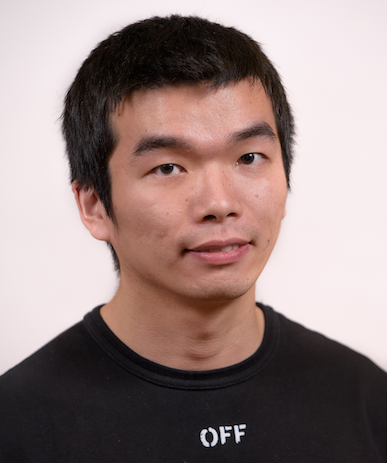
 Zhuofeng Wu
· 5 previous affiliations
- Apple (United States)Since 2026
- Research Scientist · Since 2026
- ML Research Intern · 2023
- Amazon (United States)2024–2026
- Researcher · 2024–2026
- University of Michigan2018–2024
- Doctor of Philosophy - PhD, Natural Language Processing, Deep Learning · 2018–2024
- Research Intern · 2020
- Zhejiang University2013–2017
- Undergrad student · 2013–2017
Research Overview
Zhuofeng Wu focuses on large language model reasoning, self-supervised representation learning, and the robustness of machine learning systems against adversarial attacks. His trajectory spans early work in dynamic word embeddings and contrastive learning to recent advancements in conversational retrieval-augmented generation and model distillation. Currently, he investigates unified architectures for conversational search and the mechanics of distilling complex reasoning capabilities into smaller models.
Research Trajectory
Early work investigated the temporal dynamics of natural language. In Identify Shifts of Word Semantics through Bayesian Surprise (2018), he introduced a computational method to model the evolution of word meanings over time, addressing the limitations of static word embeddings when applied to corpora spanning long periods. He subsequently focused on improving sentence-level representations. CLEAR: Contrastive Learning for Sentence Representation (2020) proposed a framework utilizing multiple augmentation strategies—such as word deletion, reordering, and substitution—to learn noise-invariant sentence embeddings through contrastive learning.
Expanding into text generation and prompting methodologies, he developed IDPG: An Instance-Dependent Prompt Generation Method (2022). He also participated in collaborative research on alternative generation architectures, contributing to PLANNER: Generating Diversified Paragraph via Latent Language Diffusion Model (2023), which combined latent semantic diffusion with autoregressive generation to mitigate exposure bias and improve fluency in longer texts. Returning to representation learning with a focus on efficiency, he proposed HiCL: Hierarchical Contrastive Learning of Unsupervised Sentence Embeddings (2023). This framework models both local segment-level and global sequence-level relationships to improve training effectiveness while addressing the quadratic time complexity of transformers.
In parallel, a significant portion of his research addresses the security and robustness of language models against adversarial threats. With collaborators, he explored attribution-based defense mechanisms in Defending against Insertion-based Textual Backdoor Attacks via Attribution (2023). This work identified potential poison triggers by analyzing token attribution scores, contributing to the research direction of Explainable Defense Against Neural Backdoor Attacks and advancing the area of Neutralizing Adversarial Perturbations through Inference Time Purification. Continuing this focus on vulnerabilities, he exposed critical security flaws in in-context learning through Adversarial Demonstration Attacks on Large Language Models (2023). By manipulating only the few-shot prompt demonstrations while leaving the test input untouched, this method achieved high attack success rates, situating the work within the broader area of Semantic Preservation Constraints for Textual Adversarial Attacks. Further exploring the intersection of generative capabilities and security, collaborative work examined the use of advanced models to execute stealthy manipulations in ChatGPT as an Attack Tool: Stealthy Textual Backdoor Attack via Blackbox Generative Model Trigger (2024), intersecting with research in Defending Language Models with Perplexity Filters.
More recently, his work has shifted toward optimizing the reasoning and conversational capabilities of large language models. In Divide-or-Conquer? Which Part Should You Distill Your LLM? (2024), he demonstrated that LLM reasoning consists of distinct problem decomposition and problem-solving skills. The study found that distilling the decomposition capability into smaller models is highly effective, whereas distilling knowledge-heavy execution can lead to performance degradation. This interest in optimizing complex LLM pipelines extends to conversational search. He developed UniConv: Unifying Retrieval and Response Generation for Large Language Models in Conversations (2025), a framework that jointly fine-tunes a single model to handle both information retrieval and response generation, contributing to the research direction of Jointly Optimizing Retrieval and Generation. He continued to refine conversational systems as a co-author on Leveraging historical information to boost retrieval-augmented generation in conversations (2026), which investigates methods for integrating past dialogue context to enhance retrieval-augmented generation.
Current Directions
The most recent papers in the evidence address the optimization of large language models for complex reasoning and conversational search. Recent work investigates the mechanics of model distillation, specifically isolating problem decomposition from problem-solving execution to efficiently transfer reasoning capabilities to smaller models without suffering performance collapse. Additionally, his current research focuses heavily on retrieval-augmented generation (RAG) in multi-turn conversations. This includes developing unified frameworks that jointly handle information retrieval and response generation to replace disconnected pipelines, as well as leveraging historical conversational context to improve the accuracy and consistency of LLM-driven search.
Profile updated
Loading new papers…
Other researchers whose papers cluster into the same research directions — a proxy for overlapping technical interests and shared intellectual neighborhoods.
See something wrong? Report a mistake