

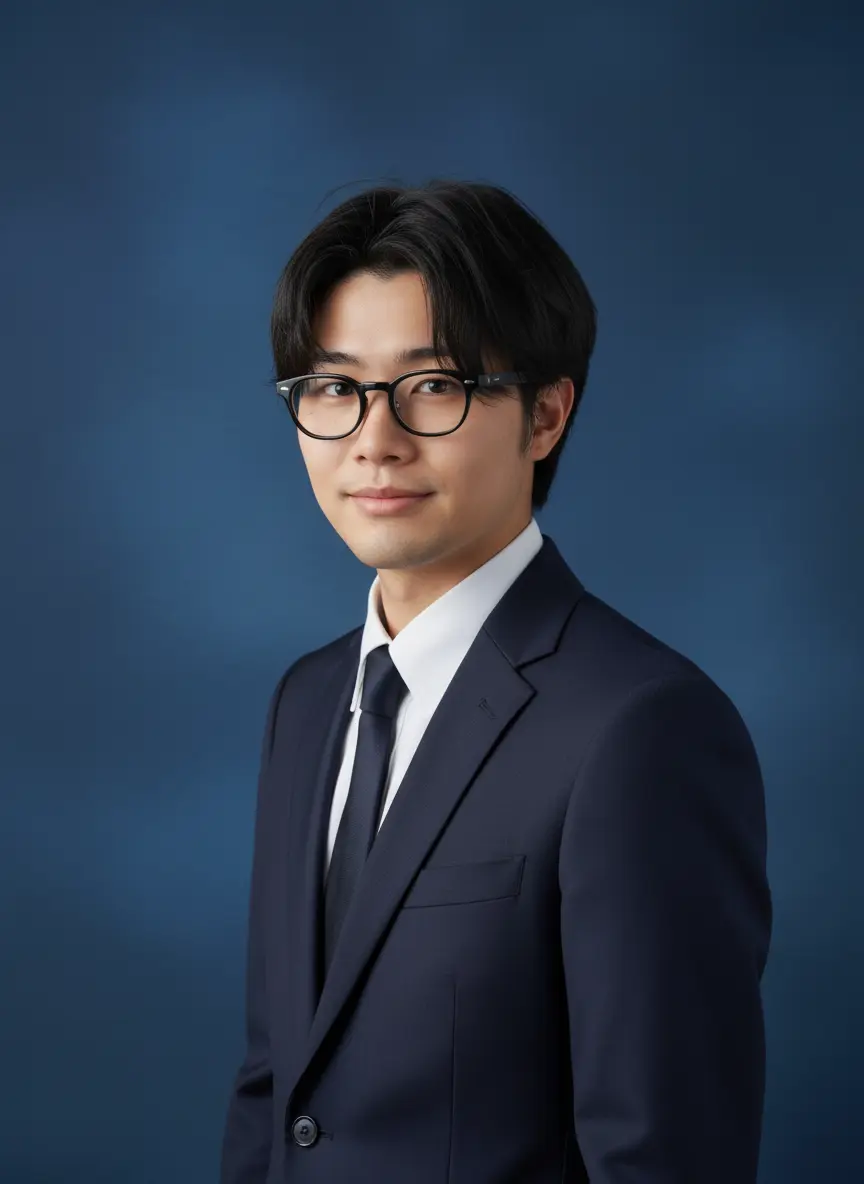
 Zhuo Huang
· 2 previous affiliations
- Adelaide UniversitySince 2026
- Postdoc · Since 2026
- Current
- The University of Sydney2022–2026
- PhD · 2022–2026
Research Overview
Zhuo Huang focuses on trustworthy machine learning, out-of-distribution generalization, and multimodal learning. His early work addressed semi-supervised learning under severe distribution shifts, evolving into robust optimization techniques for handling noisy and mismatched data. Most recently, he investigates the use of multimodal large language models to enhance visual robustness and explores mechanisms for selective unlearning in foundation models.
Research Trajectory
His early research concentrated on semi-supervised learning (SSL) in environments characterized by severe distribution shifts. He introduced Universal Semi-Supervised Learning, which addressed the open-set problem where both class and feature distributions differ significantly between labeled and unlabeled datasets. Building on the challenge of mismatched classes, he developed methods to salvage value from out-of-distribution (OOD) data rather than simply discarding it, as detailed in They are Not Completely Useless: Towards Recycling Transferable Unlabeled Data for Class-Mismatched Semi-Supervised Learning.
This interest in leveraging OOD data naturally extended into causal and generative approaches. He proposed Harnessing Out-Of-Distribution Examples via Augmenting Content and Style, utilizing a variational inference framework to causally disentangle content and style features. This separation allowed the model to distinguish between benign OOD instances that enhance learning and malign instances that degrade performance.
To further bridge the generalization gap between small labeled datasets and massive unlabeled corpora, he explored the geometry of the loss landscape. He developed FlatMatch: Bridging Labeled Data and Unlabeled Data with Cross-Sharpness for Semi-Supervised Learning, a framework that minimizes a novel cross-sharpness measure to locate stable regions in the loss landscape that generalize across both data types. The focus on landscape geometry also informed his approach to severe data corruptions. In Robust Generalization Against Photon-Limited Corruptions via Worst-Case Sharpness Minimization, he addressed rare, noisy distributions by penalizing the sharpness of the worst-case distribution, offering a smoother alternative to traditional distributionally robust optimization.
Expanding his work on robust optimization, he later investigated techniques to improve invariant learning. He introduced the EVIL method in Winning Prize Comes from Losing Tickets: Improve Invariant Learning by Exploring Variant Parameters for Out-of-Distribution Generalization. This work demonstrated that actively exploring "variant" parameters—those highly sensitive to distribution shifts—can guide the pruning of subnetworks to achieve better OOD generalization.
As multimodal large language models (MLLMs) emerged, his trajectory shifted toward utilizing their reasoning capabilities to enhance model robustness and correct label noise. He proposed Machine Vision Therapy: Multimodal Large Language Models Can Enhance Visual Robustness via Denoising In-Context Learning, a framework where MLLMs automatically identify and rectify errors in specialized vision models deployed in OOD scenarios. This work contributes to the broader research area of Overcoming Spurious Contextual Correlations in Visual Models and intersects with the direction of Noise Transition Matrix Estimation for Noisy Labels. Collaborating on related challenges, he contributed to NoiseGPT: Label Noise Detection and Rectification through Probability Curvature, which leverages the probability curvature of MLLM predictions under perturbation to detect and correct mislabeled image data.
Most recently, his research has pushed the boundaries of multimodal learning and the trustworthy deployment of foundation models. He addressed the challenge of generalizing to entirely new sensory modalities without paired data in Towards Out-of-Modal Generalization without Instance-level Modal Correspondence, introducing the Connect&Explore (COX) framework. Concurrently, with collaborators, he investigated the mechanics of machine unlearning in Exploring Criteria of Loss Reweighting to Enhance LLM Unlearning. By identifying saturation and importance criteria, this work enables models to selectively erase specific data without losing their general intelligence, advancing the research direction of Preserving Model Utility During Machine Unlearning.
Current Directions
The most recent papers in the evidence indicate a strong focus on the trustworthy deployment and generalization of foundation models. One major current direction involves out-of-modal generalization, where models are trained to transfer knowledge from known modalities (such as text or vision) to entirely new sensory inputs without relying on expensive, instance-level paired data.
Concurrently, recent work investigates the mechanisms of machine unlearning in large language models. By analyzing loss reweighting criteria like token importance and learning saturation, this research seeks to selectively erase specific knowledge while preserving the model's broader reasoning capabilities. Additionally, there is an ongoing effort to harness the in-context learning abilities of multimodal models to automatically detect label noise and provide high-quality supervision for smaller, specialized architectures in out-of-distribution environments.
Profile updated
Loading new papers…
Other researchers whose papers cluster into the same research directions — a proxy for overlapping technical interests and shared intellectual neighborhoods.
See something wrong? Report a mistake