

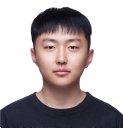
 Zhuo Chen
· 5 previous affiliations
- Tencent Hunyuan3DCurrent
- Current
- Tencent (China)2024–2026
- Researcher · 2024–2026
- Sensetime (China)2018–2024
- Researcher · 2023–2024
- Intern · 2018–2021
- Huawei Technologies (China)2021–2023
- Postdoc · 2021–2023
- Institute of Automation2015–2021
- PhD student · 2015–2021
15 other authors named Zhuo Chen: Zhuo Chen (Zhejiang University · 114 papers), Zhuo Chen (Massachusetts Institute of Technology · 19 papers), Zhuo Chen (11 papers), Zhuo Chen (University of Birmingham · 8 papers), Zhuo Chen (ShanghaiTech University · 8 papers), and 10 more
Research Overview
Zhuo Chen focuses on 3D generative modeling, representation learning, and efficient neural architectures. His early research addressed cross-model feature alignment and efficient inference through expert routing. Recently, his work has concentrated on advancing 3D asset generation, exploring techniques for high-quality mesh synthesis, topological refinement, and physics-grounded virtual environments.
Research Trajectory
Chen's early research investigated feature alignment and representation learning. He introduced the R3 Adversarial Network for Cross Model Face Recognition, addressing the challenge of making features comparable across different models due to frequent updates and varying platforms. Utilizing a Bayesian modeling perspective and adversarial learning to align incompatible latent spaces, this work contributed to the research direction of Backward Compatible Representation Learning for Large Scale Retrieval and the broader area of Reconstructing Faces from Biometric Embeddings. The methodology also touches upon the area of Controlling Language Models Through Latent Space Interventions.
Building on his interest in model efficiency, Chen subsequently explored routing mechanisms and ensemble techniques. With collaborators, he developed Collaboration of Experts: Achieving 80% Top-1 Accuracy on ImageNet with 100M FLOPs. This framework pools the expertise of multiple networks, using a delegator to select experts and support early termination. This research advanced the area of Why Theoretical FLOPs Fail to Predict Real Latency and provided insights relevant to the direction of Dynamic Architecture Expansion for Continual Learning.
In recent years, Chen's focus has shifted significantly toward 3D generative modeling and the synthesis of production-ready virtual assets. He has participated in several collaborative efforts to improve the topological quality and efficiency of 3D mesh generation. In FreeMesh: Boosting Mesh Generation with Coordinates Merging, he contributed to a training-free metric for evaluating 3D mesh tokenizers and a coordinate merging technique that improves compression and topological detail. He also collaborated on Mesh-RFT: Enhancing Mesh Generation via Fine-grained Reinforcement Fine-Tuning, a reinforcement learning framework designed to fix local geometric errors at the face level, which intersects with work in the direction of Accelerating Transformer Inference for Real-Time Deployment.
Continuing this trajectory into advanced 3D representations, Chen contributed to QuadGPT: Native Quadrilateral Mesh Generation with Autoregressive Models, an end-to-end framework for generating quadrilateral meshes directly from point clouds to preserve clean edge flow. Addressing the texturing pipeline, he was part of the team that developed ArtUV: Artist-style UV Unwrapping, a deep learning approach that automates the creation of semantically sensible and space-efficient 2D texture maps.
His most recent collaborative work expands beyond static geometry into interactive and semantically grounded 3D environments. In PhysForge: Generating Physics-Grounded 3D Assets for Interactive Virtual World, he helped develop a two-stage framework combining vision-language models and diffusion models to generate objects with functional joints and physical properties. Finally, in Part-X-MLLM: Part-aware 3D Multimodal Large Language Model, Chen contributed to a native 3D multimodal model that formulates 3D tasks as executable programs based on part-level semantic descriptions, enabling precise, language-driven control over 3D generation and reasoning.
Current Directions
The most recent papers in the evidence indicate a strong focus on the automated generation and refinement of 3D assets for virtual environments. Current work investigates end-to-end pipelines for 3D modeling, moving from basic triangular meshes to professional-grade quadrilateral meshes and artist-style UV unwrapping. Additionally, recent research addresses the integration of physical properties and semantic understanding into 3D generation. By leveraging multimodal large language models and reinforcement learning, these efforts aim to produce interactive, physics-grounded objects and enable fine-grained, part-aware control over 3D scenes.
Profile updated
| Paper | Venue | Year |
|---|---|---|
| FreeMesh: Boosting Mesh Generation with Coordinates MergingGitHubhitcslj/ | ICML | 2025 |
Loading new papers…
Other researchers whose papers cluster into the same research directions — a proxy for overlapping technical interests and shared intellectual neighborhoods.
See something wrong? Report a mistake