

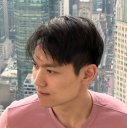
 Zhiwei Jia
· 6 previous affiliations
- Luma AISince 2025
- Researcher · Since 2025
- Character.AI2025
- Member of Technical Staff · 2025
- zoom2023–2025
- Researcher · 2023–2025
- University of California San Diego2014–2023
- PhD student · 2018–2023
- Bachelor’s Degree, Computer Science / Applied Mathematics · 2014–2017
- Research Intern · 2022
- Research Intern · 2021
Research Overview
Zhiwei Jia focuses on multi-modal generative models and Embodied AI, particularly the development of collaborative ecosystems for agents capable of complex interaction and reasoning. His work spans the optimization of deep reinforcement learning policies, hierarchical imitation learning for robot manipulation, and the alignment of large-scale diffusion models for image and video generation. Currently a Research Scientist at Luma AI, Jia’s research trajectory reflects a transition from theoretical deep learning and computer vision toward the creation of interactive world models and multimodal AI agents.
Research Trajectory
The early phase of Jia’s research, beginning around 2017, was centered on the internal mechanics of convolutional neural networks (CNNs) and the theoretical underpinnings of deep learning. During this period, he investigated how top-down control processes influence feature map transformations across network layers. This work aimed to provide a more granular understanding of CNN internal representations, moving beyond simple feed-forward classification toward controllable feature generation. Parallel to these architectural studies, Jia explored the information-theoretic properties of deep neural networks, specifically addressing the problem of generalization. By characterizing the local minima of loss landscapes, he developed regularization techniques intended to improve the robustness of models across diverse data distributions, a precursor to his later work on Automated Hyperparameter Selection.
As his doctoral work at UC San Diego progressed under the supervision of Prof. Hao Su and Prof. Zhuowen Tu, Jia’s focus shifted toward Embodied AI and the challenges of training agents in simulated environments. This transition involved addressing the Semantic Consistency Constraints for Image Translation between synthetic training data and real-world application. He participated in the development of large-scale benchmarks and frameworks for indoor scene generation, such as LUMINOUS and ManiSkill. While these projects were collaborative efforts, they provided the foundation for his independent research into task decomposition and generalizable manipulation skills. His work during this time increasingly utilized Relational Scene Graphs for Visual Reasoning to facilitate spatial reasoning and planning in complex, interactive environments.
In the middle years of his observed corpus (2021–2023), Jia concentrated on improving the efficiency of reinforcement learning (RL) and imitation learning. He introduced frameworks for policy optimization that utilize generalist-specialist architectures to overcome optimization bottlenecks in diverse task environments. This period also saw an expansion into vision-language models (VLMs) through industry research, where he applied knowledge-augmented feature adaptation to improve the understanding of complex visual content, such as image advertisements. This work bridged his interests in multimodal understanding and practical machine learning applications.
Most recently, Jia has focused on the intersection of generative AI and robot control. He developed hierarchical imitation learning methods that treat robot demonstrations as a "Chain-of-Thought," allowing agents to discover and execute high-level subskills from sub-optimal data. Following his Ph.D., his work in industry at Zoom, Character AI, and Luma AI has shifted toward the acceleration and alignment of large-scale diffusion models. This current phase involves developing differentiable surrogate rewards to fine-tune fast-generation models, aiming to align multi-modal generative outputs with human preferences and complex reward functions.
Current Directions
Jia’s current research is primarily situated in the domain of interactive video models and large-scale video generation. At Luma AI, he focuses on video-based world models, which extend generative capabilities to include interactive elements where models can simulate physical environments and agent interactions. This direction builds upon his previous work in unsupervised image-to-image (I2I) translation and Learning Object Centric Representations with Slot Attention, applying these concepts to the temporal and spatial complexities of video. A key component of this focus is the development of efficient fine-tuning methods for 10B+ parameter diffusion models, ensuring that high-fidelity generation remains computationally viable and controllable.
Representative Work
Top-down Flow Transformer Networks
In Top-down Flow Transformer Networks, Jia investigated the intrinsic transformation of feature maps across convolutional layers. The research introduced the Top-down Feature Transformer (TFT), a framework designed to account for hidden layer transformations under controllable parameters. By maintaining consistency across layers through learned generators, the work provided insights into how CNNs can be directed by top-down processes to capture feature transformations independent of specific training images. This early work established Jia’s interest in the controllability of deep neural architectures.
Information-Theoretic Local Minima Characterization and Regularization
In Information-Theoretic Local Minima Characterization and Regularization, Jia addressed the theoretical problem of generalizability in deep neural networks. The paper proposed a method to characterize local minima based on their information-theoretic properties, arguing that certain minima are more conducive to generalization than others. By developing a regularization framework grounded in these findings, Jia demonstrated how to guide the optimization process toward more robust solutions, contributing to the broader understanding of the relationship between loss landscape geometry and model performance.
Improving Policy Optimization with Generalist-Specialist Learning
Jia led the development of the Generalist-Specialist Learning (GSL) framework in Improving Policy Optimization with Generalist-Specialist Learning. This work addressed the performance plateaus encountered by deep reinforcement learning agents when tasked with mastering diverse environments. The GSL framework employs a three-phase process: training a generalist agent, spawning a population of specialists to master difficult sub-tasks, and distilling that specialized expertise back into the generalist. This approach effectively broke through optimization bottlenecks that traditional solo-agent training could not resolve.
KAFA: Knowledge-Augmented Feature Adaptation
In KAFA: Rethinking Image Ad Understanding with Knowledge-Augmented Feature Adaptation of Vision-Language Models, Jia applied vision-language models to the specific challenges of image advertisement understanding. Recognizing that standard VLMs often struggle with the nuanced, knowledge-heavy content of ads, he proposed a feature adaptation method that incorporates external knowledge. This research demonstrated how fine-tuning VLMs with augmented features can significantly improve their ability to reason about complex visual-textual relationships in specialized domains.
Chain-of-Thought Predictive Control
In Chain-of-Thought Predictive Control, Jia introduced a hierarchical imitation learning framework (CoTPC) for complex, low-level robot control tasks. The method automatically discovers high-level subskills from sub-optimal demonstrations by treating them as a "Chain-of-Thought." By predicting these subgoals alongside low-level actions using a specialized Transformer architecture, CoTPC enables robots to solve contact-rich manipulation tasks with greater robustness than standard behavior cloning methods. This work represents a significant step toward developing decision foundation models for Embodied AI.
Reward Fine-Tuning Two-Step Diffusion Models
Jia’s recent work, Reward Fine-Tuning Two-Step Diffusion Models via Learning Differentiable Latent-Space Surrogate Reward, addresses the difficulty of aligning ultra-fast, timestep-distilled diffusion models with complex rewards. He proposed LaSRO, a method that learns differentiable surrogate reward models in the latent space of models like SDXL. This allows for efficient reward fine-tuning even when the original reward functions are non-differentiable, facilitating the alignment of high-speed generative models with specific human preferences or aesthetic criteria.
Profile updated
Loading new papers…
Other researchers whose papers cluster into the same research directions — a proxy for overlapping technical interests and shared intellectual neighborhoods.
See something wrong? Report a mistake