

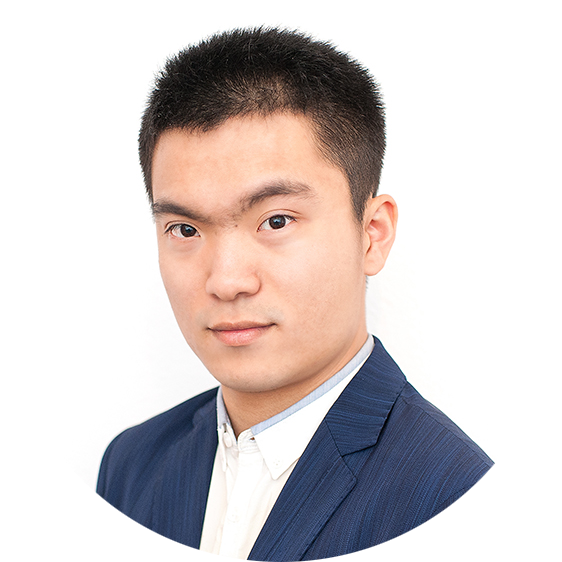
 Zhiwei Han
· 4 previous affiliations
- Technical University of MunichSince 2021
- Doctoral Researcher in Machine Learning · 2021–2026
- Master, Elektrotechnik und Elektronik · 2015–2018
- Working Student Computer Vision · 2017
- Research Internship Reinforcement Learning · 2016–2017
- Fortiss2018
- Researcher · 2018
- AVL Software and Functions GmbH2017–2018
- Internship Predictive Diagnose and Maintenance (Automotive) · 2017–2018
- Zhejiang University of Technology2010–2014
- Undergrad student · 2010–2014
Research Overview
Zhiwei Han focuses on self-supervised multi-view learning, multi-modal data analysis, and the theoretical foundations of disentangled representations. His trajectory spans early work in interactive image restoration and heterogeneous graph learning to recent theoretical advances in the identifiability of latent factors. Currently, he investigates the mathematical conditions required for provable identifiability in nonlinear representation learning.
Research Trajectory
Han's early research explored how human intuition can be integrated with deep learning for visual tasks. He introduced Interactive Image Restoration, a framework combining the pattern-matching capabilities of neural networks with human semantic input. This work contributed to the research direction of Interpretable Image Restoration and Enhancement and demonstrated the utility of Untrained Neural Networks as Structural Priors. By bringing humans into the loop, the system achieved higher restoration quality, aligning with broader efforts in the area of Empirical Validation of Interactive Visual Analytics Systems. He further participated in related collaborative work evaluating these human-in-the-loop interfaces in Draw with me: human-in-the-loop for image restoration.
Concurrently, Han investigated representation learning on complex graph structures. He developed Metapath- and Entity-aware Graph Neural Network for Recommendation, a framework designed to explicitly model the sequential semantics of multi-hop connections. By integrating metapath-aware information aggregation with a contrastive regularizer, this approach captured complex collaborative signals, advancing the area of Multi-View Decomposition for Heterogeneous Graph Learning and intersecting with work in Subgraph Reasoning for Inductive Link Prediction. Continuing in the domain of graph analysis, he contributed to Unsupervised Learning of Joint Embeddings for Node Representation and Community Detection, which proposed a generative model to constrain node embeddings such that connected nodes share similar community assignments.
By 2023, Han's focus shifted toward the theoretical foundations of representation learning, particularly disentanglement and 3D scene reconstruction. With collaborators, he formalized Towards a Unified Framework of Contrastive Learning for Disentangled Representations. This theoretical work relaxed restrictive traditional assumptions, proving that various contrastive learning objectives can successfully disentangle underlying factors even when those factors are statistically dependent. This analysis provided a rigorous basis for the research direction of Scaling Disentangled Representations to High Dimensional Real World Data. In parallel, he explored object-centric representations in dynamic scenes, introducing Symmetry-based Learning of Radiance Fields for Rigid Objects. By leveraging group symmetry and a canonical object field representation, this method enabled the disentanglement and reconstruction of individual objects without requiring manual annotations.
Most recently, Han has concentrated on the mathematical identifiability of latent factors in nonlinear models. He co-authored Mechanistic Independence: A Principle for Identifiable Disentangled Representations, which proposed shifting the foundation of representation learning from statistical independence to mechanistic independence—characterizing latent factors by how they act on observations rather than how they are distributed. This perspective proved that latent factors can be uniquely recovered even under non-invertible mixing. Building on these themes of identifiability, he established sufficient conditions for recovering ground-truth latent factors in Provable Affine Identifiability of Nonlinear CCA under Latent Distributional Priors. By transporting the analysis from the observation space to the source space, this work proved affine identifiability for nonlinear Canonical Correlation Analysis under specific distributional priors and demonstrated the necessity of whitening for well-conditioned mappings.
Current Directions
The most recent papers in the evidence address the theoretical guarantees of representation learning, specifically focusing on the identifiability of latent factors in nonlinear and multi-view settings. Recent work investigates how to uniquely recover ground-truth variables without relying on restrictive assumptions of statistical independence. By exploring concepts such as mechanistic independence and latent distributional priors, this research aims to establish rigorous mathematical conditions under which models like nonlinear Canonical Correlation Analysis (CCA) and disentangled representation frameworks can provably identify underlying causal factors, even when the data-generating processes are complex, correlated, or non-invertible.
Profile updated
Loading new papers…
Other researchers whose papers cluster into the same research directions — a proxy for overlapping technical interests and shared intellectual neighborhoods.
See something wrong? Report a mistake