

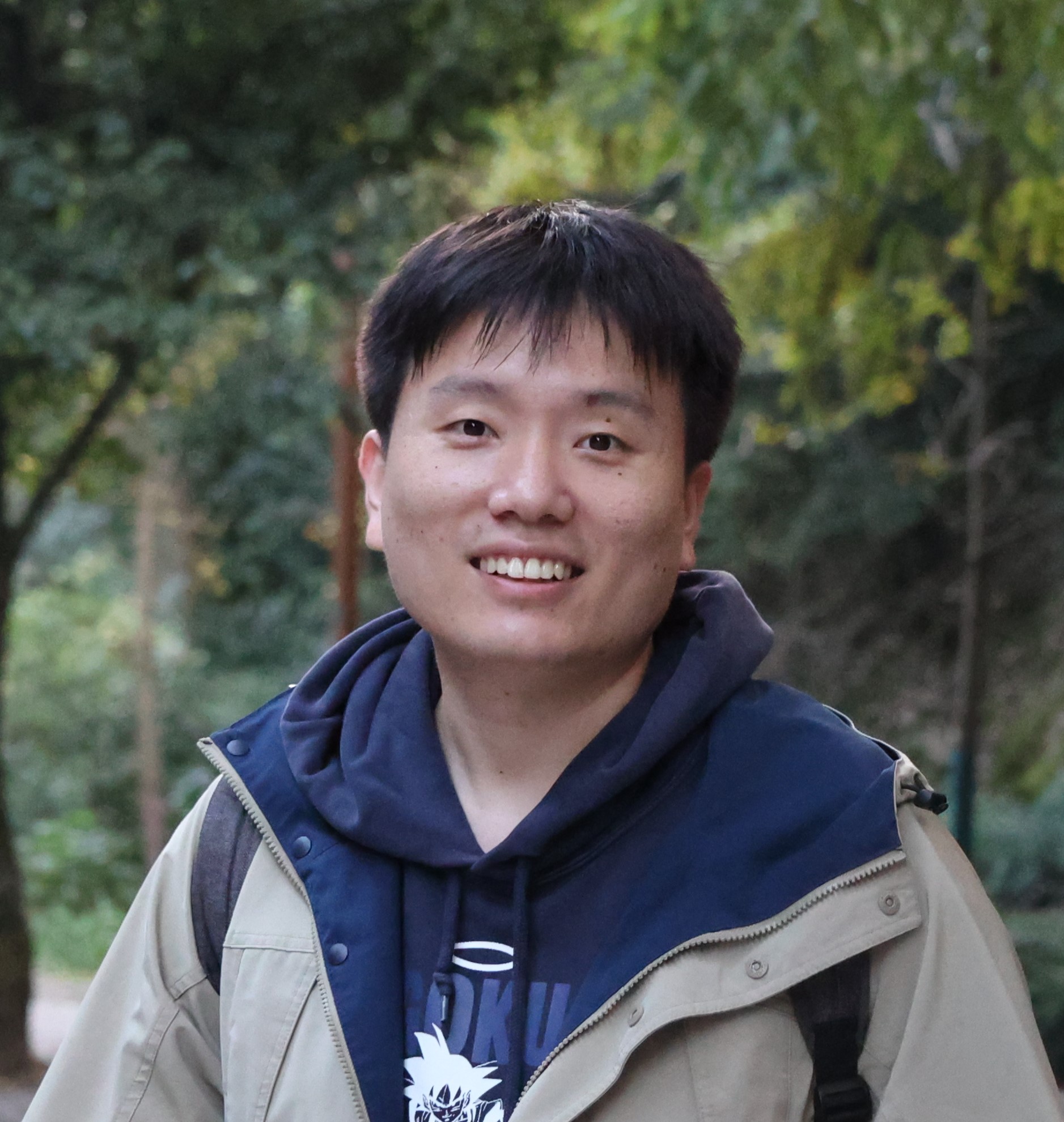
 Zhipeng Wei
3 previous affiliations
- Postdoc · 2024–2026
- Fudan University2021–2024
- PhD student · 2021–2024
- Jilin University2013–2020
- MS student · 2017–2020
- Undergrad student · 2013–2017
1 other author named Zhipeng Wei: Zhipeng Wei (Shanghai University · 1 paper)
Research Overview
Zhipeng Wei focuses on the robustness of deep learning systems, adversarial transferability, and the security of large-scale models. His early work explored black-box adversarial attacks and cross-modal vulnerabilities in computer vision and video recognition architectures. More recently, his research addresses the safety and alignment of generative artificial intelligence, investigating jailbreak defenses, concept erasure, and multimodal efficiency in large language models.
Research Trajectory
Zhipeng Wei’s early research began in applied computer vision, including work on large-scale image classification systems such as DietLens-Eout: Large Scale Restaurant Food Photo Recognition. He quickly transitioned to focusing on the vulnerabilities of these visual systems, particularly in the context of video recognition. He introduced a novel black-box attack method in Heuristic Black-Box Adversarial Attacks on Video Recognition Models, which intelligently selected key frames and salient regions to significantly reduce the number of queries required to fool a model. This work established his foundational contributions to the research direction of Adversarial Robustness in the Temporal Dimension.
By 2022, his focus expanded significantly into the mechanics of adversarial transferability—the ability of an attack crafted on one model to successfully deceive another unseen model. He developed a dual-attack framework in Towards Transferable Adversarial Attacks on Vision Transformers that bypassed attention gradients and sub-sampled image patches to boost attack success rates against both Vision Transformers and convolutional networks. This advanced the broader area of Enhancing Adversarial Transferability for Black Box Attacks. In parallel, he investigated the role of input diversity, revisiting standard techniques in Rethinking Data Augmentation for Improving Transferable Targeted Attacks to demonstrate how restricted diversity limits targeted transferability.
Wei also extended these transferability principles to the temporal and cross-modal domains. He designed a "Temporal Translation" attack in Boosting the Transferability of Video Adversarial Examples via Temporal Translation, which optimized perturbations across temporally shifted video versions to prevent overfitting to a specific model's temporal dynamics. Pushing this further, he explored cross-modal vulnerabilities in Cross-Modal Transferable Adversarial Attacks from Images to Videos, demonstrating that adversarial perturbations generated on standard image models could successfully compromise black-box video recognition systems by disrupting intermediate feature similarities. Continuing to refine targeted attacks, he incorporated image locality to generate transferable examples in Incorporating Locality of Images to Generate Targeted Transferable Adversarial Examples, contributing to the research areas of Universal Adversarial Perturbations as Dominant Features and Real-Time Adversarial Generation without Iterative Optimization.
In 2023, he introduced a method to make adversarial perturbations agnostic to local image regions in Enhancing the Self-Universality for Transferable Targeted Attacks. By maximizing feature similarity between a global image and its local crops, this approach improved targeted attack success rates without requiring auxiliary networks, furthering work in the area of Input Agnostic Universal Adversarial Perturbations. He later revisited the mechanics of visual attention in these attacks with What Do Visual Models Look At? Dilated Attention for Targeted Transferable Attacks.
As generative AI and large language models (LLMs) became central to the field, Wei’s trajectory shifted toward the safety, alignment, and robustness of these foundational models. With collaborators, he investigated the removal of inappropriate or copyrighted content in Reliable and Efficient Concept Erasure of Text-to-Image Diffusion Models. This framework iteratively identified and erased adversarial embeddings without traditional fine-tuning, aligning with the growing research direction of Preserving Model Utility During Machine Unlearning.
His recent work has uncovered critical vulnerabilities in the safety mechanisms of LLMs. In Emoji Attack: Enhancing Jailbreak Attacks Against Judge LLM Detection, he demonstrated how systematically inserting emojis disrupts tokenization, causing safety filters to misclassify harmful content. To counter sophisticated adversarial strategies, he helped develop a defense against multi-turn jailbreaks in D-Judge: Disrupting Multi-Turn Jailbreaks using Semantics-Preserving Output Rewriting. By subtly rewriting the model's responses to distort their perceived harmfulness to an automated judge, this method breaks the iterative feedback loops attackers rely on. Additionally, he has addressed the computational bottlenecks of multimodal models; in EchoingPixels: Aliasing-Resistant Joint Token Reduction for Audio-Visual LLMs, he collaborated on techniques to compress intertwined audio and visual tokens without losing temporal coherence.
Current Directions
The most recent papers in the evidence indicate a strong focus on the security, alignment, and efficiency of large language and multimodal models. A primary theme is the adversarial robustness of LLM safety guardrails, specifically investigating how tokenization biases and multi-turn interactions can be exploited to bypass moderation systems. This includes developing defensive frameworks that disrupt automated red-teaming and jailbreak attempts by manipulating the evaluation feedback loop.
Alongside model security, current work addresses the architectural efficiency of audio-visual LLMs. As these models scale to process complex, intertwined sensory inputs, research is directed toward sophisticated token reduction strategies that alleviate memory constraints while preserving the critical temporal alignment between visual and auditory data streams.
Profile updated
Loading new papers…
Other researchers whose papers cluster into the same research directions — a proxy for overlapping technical interests and shared intellectual neighborhoods.
See something wrong? Report a mistake