

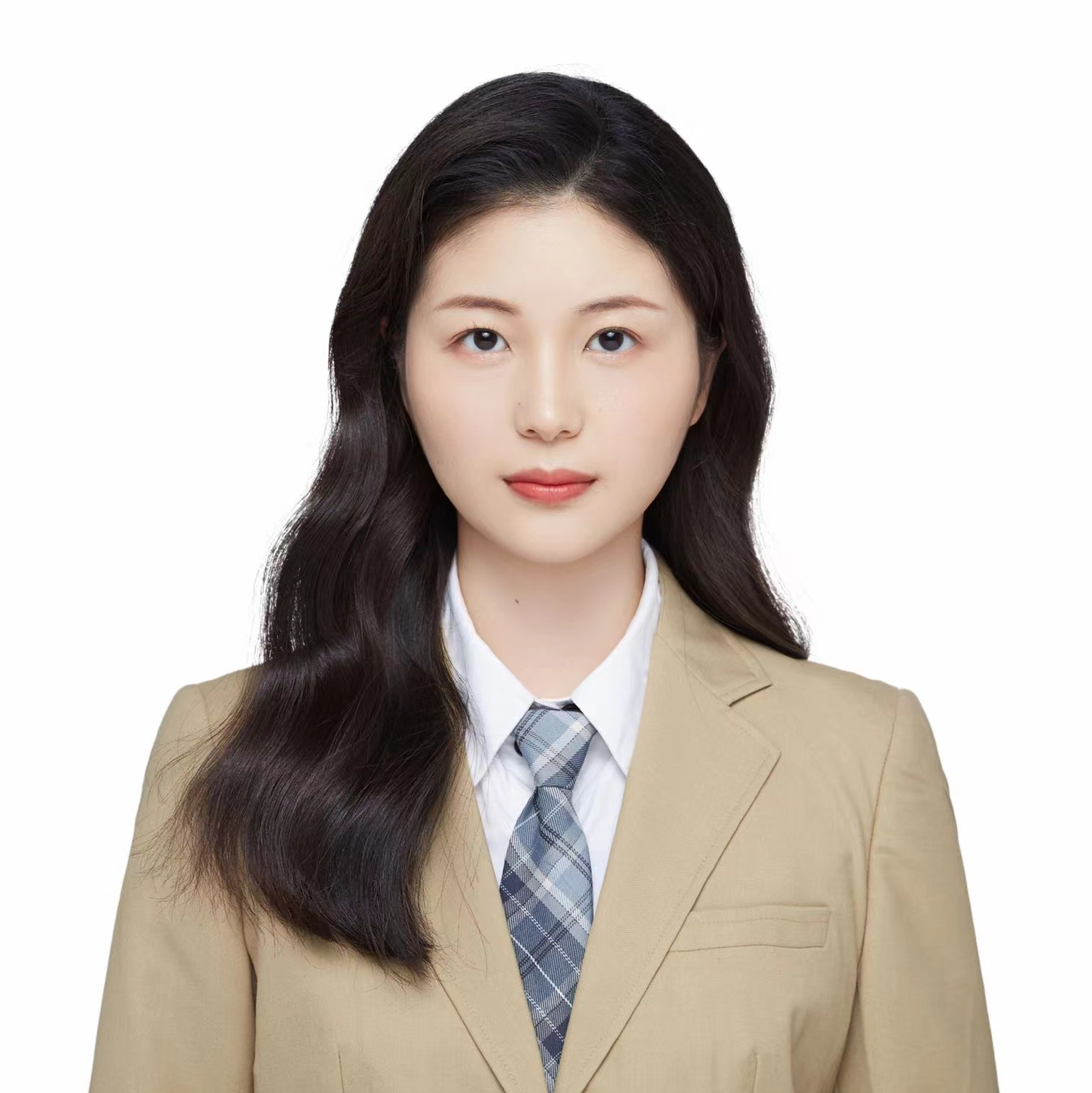
 Zhijing Wu
· 2 previous affiliations
- Beijing Institute of TechnologySince 2022
- Assistant Professor · Since 2022
- Tsinghua University2013–2022
- PhD student · 2017–2022
- Undergrad student · 2013–2017
1 other author named Zhijing Wu: Zhijing Wu (2 papers)
Research Overview
Zhijing Wu focuses on information retrieval, natural language processing, and user behavior modeling. His early research investigated how users interact with search engines at a fine-grained level, leading to improved document ranking and relevance estimation. Currently, he explores the integration of large language models into retrieval systems, personalized dialogue generation, and the detection of machine-generated text.
Research Trajectory
Zhijing Wu’s early research centered on understanding user behavior in search environments, with a particular emphasis on how visual and textual presentations influence satisfaction and relevance judgments. His initial investigations into multimedia retrieval included A Study of User Image Search Behavior Based on Log Analysis, which laid the groundwork for deeper explorations into user perception. He subsequently led laboratory studies to examine how near-duplicate results and visual factors impact users, detailing these findings in Does Diversity Affect User Satisfaction in Image Search.
Transitioning from image search to textual information retrieval, Wu began analyzing how users read and process text at a granular level. He introduced new methodologies for evaluating search systems in Investigating Passage-level Relevance and Its Role in Document-level Relevance Judgment. To better understand the cognitive processes underlying these judgments, he leveraged eye-tracking data in Investigating Reading Behavior in Fine-grained Relevance Judgment. This line of inquiry culminated in the development of context-aware ranking models, as presented in Leveraging Passage-level Cumulative Gain for Document Ranking, which modeled how information gain accumulates as users sequentially read passages.
As his research expanded into broader natural language processing tasks, Wu applied his expertise in reading comprehension and user behavior to new domains. He guided the development of systems designed to filter noise and extract complex relationships, such as the framework detailed in A Multi-turn Machine Reading Comprehension Framework with Rethink Mechanism for Emotion-Cause Pair Extraction. Returning to search behavior, he addressed the shift toward mobile platforms by conducting lab-based studies to identify position and selection biases, proposing new models in A Passage-Level Reading Behavior Model for Mobile Search. During this period, he also oversaw work on foundational NLP techniques, including A Semantically Driven Hybrid Network for Unsupervised Entity Alignment, and contributed to collaborative efforts modeling conversational context in A multi-level multi-task progressive framework based on relational graph convolutional networks for causal emotion entailment.
In recent years, Wu’s trajectory has increasingly focused on the intersection of large language models (LLMs) and information retrieval. He explored the use of LLMs to enhance specialized search tasks in Boosting legal case retrieval by query content selection with large language models. To address the computational bottlenecks of retrieval-augmented generation, his team developed FlashBack: Efficient Retrieval-Augmented Language Modeling for Fast Inference, a modular system that optimizes Key-Value cache usage. He also advanced the capabilities of conversational agents by designing the PALACE framework in A Persona-Aware LLM-Enhanced Framework for Multi-Session Personalized Dialogue Generation, which maintains consistent AI personalities across extended interactions.
Alongside improving LLM capabilities, Wu has actively investigated the trustworthiness and societal impact of generated content. He led research into identifying factual inaccuracies without task-specific training in Training-free Truthfulness Detection via Value Vectors in LLMs, exploiting statistical patterns within Transformer MLP modules to evaluate factual recall. Similarly, he developed zero-shot detection methods for machine-generated text in Zero-Shot Detection of LLM-Generated Text via Implicit Reward Model, demonstrating that text alignment with human preferences can be measured by comparing output probabilities between instruction-tuned and base models. His recent work continues to refine complex retrieval tasks, as seen in the temporal aggregation strategies proposed in Subtopic-aware View Sampling and Temporal Aggregation for Long-form Document Matching. Furthermore, Wu has participated in interdisciplinary studies examining how digital content consumption affects human cognition. His collaborative work in EEG reveals the cognitive impact of polarized content in short video scenarios bridges behavioral signals and brain activity, contributing to the research direction of Differential Entropy for EEG Based Emotion Recognition and the broader area of Multimodal Sensing of Internal Human States.
Current Directions
Recent work investigates the efficiency, trustworthiness, and personalization of large language models in complex retrieval and conversational settings. A primary focus is the development of training-free and zero-shot methodologies to detect machine-generated text and evaluate the factual truthfulness of LLM outputs by analyzing internal model activations. Additionally, ongoing research addresses the computational challenges of retrieval-augmented language modeling, seeking to optimize inference speeds without sacrificing performance. In the domain of conversational AI, current efforts explore memory-augmented frameworks designed to maintain persona consistency across multi-session dialogues. Finally, advanced document matching techniques continue to be a key theme, particularly the use of subtopic-aware sampling to improve retrieval performance for long-form texts in specialized domains like legal and news search.
Profile updated
Loading new papers…
Other researchers whose papers cluster into the same research directions — a proxy for overlapping technical interests and shared intellectual neighborhoods.
See something wrong? Report a mistake