

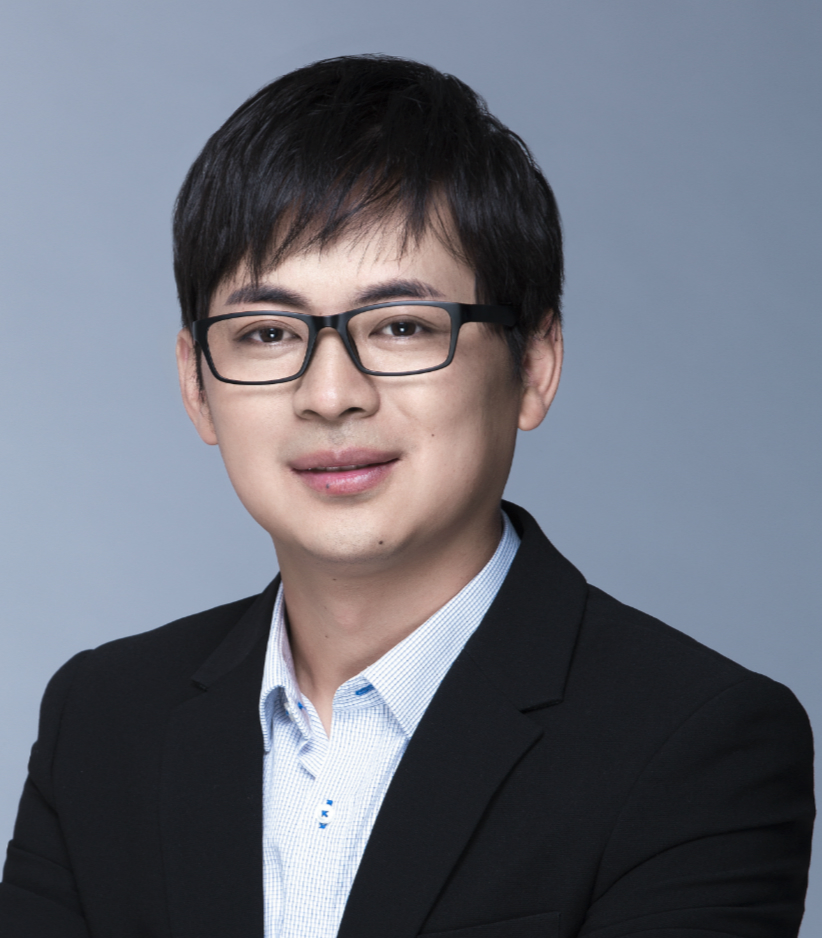
 Zhidan Liu
· 6 previous affiliations
- Assistant Professor · Since 2024
- Current
- Shenzhen University2017–2024
- Associate Professor · 2022–2024
- Assistant Professor · 2017–2022
- Nanyang Technological University2015–2017
- Postdoc · 2015–2017
- Zhejiang University2009–2014
- PhD student · 2009–2014
- Northeastern University2005–2009
- Undergrad student · 2005–2009
1 other author named Zhidan Liu: Zhidan Liu (Beijing Institute of Technology · 2 papers)
Research Overview
Zhidan Liu focuses on urban computing, intelligent transportation systems, and spatial-temporal data mining. His research leverages deep learning and mobility data to optimize city-scale services, from traffic prediction and taxi dispatching to ride-hailing recommendations. Recently, his work investigates advanced machine learning techniques, including domain adaptation and federated learning, to enhance urban sensing and cross-domain generalization.
Research Trajectory
His early work explored the application of emerging deep learning techniques to urban mobility challenges. In 2018, he outlined frameworks for extracting hidden traffic characteristics from historical mobility data in Urban Traffic Prediction from Mobility Data Using Deep Learning, focusing on the prediction of traffic speed and flow. He subsequently expanded this approach to region-level forecasting with DeepRTP: A Deep Spatio-Temporal Residual Network for Regional Traffic Prediction, introducing a Traffic State Index to measure and predict broader regional conditions. Concurrently, he investigated the logistics of urban sensing, developing UniTask: A Unified Task Assignment Design for Mobile Crowdsourcing-Based Urban Sensing to optimize multiple performance metrics simultaneously in crowdsourced data collection. He also contributed to human-centric sensing applications, participating in the development of a wearable system for 3D arm skeleton tracking in Real-time Arm Skeleton Tracking and Gesture Inference Tolerant to Missing Wearable Sensors.
Between 2020 and 2022, a major theme of his research involved optimizing ride-hailing and taxi operations. He introduced a mobility-aware dynamic taxi ridesharing approach in Mobility-Aware Dynamic Taxi Ridesharing, which he later expanded into a comprehensive framework in mT-Share: A Mobility-Aware Dynamic Taxi Ridesharing System. This system uniquely incorporated offline passengers—those hailing taxis at the roadside without submitting explicit requests—into the matching process to improve overall efficiency. To address demand-supply gaps across city locations, he developed a context-aware taxi dispatching framework using deep reinforcement learning in Context-Aware Taxi Dispatching at City-Scale Using Deep Reinforcement Learning. During this period, he also synthesized broader concepts in the field, authoring the book Mobility Data-Driven Urban Traffic Monitoring.
His subsequent research tackled the underlying data quality and representation challenges inherent in mobility systems. He addressed the sparsity and cold-start problems in GPS trajectory mining with $\mathtt {Radar}$: Adversarial Driving Style Representation Learning With Data Augmentation. To improve the raw accuracy of location data, he designed DeepGPS: Deep Learning Enhanced GPS Positioning in Urban Canyons, a system that corrects non-line-of-sight signal reflections using contextual information rather than relying on proprietary 3D city models. Returning to ride-hailing applications, he developed Data-Driven Pick-Up Location Recommendation for Ride-Hailing Services, a recommendation system that leverages riders' specific mobility demands and historical experiences to suggest optimal meeting points.
Most recently, his work has incorporated distributed and generalized machine learning techniques for mobile environments. He collaborated on hierarchical clustered federated learning to handle non-IID data in Towards Hierarchical Clustered Federated Learning With Model Stability on Mobile Devices, as well as domain generalization for activity recognition using conditional diffusion models in Diverse Intra- and Inter-Domain Activity Style Fusion for Cross-Person Generalization in Activity Recognition. Extending these advanced learning paradigms to his core focus on urban mobility, he introduced a fine-grained transfer learning approach for traffic flow prediction in data-scarce environments with Regional Knowledge Transfer for Urban Traffic Flow Prediction via Satellite Imagery Assisted Contrastive Domain Adaptation.
Current Directions
The most recent papers in the evidence address the challenges of data scarcity, domain generalization, and distributed learning in urban and mobile computing. Work in this area investigates how to transfer knowledge across different city regions using satellite imagery and contrastive domain adaptation to improve traffic flow prediction where historical data is limited. Additionally, recent collaborative efforts focus on enhancing model stability in clustered federated learning for mobile devices and utilizing diffusion models to synthesize diverse data for cross-person activity recognition. These directions collectively aim to make urban sensing and mobility models more robust, scalable, and adaptable to environments with heterogeneous or restricted data.
Profile updated
Loading new papers…
Loading research neighbors…
See something wrong? Report a mistake