

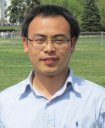
 Zhibo Wang
· 2 previous affiliations
- Zhejiang UniversitySince 2021
- Full Professor · Since 2021
- Wuhan University2014–2020
- Full Professor · 2018–2020
- Associate Professor · 2014–2018
1 other author named Zhibo Wang: Zhibo Wang (StepFun AI (China) · 15 papers)
Research Overview
Zhibo Wang focuses on privacy-preserving systems, adversarial machine learning, and the safety of large language models. His early research addressed differential privacy and secure communication in mobile networks before expanding into algorithmic fairness and deepfake detection. Currently, his work investigates the internal mechanisms of foundation models to develop robust guardrails, certifiable unlearning techniques, and secure federated learning frameworks.
Research Trajectory
Zhibo Wang's early research concentrated on privacy-preserving mechanisms in mobile and wireless networks. In 2011, he explored privacy in social applications with Friendbook: privacy preserving friend matching based on shared interests, a system that matched users based on extracted image features rather than raw photos to conserve smartphone resources and protect user privacy. He subsequently investigated physical layer security in wireless communications, demonstrating in Walls Have Ears! Opportunistically Communicating Secret Messages Over the Wiretap Channel: from Theory to Practice (2015) that near-perfect secrecy could be achieved with practical codeword lengths by leveraging the inherent randomness of wireless channels. This focus on data protection extended to mobile crowdsensing, where he developed frameworks for real-time, spatio-temporal data publishing using differential privacy in RescueDP: Real-time spatio-temporal crowd-sourced data publishing with differential privacy (2016) and further refined these concepts in Personalized Privacy-Preserving Task Allocation for Mobile Crowdsensing (2019).
Moving into the 2020s, Wang's focus shifted toward the intersection of computer vision, adversarial machine learning, and algorithmic fairness. He introduced AdvFace in Privacy-preserving Adversarial Facial Features (2023), a plugin that injects adversarial latent noise into facial embeddings to prevent unauthorized image reconstruction while maintaining recognition accuracy. Addressing the unintended biases often introduced during model compression, he developed a framework in Towards Fairness-aware Adversarial Network Pruning (2023) that treats pruning as an adversarial game, yielding highly compressed models with significantly improved fairness. He continued to tackle bias in Towards Real-world Debiasing: Rethinking Evaluation, Challenge, and Solution (2024), noting that real-world biases are often sparse rather than dense. To address this gap, he proposed the RDBench evaluation framework and a "Debias in Destruction" method that forces models to identify subtle biases by intentionally degrading primary features. During this period, he also contributed to deepfake detection against quality degradation in ProFake: Detecting Deepfakes in the Wild against Quality Degradation with Progressive Quality-adaptive Learning (2024) and explored privacy-preserving model evaluation in DAAP: Privacy-Preserving Model Accuracy Estimation on Unlabeled Datasets Through Distribution-Aware Adversarial Perturbation (2024).
More recently, Wang has extensively investigated the security, interpretability, and alignment of foundation models, particularly contributing to the broader research direction of Adversarial Robustness and Knowledge Erasure in Aligned Language Models. In JailbreakLens: Interpreting Jailbreak Mechanism in the Lens of Representation and Circuit (2024), he provided a mechanistic interpretability framework revealing how jailbreak attacks bypass safety guardrails by shifting harmful inputs into safe representation clusters. Building on these internal mechanisms, he developed Sparse Representation Steering (SRS) in Towards LLM Guardrails via Sparse Representation Steering (2025), utilizing sparse autoencoders to surgically enhance model safety and truthfulness without degrading general capabilities.
His work on model security also encompasses backdoor detection and machine unlearning. As a principal investigator, he led the development of ICLScan: Detecting Backdoors in Black-Box Large Language Models via Targeted In-context Illumination (2025), a black-box framework that identifies compromised models by exploiting their heightened susceptibility to temporary, in-context backdoor injections. In the domain of unlearning, he collaborated on Textual Unlearning Gives a False Sense of Unlearning (2025), demonstrating that inexact unlearning methods can paradoxically act as privacy leaks. To provide stronger guarantees, he participated in designing PRUNE: A Patching Based Repair Framework for Certifiable Unlearning of Neural Networks (2025), which uses localized network patches to certifiably falsify predictions on deleted data.
Concurrently, Wang has advanced secure and efficient federated learning. He co-authored AFLoRA: Adaptive Federated Fine-Tuning of Large Language Models with Resource-Aware Low-Rank Adaption (2025), a framework that dynamically adjusts LoRA ranks based on client hardware, significantly reducing communication costs. He also contributed to a comprehensive systematization of knowledge in SoK: On Gradient Leakage in Federated Learning (2025), analyzing the practical fragility of gradient inversion attacks. Extending his security research to generative computer vision, his group introduced Attack-Resistant Watermarking for AIGC Image Forensics via Diffusion-based Semantic Deflection (2026), a training-free framework that steers the diffusion process to embed robust, provenance-aware watermarks capable of localizing semantic tampering.
Current Directions
Based on the most recent papers in the evidence, Wang's current research focuses heavily on the security, efficiency, and provenance of generative AI systems. A major theme is the mechanistic control and safety of large language models, where he is exploring how internal representations can be steered or patched to enforce guardrails and certifiably unlearn sensitive data without degrading model performance. Additionally, he is actively investigating resource-efficient federated fine-tuning methods for foundation models and developing robust, attack-resistant watermarking techniques for AI-generated content to ensure reliable image forensics and provenance tracking.
Profile updated
Loading new papers…
Other researchers whose papers cluster into the same research directions — a proxy for overlapping technical interests and shared intellectual neighborhoods.
See something wrong? Report a mistake