

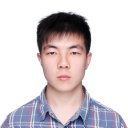
 Zhi Tu
· 4 previous affiliations
- Applied IntuitionSince 2026
- Research Intern · Since 2026
- Purdue University West LafayetteSince 2022
- PhD student · 2022–2027
- Teaching Assistant · 2023–2024
- University of Southern California2020–2022
- MS student · 2020–2022
- Teaching Assistant · 2021–2022
- ShanghaiTech University2016–2020
- Undergrad student · 2016–2020
- Teaching Assistant · 2019
Research Overview
Zhi Tu focuses on computer vision, generative modeling, and the automated validation of autonomous systems. Their work explores the intersection of multi-modal data processing and human-centric synthesis, ranging from medical image analysis and human motion generation to the creation of complex testing environments for autonomous driving systems (ADS). A recurring objective in Tu’s research is the development of frameworks that bridge the gap between high-level semantic descriptions—such as natural language or traffic rules—and low-level generative outputs, including 3D meshes, gesture sequences, and simulated traffic scenarios.
Research Trajectory
Tu’s early research in 2020 addressed specialized problems in medical imaging, specifically the simultaneous grading of diabetic retinopathy and diabetic macular edema. This work emphasized multi-task learning and interpretability, utilizing lesion-based regularization to align model behavior with clinical diagnostic practices. Following this, Tu transitioned toward human image and motion synthesis, contributing to the development of unified frameworks for human appearance transfer and motion imitation. This period was marked by a shift from 2D keypoint-based structures to 3D body mesh recovery, allowing for more precise modeling of joint rotations and personalized body shapes.
In 2021, Tu’s focus intensified on the challenges of co-speech gesture synthesis. This research addressed the Stochastic Generation for Audio Driven Motion Synthesis, where a single audio input can correspond to a vast array of valid physical movements. To mitigate the "robotic" quality often found in automated animations, Tu investigated methods to move Overcoming the Mean Pose Problem in Motion Synthesis, which tends to produce dampened, non-intentional movements. This involved exploring Semantic Alignment in Co-speech Gesture Synthesis to ensure that gestures—such as deictic or iconic movements—matched the linguistic content of speech. Furthermore, Tu’s work during this phase emphasized Rhythmic Synchronization in Cross-Modal Generation, ensuring that the physical intensity of movement synchronized with the dynamic shifts of auditory signals, while Aligning Generative Human Motion with Human Perception to improve realism beyond standard mathematical metrics like Mean Squared Error.
By 2023, Tu’s research expanded into large-scale 3D vision and neuro-symbolic learning. They participated in the creation of extensive scene-level datasets to support neural radiance field (NeRF) representations and novel view synthesis. Simultaneously, Tu explored the efficiency of data annotation in specialized domains, developing methods to infer labeling rules from minimal expert input. This neuro-symbolic approach combined pre-trained vision models with inductive logic to automate the labeling of unannotated data, particularly in fields where manual annotation is prohibitively expensive.
Current Directions
Tu’s most recent work, spanning 2024 and 2025, centers on the safety and robustness of autonomous driving systems. This research addresses the labor-intensive nature of constructing test scenarios by leveraging Large Language Models (LLMs) and multi-modal generative frameworks. Tu has focused on extracting actionable knowledge from natural language traffic rules to automatically synthesize test cases in simulators. A key challenge in this domain is mitigating LLM hallucinations and handling the ambiguity of natural language, which Tu has addressed through the design of domain-specific languages (DSLs) and the integration of complementary visual information. These current efforts aim to create high-fidelity, dynamic traffic environments that reflect the complexity of real-world driving conditions.
Representative Work
SUNet: A Lesion Regularized Model for Simultaneous Diabetic Retinopathy and Diabetic Macular Edema Grading In this first-author work, Tu proposed the Feature Separation and Union Network (SUNet) to address the clinical reality that diabetic retinopathy and diabetic macular edema are often diagnosed simultaneously. The model mimics clinician behavior by extracting shared and task-specific features from retinal images. To enhance interpretability, Tu introduced a lesion regularizer that constrains the network's focus to relevant pathological regions, improving both diagnostic accuracy and the transparency of the grading process.
Speech Drives Templates: Co-Speech Gesture Synthesis with Learned Templates As a primary contributor to this research, Tu addressed the ambiguity inherent in speech-to-gesture mapping. The proposed method utilizes learned gesture template vectors to model latent conditions, allowing the model to generate a variety of realistic upper-body movements from the same audio input. The template vector governs the general style and appearance of the gesture sequence, while the speech signal drives the specific temporal dynamics, effectively reducing the "mean pose" effect and increasing the fidelity of synthesized animations.
Rapid Image Labeling via Neuro-Symbolic Learning Tu contributed to the development of RAPID, a neuro-symbolic framework designed to accelerate image labeling in expertise-heavy domains like healthcare. The system infers logic-based labeling rules from a small set of expert-annotated examples. By combining the perceptual capabilities of deep learning with the reasoning power of inductive logic, the framework allows for the automatic labeling of large unannotated datasets with high accuracy, significantly reducing the reliance on manual crowd-sourced annotation.
DL3DV-10K: A Large-Scale Scene Dataset for Deep Learning-based 3D Vision Tu participated in the development of DL3DV-10K, a large-scale dataset designed to advance scene-level 3D vision research. Featuring over 50 million frames from more than 10,000 videos across 65 environmental categories, the dataset addresses the limitations of previous synthetic or small-scale real-world collections. This work provides a comprehensive benchmark for evaluating neural radiance fields and novel view synthesis methods, facilitating more robust 3D analysis in diverse real-world settings.
TARGET: Traffic Rule-Based Test Generation for Autonomous Driving via Validated LLM-Guided Knowledge Extraction In this research, Tu explored the use of LLMs to automate the generation of test scenarios for autonomous vehicles based on human-written traffic rules. To overcome the complexity and potential for error in natural language processing, the framework introduces a syntactically simple and compositional domain-specific language. This allows the LLM to extract and represent traffic rules in a modular fashion, which are then synthesized into executable test scenarios in simulators like CARLA, enhancing the efficiency of safety validation.
Multi-modal Traffic Scenario Generation for Autonomous Driving System Testing As first author, Tu developed TrafficComposer, a multi-modal approach for constructing traffic scenarios. The system integrates high-level dynamic information from natural language descriptions with the intricate environmental details provided by traffic scene images. By combining these modalities, TrafficComposer can generate complex, context-aware scenarios in simulators, providing a more flexible and detailed tool for the rigorous testing of autonomous driving software compared to single-modality methods.
Profile updated
| Paper | Venue | Year |
|---|---|---|
| Rapid Image Labeling via Neuro-Symbolic LearningGitHubNeural-Symbolic-Image-Labeling/ | arXiv | 2023 |
Loading new papers…
Other researchers whose papers cluster into the same research directions — a proxy for overlapping technical interests and shared intellectual neighborhoods.
See something wrong? Report a mistake