

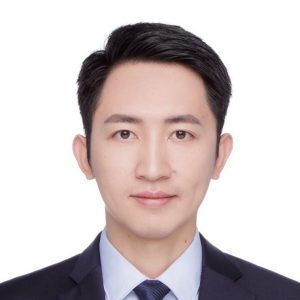
 Zhenzhen Zhang
· 4 previous affiliations
- Tongji UniversitySince 2020
- Full Professor · Since 2025
- Associate Professor · 2020–2025
- National University of Singapore2016–2020
- Assistant Professor · 2016–2020
- City University of Hong Kong2014–2016
- PhD student · 2014–2016
- Xiamen University2005–2012
- MS student · 2009–2012
- Undergrad student · 2005–2009
Research Overview
Zhenzhen Zhang focuses on management science, with particular emphasis on mixed integer programming, decision-making under uncertainty, and joint learning and optimization. Currently a Professor in the Department of Management Science at Tongji University, Zhang’s work addresses complex logistical and operational challenges, including vehicle routing and production planning. This research trajectory reflects an evolution from early investigations into information system architecture and pedagogical frameworks toward a more rigorous application of mathematical optimization and security protocols in industrial and economic contexts.
Research Trajectory
Zhang’s early work, beginning around 2006, was primarily concerned with the architecture and implementation of institutional management systems. This period focused on the practical application of object-oriented technologies and network environments to solve administrative challenges within university settings. In Design and Implementation of an Education Management System Based on.net Techniques, Zhang explored the integration of C/S and B/S architectures to support campus network environments, establishing an early interest in how structured data systems can improve organizational efficiency.
By 2010, this interest in institutional systems expanded to include the study of pedagogical outcomes and the psychological factors influencing professional environments. Zhang investigated the relationship between educator beliefs and classroom interactions, contributing to the understanding of Overcoming Resistance to Active Learning Models. This phase of research was characterized by empirical investigations into how internal beliefs and systemic structures—such as the "3-manuscript-review system" in medical journals—affect the quality and output of professional processes.
In the mid-2010s, Zhang’s focus shifted toward technical optimization and engineering problems, specifically in the domains of energy management and digital forensics. This transition marked a move toward more mathematically intensive research. Zhang participated in developing multi-objective optimization techniques for hybrid power systems, aligning with broader efforts in the Regional Adaptation of Sustainable Energy Infrastructure. Simultaneously, Zhang addressed security and integrity in digital media, developing methods to detect multiple compressions in video files, which is a critical component of video forensics.
Since 2020, Zhang has increasingly focused on high-level management science and the security of shared data environments. This recent work combines optimization theory with practical concerns in regional economics and cloud computing. Zhang has also contributed to interdisciplinary projects involving chemical synthesis and forest ecology, though these represent collaborative participations rather than core research directions in management science.
Current Directions
Zhang’s current research is centered on the intersection of optimization and security within modern industrial systems. A significant portion of this work involves developing robust algorithms for data integrity and copyright protection. In the realm of cloud computing, Zhang has focused on the challenges of dynamic group membership and data verification. By utilizing algebraic structures like the Authorization Invisible Authenticator (AIA), Zhang has sought to make the enrollment and revocation of group members more efficient without compromising the security of shared data.
In the field of management science, Zhang is actively working on Iterative Destroy and Repair for Combinatorial Optimization as applied to vehicle routing and production planning. This research aims to solve large-scale logistical problems where traditional local search methods may fail to find global optima. Furthermore, Zhang is exploring the "high-quality growth" framework in regional economics, examining how vocational education and industrial needs can be synchronized to ensure sustainable economic health.
Representative Work
Zhang’s research is documented across a diverse range of publications, reflecting a multidisciplinary approach to optimization and systems management. The following papers represent key contributions to these areas:
In Remote data possession checking scheme with supporting efficient group user authority management for shared cloud data, Zhang (as first author) introduced a novel remote data possession checking (RDPC) scheme. The work addresses the inefficiencies of existing methods in handling dynamic group memberships in cloud environments. By integrating Identity-Based Encryption (IBE) with the AIA structure, the paper provides a framework for verifying data integrity that remains secure even as users are added or removed from a group.
Addressing the intersection of education and economic policy, Zhang authored Synergistic Development of Vocational Education and Regional Economy in the Era of High-Quality Growth. This work utilizes a case study of the manufacturing sector in Zhuhai to argue for a symbiotic relationship between specialized training and local industrial requirements. The paper frames synchronized growth as a necessity for modern economic sustainability, moving beyond traditional pedagogical analysis to a broader management perspective.
Zhang’s work in technical optimization is exemplified by An Active Power Allocation Method for Wind-solar-batteries Hybrid Power System. This research formulated the power allocation problem as a multi-objective optimization task, aiming to minimize the error between output and grid demand while maximizing the utilization of wind turbine regulation. The method relies on short-term power prediction to quantify available output, demonstrating Zhang's application of optimization to complex engineering constraints.
In the domain of digital security, Zhang contributed to Detecting multiple H.264/AVC compressions with the same quantisation parameters. The paper proposes a "ratio difference set" (RDS) to identify quantized DCT coefficients that change after re-compression. This provides a discriminative statistical feature set for detecting manipulations in video content, a task that is traditionally difficult when quantization parameters remain constant across compressions.
Furthering the study of digital media protection, Zhang participated in the development of A Robust Video Watermarking Algorithm Based on Two-Dimensional Discrete Fourier Transform. This research addresses the limitations of 2D-DFT template-based methods, specifically their small embedding capacity and vulnerability to frame-dropping attacks. The proposed template construction method extends the embedding capacity, enhancing the robustness of copyright protection for digital video content.
The breadth of Zhang's collaborative work is also evident in contributions to environmental science and chemical engineering. For instance, Zhang participated in research regarding Enhanced Isohydric Behavior Decoupled the Whole-Tree Sap Flux Response to Leaf Transpiration under Nitrogen Addition in a Subtropical Forest, which monitored water transport capacity in response to nitrogen deposition. While these papers demonstrate Zhang's involvement in diverse scientific inquiries, the core of the researcher's independent work remains firmly rooted in the mathematical and systemic optimization of management processes.
Profile updated
Loading new papers…
Other researchers whose papers cluster into the same research directions — a proxy for overlapping technical interests and shared intellectual neighborhoods.
See something wrong? Report a mistake