

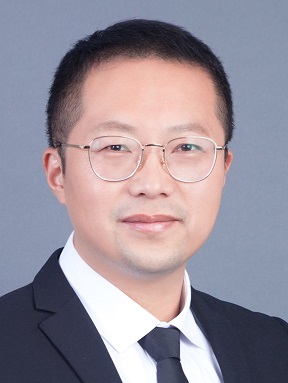
 Zhenxing Qian
· 3 previous affiliations
- Fudan UniversitySince 2017
- Full Professor · Since 2017
- Shanghai University2009–2019
- Full Professor · 2009–2019
- Undergrad student · 2003–2008
Research Overview
Zhenxing Qian focuses on multimedia security, artificial intelligence safety, and information hiding. His research trajectory spans foundational techniques in reversible data hiding for encrypted media to modern approaches in generative steganography and deep neural network watermarking. Most recently, his work addresses the security and traceability of generative models, developing robust watermarking and anti-forensic frameworks for synthetic content.
Research Trajectory
Qian’s early research established foundational methods in multimedia security, particularly focusing on reversible data hiding (RDH) and image watermarking. With collaborators, he explored compressive sensing techniques for image self-recovery in Watermarking With Flexible Self-Recovery Quality Based on Compressive Sensing and Compositive Reconstruction, allowing original coefficients to be retrieved even when a watermarked image is tampered with. He subsequently developed specialized frameworks for embedding data within encrypted media. This included designing an RDH method that modifies properly structured encrypted JPEG streams to carry secret messages with error correction, detailed in Reversible Data Hiding in Encrypted JPEG Bitstream. He further advanced this domain by integrating distributed source coding, utilizing Slepian-Wolf encoding to compress selected bits from encrypted images to create room for secret data in Reversible Data Hiding in Encrypted Images With Distributed Source Encoding.
As deep learning transformed multimedia processing, Qian’s focus expanded to neural information hiding and model security. He contributed significantly to the research direction of Synthesizing Cover Media to Evade Steganalysis by proposing methods that synthesize steganographic images from scratch rather than altering existing cover media. In Generative Steganography Network, he introduced a StyleGAN2-based architecture that achieves massive hiding capacities, advancing the area of Scaling Payload Capacity in Neural Information Hiding. This approach also improved robustness against steganalysis, contributing to the broader area of The Statistical Vulnerability of Digital Steganography. Concurrently, he investigated vulnerabilities in neural networks, particularly in the area of Input-Aware Dynamic Backdoor Attacks. His work on Imperceptible Backdoor Attack: From Input Space to Feature Representation demonstrated how malicious features could be entangled with benign ones using multinomial noise, creating backdoor attacks that evade both human inspection and statistical defenses.
In 2023, Qian’s research addressed complex forensic and anti-forensic challenges across diverse media types. He developed a general anti-forensics framework for image inpainting in Image Inpainting Anti-Forensics Network via Attention-Guided Hierarchical Reconstruction, utilizing a hierarchical attention model to symmetrically reconstruct inpainted results to evade detection. Addressing the logistical challenges of deploying large neural models covertly, he proposed a novel scheme for hiding the models themselves in Steganography of Steganographic Networks. His work also extended to audio security; in STFF-SM: Steganalysis Model Based on Spatial and Temporal Feature Fusion for Speech Streams, he designed a steganalysis model capable of real-time detection of low-intensity speech steganography in Voice-over-IP scenarios by fusing spatial and temporal features.
More recently, Qian has focused on the security, traceability, and optimization of large-scale generative models. He explored training efficiencies for vision-language models in What Makes Good Few-shot Examples for Vision-Language Models?, introducing sampling strategies based on model unfamiliarity and class typicality. Returning to information hiding, he advanced the research direction of High Capacity Generative Steganography via Latent Space Mapping. This is exemplified by his work on 扩散模型中秘密信息映射的生成式视频隐写 (Generative video steganography via secret mapping in diffusion models), which generates video directly from noise encoded with secret data, and Conditional Flow-Based Generative Steganography, which utilizes frequency-domain hiding to improve extraction accuracy and image diversity.
His latest work heavily emphasizes the provenance and detection of AI-generated content. Qian developed Spherical Watermark: Encryption-Free, Lossless Watermarking for Diffusion Models, a framework that embeds traceable identifiers into AI-generated images via spherical projection into the model's initial Gaussian noise, ensuring high robustness without degrading visual quality. He also participated in collaborative efforts to secure generative outputs, including the development of trustworthy verification mechanisms for privacy-preserving virtual faces in Towards Trustworthy and Identifiable Virtual Face Generation, and self-supervised methods for detecting synthetic imagery using camera EXIF metadata in Self-Supervised AI-Generated Image Detection: A Camera Metadata Perspective.
Current Directions
The most recent papers in the evidence indicate a strong focus on the security, provenance, and traceability of generative AI models. A primary current direction involves developing lossless and highly robust watermarking techniques for diffusion models, allowing synthetic media to be reliably identified without compromising generation quality. Additionally, recent work investigates advanced generative steganography, exploring how secret data can be mapped directly into the latent noise spaces of diffusion and flow-based models to synthesize media from scratch. This is complemented by ongoing research into multimedia forensics, specifically the detection of AI-generated imagery through self-supervised learning and camera metadata analysis, as well as the creation of verifiable, privacy-preserving virtual identities.
Profile updated
Loading new papers…
Other researchers whose papers cluster into the same research directions — a proxy for overlapping technical interests and shared intellectual neighborhoods.
See something wrong? Report a mistake