

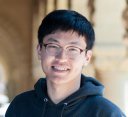
 Zhenqin Wu
· 4 previous affiliations
- University of Hong KongSince 2024
- Assistant Professor · Since 2024
- Enable Medicine2022–2024
- Researcher · 2022–2024
- Stanford University2016–2022
- PhD student · 2016–2022
- Peking University2012–2016
- Undergrad student · 2012–2016
Research Overview
Zhenqin Wu focuses on developing artificial intelligence and deep learning frameworks for modeling and interpreting spatial biology, with specific applications in spatial proteomics, transcriptomics, and histopathological imaging. His work integrates geometric deep learning, self-supervised representation learning, and probabilistic generative models to characterize complex tissue architectures and cellular microenvironments. Currently an Assistant Professor in the Department of AI & Data Science at the University of Hong Kong, Wu’s research aims to bridge the gap between high-dimensional molecular profiling and clinical outcomes, particularly in the context of cancer immunotherapy and drug discovery.
Research Trajectory
The trajectory of Wu’s research reflects a transition from molecular-level machine learning to the spatial modeling of multicellular systems. During his doctoral studies at Stanford University, his early work focused on applying machine learning to predict biological outcomes from genomic and imaging data. This period was characterized by the development of models to understand DNA repair mechanisms and cellular dynamics. For instance, he contributed to the Systematic characterization of genome editing in primary T cells reveals proximal genomic insertions and enables machine learning prediction of CRISPR-Cas9 DNA repair outcomes, which utilized machine learning to predict the distribution of repair outcomes following CRISPR-Cas9 cleavage. This work established a foundation for using computational models to interpret non-random biological processes that were previously difficult to characterize.
In the early 2020s, Wu’s focus shifted toward the morphodynamics of live cells, employing self-supervised learning to analyze label-free imaging data. This phase of his work addressed the challenge of identifying functional cellular states without the need for genetic labeling or manual annotation. The development of the DynaMorph framework, detailed in DynaMorph: self-supervised learning of morphodynamic states of live cells, demonstrated the utility of combining quantitative live-cell imaging with deep learning to annotate the complex functional states of primary human microglia.
As spatial omics technologies matured, Wu’s research evolved to address the organizational complexity of tissues. Starting around 2022, he began developing geometric deep learning methods to model the tumor microenvironment (TME). This shift was marked by the introduction of SPACE-GM: geometric deep learning of disease-associated microenvironments from multiplex spatial protein profiles, which treated cells as nodes in a graph to identify spatial motifs associated with clinical outcomes. This was followed by the development of unsupervised methods for tissue structure identification, such as Characterizing Tissue Structures from Spatial Omics with Spatial Cellular Graph Partition, which allowed for the automated mapping of anatomical regions across diverse samples.
Most recently, Wu’s work has expanded into multi-modal integration and the development of agentic AI systems for biological analysis. His current research involves integrating spatial transcriptomics and proteomics to identify clinical biomarkers, as seen in his 2025 study on Spatial omics and deep learning define an immunotherapy resistance niche in hepatocellular carcinoma. He is also exploring the use of large language models (LLMs) and multi-agent systems to automate the interpretation of spatial omics data, moving toward autonomous biological analysis frameworks.
Current Directions
Wu’s current research program at the University of Hong Kong, where he leads the BioAI group, is centered on three primary pillars: multi-modal spatial biology, generative modeling for histopathology, and agentic AI for drug discovery.
A major current focus is the integration of disparate spatial data types. The development of Learning single-cell spatial context through integrated spatial multiomics with CORAL represents a significant effort to align and integrate transcriptomic and proteomic features within a unified probabilistic framework. This work addresses technical challenges such as variable resolutions and imperfect tissue alignment, enabling a more holistic view of cellular organization.
In the domain of generative AI, Wu is investigating methods to synthesize high-dimensional molecular data from standard histopathology images. This includes participation in the development of ROSIE, a framework for generating multiplex immunofluorescence staining from conventional H&E images, which has potential implications for expanding the accessibility of spatial proteomics in clinical settings.
Furthermore, Wu is exploring "agentic" AI frameworks that can perform complex reasoning over biological data. This direction is exemplified by his participation in the development of CP-Agent, a multimodal framework designed for cellular morphological profiling under chemical perturbations. This system combines alignment models with reasoning agents to generate human-readable reports explaining the biological rationale behind drug-induced cellular changes. His work in this area also extends to OmicsNavigator, an LLM-driven multi-agent system for zero-shot biological analysis, aimed at automating the annotation and interpretation of spatial omics experiments.
Representative Work
CRISPR-Cas9 DNA Repair Prediction
In the study Systematic characterization of genome editing in primary T cells reveals proximal genomic insertions and enables machine learning prediction of CRISPR-Cas9 DNA repair outcomes, Wu and colleagues addressed the non-random nature of DNA repair following SpCas9-mediated cleavage. By characterizing repair outcomes in primary human T cells, the research demonstrated that the distribution of insertions and deletions is highly dependent on the target sequence. The study employed machine learning to predict these outcomes, providing a tool for more precise genome editing by anticipating the endogenous repair machinery's response to specific double-stranded breaks.
DynaMorph: Self-Supervised Morphodynamics
Wu led the development of DynaMorph: self-supervised learning of morphodynamic states of live cells, a framework designed to automate the discovery of cellular functional states from live-cell imaging. The method utilizes self-supervised representation learning to extract features from label-free measurements of optical density and anisotropy. When applied to primary human microglia, DynaMorph successfully identified distinct morphodynamic states that correlate with cellular function, offering a quantitative alternative to manual annotation and genetic labeling in live-cell assays.
SPACE-GM: Geometric Deep Learning for TMEs
The SPACE-GM: geometric deep learning of disease-associated microenvironments from multiplex spatial protein profiles framework introduced a graph-based approach to modeling tumor microenvironments. By representing cells as nodes and their spatial interactions as edges, SPACE-GM allows for the identification of high-dimensional spatial motifs. The application of this framework to head-and-neck and colorectal cancer samples demonstrated its ability to predict patient survival and immunotherapy response with higher accuracy than traditional cell-density-based methods, highlighting the importance of spatial architecture in clinical prognosis.
Spatial Cellular Graph Partitioning (SCGP)
In Characterizing Tissue Structures from Spatial Omics with Spatial Cellular Graph Partition, Wu presented an unsupervised method for identifying tissue structures that correspond to anatomical and functional units. SCGP utilizes community detection on cellular graphs to partition tissues into distinct regions without requiring manual labels. The work also introduced SCGP-Extension, a pipeline that enables the generalization of identified structures to new, unseen samples, facilitating consistent tissue annotation across large-scale spatial omics cohorts.
Immunotherapy Resistance in Hepatocellular Carcinoma
Wu’s research in Spatial omics and deep learning define an immunotherapy resistance niche in hepatocellular carcinoma combined spatial proteomics and transcriptomics with graph neural networks to investigate treatment resistance. The study identified a specific "interface niche"—a cellular barrier that physically isolates immune cell clusters from the tumor. This niche was found to be a highly accurate biomarker for immunotherapy resistance, providing a mechanistic understanding of how spatial organization contributes to therapeutic failure in liver cancer.
CORAL: Multi-modal Spatial Integration
The introduction of Learning single-cell spatial context through integrated spatial multiomics with CORAL addressed the challenge of fusing data from different spatial omics platforms. CORAL is a probabilistic deep generative model that employs graph attention mechanisms to learn integrated representations of multimodal data. By accounting for variable spatial resolutions and alignment issues, CORAL enables the discovery of coordinated molecular patterns across transcriptomic and proteomic layers, improving the characterization of single-cell spatial contexts.
Profile updated
Loading new papers…
Other researchers whose papers cluster into the same research directions — a proxy for overlapping technical interests and shared intellectual neighborhoods.
See something wrong? Report a mistake