

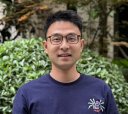
 Zhenheng Yang
· 6 previous affiliations
- National University of SingaporeSince 2024
- Adjunct Assistant Professor · Since 2024
- Meta (United States)Since 2025
- AI Research Scientist · Since 2025
- Senior Research Scientist · 2019–2021
- Research Scientist · 2018–2021
- TikTok2022–2026
- Director of Research · 2024–2026
- Senior Research Manager · 2022–2024
- ByteDance (China)2021–2022
- Staff Research Scientist · 2021–2022
- University of Southern California2014–2018
- Graduate Student · 2014–2018
- Tsinghua University2010–2014
- Bachelor of Engineering (B.E.), Micro Electromechanical Engineering System · 2010–2014
1 other author named Zhenheng Yang: Zhenheng Yang (8 papers)
Research Overview
Zhenheng Yang focuses on computer vision, multimodal machine learning, and video understanding. His early research addressed temporal action localization and 3D scene reconstruction from video, while his recent work emphasizes the development and optimization of large-scale multimodal foundation models. Currently, he investigates efficient architectures and data curation strategies for unified visual generation and comprehension.
Research Trajectory
During his doctoral studies, Yang's research centered on video analysis, specifically within the area of Temporal Regression for Precise Action Localization. He developed TURN TAP: Temporal Unit Regression Network for Temporal Action Proposals, which introduced a model to jointly predict action proposals and refine temporal boundaries through coordinate regression. He also contributed to TALL: Temporal Activity Localization via Language Query, exploring how natural language queries can be matched with video representations to accurately locate actions in untrimmed sequences. This work advanced the broader direction of Refining Action Boundaries through Temporal Context.
Expanding into spatial reasoning and scene dynamics, Yang led the development of Every Pixel Counts ++: Joint Learning of Geometry and Motion with 3D Holistic Understanding. This holistic framework moved beyond static scene assumptions to jointly estimate depth, camera motion, and optical flow without direct supervision, contributing to the field of Modeling Non-Rigid Dynamics in 4D Scene Reconstruction. Following this, while working as a research scientist at Facebook AI, he investigated how action labels could serve as spatial priors for object detection. In Activity Driven Weakly Supervised Object Detection., he demonstrated that the action depicted in an image or video provides strong cues for localizing associated objects, reducing the need for bounding-box supervision.
In recent years, Yang's focus has shifted toward large-scale multimodal foundation models, addressing challenges in prompt optimization, data curation, and tokenization. He guided the creation of UniAPO: Unified Multimodal Automated Prompt Optimization, an Expectation-Maximization-inspired framework that mitigates visual token inflation across text, image, and video tasks. In the domain of data selection, he oversaw Cream of the Crop: Harvesting Rich, Scalable and Transferable Multi-Modal Data for Instruction Fine-Tuning, introducing a framework that decomposes data value into specific vision-language capabilities to identify high-performing subsets for training. He also directed research on Improving Text-to-Image Generation with Input-Side Inference-Time Scaling, utilizing large language models to rewrite user prompts via iterative Direct Preference Optimization.
Further advancing multimodal architectures within the domain of High Fidelity Autoregressive Visual Generation, his work on UniCode2: Cascaded Large-scale Codebooks for Unified Multimodal Understanding and Generation introduced a large visual codebook built by clustering semantic embeddings, enabling detailed image generation and semantic understanding. Yang has also led efforts to make multimodal models more efficient and capable of self-improvement. He introduced Seaweed-7B: Cost-Effective Training of Video Generation Foundation Model, a 7-billion parameter model that achieves competitive text-to-video and image-to-video performance with a fraction of typical computational resources. To optimize unified transformers in areas like Hybrid Masking for Unified Multimodal Transformers, he developed UniMoD: Efficient Unified Multimodal Transformers with Mixture-of-Depths, which employs task-aware routing to reduce training compute. Additionally, he proposed UniRL: Self-Improving Unified Multimodal Models via Supervised and Reinforcement Learning, a post-training framework that uses a model's own generated images to enhance its understanding capabilities, balancing creative and analytical functions.
Most recently, Yang has collaborated on techniques for processing extended video sequences and complex motion. He participated in the development of MotionSight: Boosting Fine-Grained Motion Understanding in Multimodal LLMs, which uses zero-shot visual prompting to decouple object motion from camera shifts. Addressing the token explosion problem in long-form content, he contributed to FOCUS: Efficient Keyframe Selection for Long Video Understanding, a multi-armed bandit approach for identifying query-relevant frames, advancing the area of Adaptive Temporal Sampling for Long Video Reasoning. He also co-authored Mixture of Contexts for Long Video Generation, which introduces a learnable sparse attention mechanism that treats long-video generation as an internal information retrieval task to reduce computational costs.
Current Directions
The most recent papers in the evidence indicate a strong focus on scaling and optimizing unified multimodal foundation models. Recent work investigates efficient architectural designs, such as task-aware routing and sparse attention mechanisms, to reduce the computational burden of training and inference for both image and video generation. Additionally, Yang is exploring self-improving frameworks that leverage reinforcement learning to align a model's generative and analytical capabilities without relying on external datasets. Another active area of research involves long video reasoning, where he and his collaborators are developing adaptive sampling and keyframe selection techniques to process extended temporal sequences while managing memory constraints.
Profile updated
Loading new papers…
Other researchers whose papers cluster into the same research directions — a proxy for overlapping technical interests and shared intellectual neighborhoods.
See something wrong? Report a mistake