

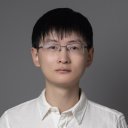
 Zhengyi Yang
· 5 previous affiliations
- Euler AISince 2024
- Founder · Since 2024
- The University of SydneySince 2026
- ARC Early Career Industry Fellow · Since 2026
- UNSW Sydney2018–2026
- Adjunct Lecturer · 2026
- Associate Lecturer · 2022–2025
- PhD Candidate · 2018–2022
- Enmotech2023–2025
- Visiting Database System Scientist · 2023–2025
- University College London2013–2017
- Master of Engineering - MEng, Mathematical Computation · 2013–2017
1 other author named Zhengyi Yang: Zhengyi Yang (University of Science and Technology of China · 28 papers)
Research Overview
Zhengyi Yang focuses on large-scale graph analytics, distributed subgraph matching, and hypergraph mining. His trajectory spans from optimizing distributed graph database systems and hardware-accelerated matching to modeling high-order relationships and temporal graph neural networks. Recently, his work has expanded to include high-dimensional similarity search and the application of large language models to structured document extraction.
Research Trajectory
Yang’s early work addressed the computational bottlenecks of querying massive graph datasets across distributed systems. He contributed to a systematic evaluation of distributed subgraph matching algorithms in Distributed Subgraph Matching on Timely Dataflow, providing practical strategies for algorithm selection and implementation. This empirical foundation was expanded in An Empirical Study on Recent Graph Database Systems, which benchmarked declarative graph query languages against standard social network datasets. Building on these insights, he introduced HUGE: An Efficient and Scalable Subgraph Enumeration System, a distributed framework featuring a hybrid communication layer and an adaptive scheduler designed to bound memory consumption during large-scale subgraph enumeration. Concurrently, he explored hardware acceleration for these intensive tasks, participating in the development of FAST: FPGA-based Subgraph Matching on Massive Graphs.
As his focus evolved toward more complex, high-order data structures, Yang began extensively researching hypergraphs. He developed HGMatch: A Match-by-Hyperedge Approach for Subgraph Matching on Hypergraphs, a method that mitigates the high enumeration costs of traditional approaches by leveraging high-order information earlier in the verification process. He also investigated local clustering techniques for these structures in High-Order Local Clustering on Hypergraphs. Alongside hypergraph mining, he continued advancing distributed graph analytics, contributing to Efficient Distributed Core Graph Decomposition for large-scale k-core computation. This line of distributed algorithmic research was further extended in Distributed Hop-Constrained s-t Simple Path Enumeration in Labelled Graphs, which introduced an online label-based index to prune search spaces in edge-labelled networks.
Expanding beyond static graph topologies, Yang's research incorporated temporal dynamics and high-dimensional spaces. He co-authored a comprehensive Survey on Exact kNN Queries over High-Dimensional Data Space, categorizing methods for accurate similarity search. In the realm of evolving networks, he contributed to TATKC: A Temporal Graph Neural Network for Fast Approximate Temporal Katz Centrality Ranking. This learning-based framework utilizes time-injected self-attention to identify influential nodes, advancing the broader research direction of Scaling Temporal Graph Neural Networks for Massive Evolving Data.
In his most recent work, Yang has continued to refine hypergraph analytics while exploring new applications in natural language processing. He contributed to Accelerating Core Decomposition in Billion-Scale Hypergraphs and Efficient indexing and searching of constrained core in hypergraphs, which introduces the (k, p)-PoolCore framework for identifying dense substructures based on vertex degree and hyperedge size constraints. Additionally, he co-authored A Survey on Efficient Graph Reachability Queries, reviewing static and dynamic approaches to path existence problems. Branching into applied machine learning, he also participated in the development of EulerESG: Automating ESG Disclosure Analysis with LLMs, a system that integrates large language models with retrieval-augmented generation to extract standardized metrics from unstructured corporate reports.
Current Directions
The most recent papers in the evidence indicate a dual focus on scaling hypergraph analytics and applying advanced language models to complex document retrieval. In the domain of graph mining, recent work investigates the efficient indexing and decomposition of billion-scale hypergraphs, specifically targeting constrained cohesive subgraphs and core structures. Concurrently, Yang is exploring the intersection of natural language processing and structured data extraction, utilizing retrieval-augmented generation and large language models to automate the analysis of heterogeneous, unstructured corporate disclosures.
Profile updated
Loading new papers…
Other researchers whose papers cluster into the same research directions — a proxy for overlapping technical interests and shared intellectual neighborhoods.
See something wrong? Report a mistake