

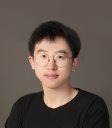
 Zhengqi Gao
· 6 previous affiliations
- Anthropic (United States)Since 2026
- STEM Fellow · Since 2026
- Research Assistant · 2021–2026
- AR/VR Hardware Engineering Intern · 2025
- Research Intern · 2023
- Fudan University2014–2021
- MS student · 2018–2021
- Undergrad student · 2014–2018
- Baidu (China)2017
- Quality Assurance Engineering Intern · 2017
Research Overview
Zhengqi Gao focuses on design automation for electronic and photonic integrated circuits, with a particular emphasis on the intersection of applied machine learning and hardware systems. His work addresses the challenges of modeling, optimizing, and synthesizing complex physical systems, ranging from traditional analog circuits to emerging programmable photonic meshes and analog neural network architectures. Currently, his research explores the use of generative models and reinforcement learning to improve the reliability of hardware description language generation and the efficiency of rare event simulation in high-dimensional design spaces.
Research Trajectory
The evolution of Gao’s research reflects a transition from classical electronic design automation (EDA) problems toward the integration of physics-aware machine learning for next-generation computing substrates. His early work, conducted primarily at Fudan University, focused on the application of Bayesian methods to analog circuit design. During this period, he addressed the computational bottlenecks of performance modeling and yield estimation, which are critical for ensuring circuit reliability under process variations.
In 2019, Gao introduced a framework for Efficient Performance Trade-off Modeling for Analog Circuit based on Bayesian Neural Network, which utilized Bayesian Neural Networks (BNNs) to capture the complex correlations between multiple performance metrics. By employing automatic differential variational inference, this approach allowed for the simultaneous modeling of various performance interests with reduced computational overhead compared to traditional Monte Carlo methods. This interest in statistical reliability continued with work on multi-corner parametric yield estimation, where he utilized Bayesian inference on Bernoulli distributions to optimize hyper-parameters for binary output circuits.
As his trajectory moved toward his doctoral studies at MIT, Gao’s focus expanded into multimodal learning and the automation of photonic systems. In 2021 and 2022, he participated in research regarding multimodal knowledge expansion and robust fusion techniques. A notable contribution during this phase was the development of Training-Free Robust Multimodal Learning via Sample-Wise Jacobian Regularization, which addressed the robustness of late-fusion methods by minimizing the Frobenius norm of a Jacobian matrix, thereby providing a theoretical error bound for multimodal integration without the need for extensive retraining.
Starting in 2022, Gao’s work increasingly centered on programmable photonics and physics-informed machine learning. He addressed the scalability limits of photonic circuit design by developing automated synthesis tools. His research in Automatic synthesis of light-processing functions for programmable photonics: theory and realization introduced a gradient-based optimization method that leverages analytical scattering matrices and automatic differentiation. This approach enabled the simultaneous synthesis of multiple light-processing functions, such as filtering and routing, on a single waveguide mesh, significantly outperforming previous manual or heuristic configuration methods.
In parallel, Gao explored the simulation of photonic devices through neural operators. He contributed to the development of NeurOLight: A Physics-Agnostic Neural Operator Enabling Parametric Photonic Device Simulation, which sought to overcome the limitations of physics-informed neural networks (PINNs) in handling varying device parameters. By treating the simulation as a learning problem over a family of partial differential equations, this work provided a more scalable alternative to traditional numerical solvers for the design loop of photonic integrated circuits.
His most recent work (2023–2025) has branched into two distinct but related directions: the development of analog-native neural network architectures and the application of large language models (LLMs) to hardware design. The "KirchhoffNet" project represents a significant effort to bridge the gap between neural network theory and analog hardware. Furthermore, he has addressed the functional correctness of AI-generated hardware code, moving beyond general-purpose LLMs to create specialized alignment frameworks for Register Transfer Level (RTL) generation.
Current Directions
Gao’s current research is characterized by a dual focus on the theoretical foundations of reconfigurable hardware and the practical deployment of machine learning for hardware reliability. One major pillar of his current work is the mathematical analysis of programmable photonic integrated circuits (PPICs). In Provable Routing Analysis of Programmable Photonic Circuits, he established rigorous bounds on the routing capabilities of square-mesh architectures, identifying "forbidden" path lengths and providing a theoretical basis for characterizing what is fundamentally achievable in reconfigurable optical chips.
Another significant direction involves the estimation of rare events in complex systems. In Rare Event Probability Learning by Normalizing Flows, Gao proposed NOFIS, a method that uses normalizing flows to assist importance sampling. By learning a sequence of proposal distributions through KL divergence minimization, this framework allows for the accurate estimation of low-probability events that are otherwise computationally inaccessible via standard Monte Carlo sampling.
Finally, Gao is actively working on the intersection of generative AI and hardware description languages. His recent development of EARL: Entropy-Aware RL Alignment of LLMs for Reliable RTL Code Generation addresses the tendency of LLMs to produce syntactically correct but functionally flawed Verilog code. By focusing reinforcement learning updates on "high-uncertainty" tokens that drive functional logic, this framework improves the reliability of automated hardware design.
Representative Work
The following papers represent key contributions to Gao's research trajectory, illustrating his shift from statistical circuit modeling to physics-aware AI and automated hardware synthesis.
Efficient Performance Trade-off Modeling for Analog Circuit based on Bayesian Neural Network (2019) This work established Gao’s early focus on Bayesian methods for EDA. By using a single BNN to model multiple performance metrics, the research demonstrated that correlations between different circuit objectives could be implicitly encoded and efficiently extracted. This provided a faster alternative to traditional multi-objective evolutionary methods for analog design.
NeurOLight: A Physics-Agnostic Neural Operator Enabling Parametric Photonic Device Simulation (2022) As a primary contributor to this project, Gao helped develop a neural operator approach to electromagnetic field simulation. Unlike standard PINNs, which are often tied to a specific instance of a PDE, NeurOLight allows for parametric simulation, making it a viable tool for the iterative design and optimization of photonic components where geometry and material properties vary.
Automatic synthesis of light-processing functions for programmable photonics: theory and realization (2023) This paper details a gradient-based optimization framework for configuring programmable photonic meshes. By deriving analytical gradients for the entire circuit, the work transformed the configuration of photonic "FPGAs" from a manual task into an automated optimization problem, achieving significant speedups in synthesizing complex light-processing functions.
Rare Event Probability Learning by Normalizing Flows (2024) In this work, Gao addressed the challenge of rare event simulation, which is critical for hardware reliability and safety-critical systems. The proposed NOFIS algorithm uses normalizing flows to learn optimal importance sampling distributions, providing a scalable solution for estimating extremely small probabilities in high-dimensional spaces.
KirchhoffNet: End-to-End Analog Circuit Acceleration for ODE-Based Neural Networks (2025) Gao introduced KirchhoffNet as a novel class of neural networks designed to operate as analog circuits. By mapping network dynamics to Kirchhoff’s laws and treating node voltages as data, the architecture allows for the execution of ODE-based neural models directly in hardware. This work suggests a path toward ultra-low-power AI inference where the time required for a forward pass is independent of the number of parameters.
EARL: Entropy-Aware RL Alignment of LLMs for Reliable RTL Code Generation (2025) Addressing the modern challenge of AI-assisted hardware design, this research introduced an entropy-aware reinforcement learning framework. By identifying and prioritizing the most critical decision points in Verilog generation, the method significantly improves the functional correctness of LLM-generated hardware descriptions, bridging the gap between natural language intent and reliable RTL implementation.
Profile updated
Loading new papers…
Other researchers whose papers cluster into the same research directions — a proxy for overlapping technical interests and shared intellectual neighborhoods.
See something wrong? Report a mistake