

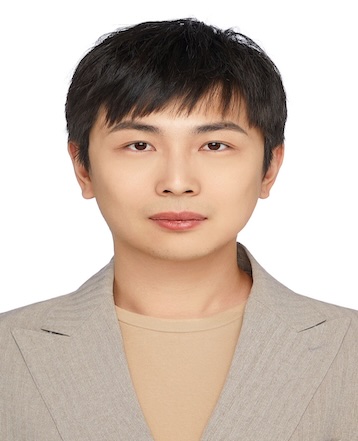
 Zhenghao Liu
· 2 previous affiliations
- Northeastern UniversitySince 2021
- Associate Professor · Since 2021
- Tsinghua University2016–2021
- PhD student · 2016–2021
1 other author named Zhenghao Liu: Zhenghao Liu (University of Science and Technology of China · 1 paper)
Research Overview
Zhenghao Liu focuses on natural language processing, information retrieval, and the integration of external knowledge into language models. His early work advanced neural ranking and fact verification by incorporating graph-based semantics and structural data. More recently, his research addresses retrieval-augmented generation, multimodal learning, and domain-specific reasoning, with an emphasis on aligning model outputs with reliable external evidence.
Research Trajectory
Liu’s early research focused on enhancing neural information retrieval (IR) and fact verification by integrating structured knowledge. In 2018, he introduced Entity-Duet Neural Ranking: Understanding the Role of Knowledge Graph Semantics in Neural Information Retrieval, a model that leveraged entity descriptions and types from knowledge graphs to improve the generalization of neural rankers in information-sparse scenarios. Building on this graph-based approach, his work expanded into automated fact-checking. In 2020, he developed Fine-grained Fact Verification with Kernel Graph Attention Network, which utilized node and edge kernels within graph attention networks to identify subtle syntactical and semantic clues across evidence graphs. That same year, he adapted these techniques to specialized scientific domains with Generalizing Open Domain Fact Extraction and Verification to COVID-FACT thorough In-Domain Language Modeling, combining open-domain literature search with in-domain medical knowledge to verify claims related to the COVID-19 pandemic.
As neural rankers became more sophisticated, their reliance on massive labeled datasets posed challenges for niche applications. Addressing this, Liu and collaborators explored the research direction of Neural Retrieval in Low-Resource Specialized Domains. In 2021, they published Few-Shot Text Ranking with Meta Adapted Synthetic Weak Supervision, which synthesized "ranking-aware" weak supervision and employed meta-learning to filter out noise, significantly boosting performance in biomedical and news search. To further support the IR community, he led the development of OpenMatch: An Open Source Library for Neu-IR Research, providing a self-contained Python library with implementations of advanced few-shot training methods and neural IR baselines.
By 2023, Liu’s research began to encompass broader modalities and linguistic tasks. He introduced MCTS: A Multi-Reference Chinese Text Simplification Dataset, establishing a comprehensive benchmark for evaluating the nuance of text simplification models. Simultaneously, he contributed to the broader area of Overcoming Modality Dominance in Multimodal Learning with Universal Vision-Language Dense Retrieval: Learning A Unified Representation Space for Multi-Modal Retrieval. This work proposed a unified embedding space optimized via modality-balanced hard negatives and image verbalization, bridging the gap between images and text for open-domain question answering.
In 2024, the proliferation of Large Language Models (LLMs) shifted his focus toward complex retrieval pipelines, data curation, and knowledge integration. To streamline document ranking, his team developed Fusion-in-T5: Unifying Variant Signals for Simple and Effective Document Ranking with Attention Fusion, a single unified model that integrates text matching, ranking features, and global document information, outperforming complex cascade pipelines. Recognizing the importance of high-quality pretraining data, he also introduced Cleaner Pretraining Corpus Curation with Neural Web Scraping, utilizing a shallow Transformer architecture and DOM tree structures to extract clean text from webpages. In the domain of personalized content, he explored Modeling User Viewing Flow using Large Language Models for Article Recommendation, leveraging LLMs to capture both constant user preferences and instant interests from click histories.
A major theme of his 2024 work involved the research direction of Grounding Language Models with External Knowledge Retrieval. He proposed ThinkNote: Enhancing Knowledge Integration and Utilization of Large Language Models via Constructivist Cognition Modeling, a framework that shifts LLMs from passive data recipients to active knowledge constructors by mimicking human assimilation and accommodation processes. He also continued to advance multimodal retrieval with MARVEL: Unlocking the Multi-Modal Capability of Dense Retrieval via Visual Module Plugin, a plugin architecture that projects visual features directly into a language model’s input space. Returning to the challenge of misinformation, he developed Multi-Evidence based Fact Verification via A Confidential Graph Neural Network, designing a network that actively prevents irrelevant or noisy evidence from polluting the reasoning process.
Moving into 2025, Liu’s trajectory expanded into highly specialized reasoning tasks, particularly in the area of Cross-Jurisdictional Generalizability in Legal AI and the broader area of Preserving General Reasoning During Domain Specialization. He contributed to LegalΔ: Enhancing Legal Reasoning in LLMs via Reinforcement Learning with Chain-of-Thought Guided Information Gain, a reinforcement learning framework that rewards models for developing meaningful reasoning patterns rather than superficial explanations. This was complemented by LexRel: Benchmarking Legal Relation Extraction for Chinese Civil Cases, which introduced a comprehensive schema demonstrating that explicitly providing formal legal relations significantly boosts downstream AI performance.
His recent work also addresses the structural and parametric limitations of LLMs. In 2025, he introduced HIPPO: Enhancing the Table Understanding Capability of Large Language Models through Hybrid-Modal Preference Optimization, which represents tabular data using both text and images to mitigate modality bias. To improve the faithfulness of Retrieval-Augmented Generation, he co-authored ParamMute: Suppressing Knowledge-Critical FFNs for Faithful Retrieval-Augmented Generation, a method that identifies and mutes specific neural layers responsible for internal knowledge dominance, forcing the model to prioritize retrieved context. Most recently, in 2026, he explored the area of Overcoming Temporal Knowledge Obsolescence in Language Models with Know More, Know Clearer: A Meta-Cognitive Framework for Knowledge Augmentation in Large Language Models, proposing a reinforcement learning objective to align a model's internal certainty with its actual accuracy, thereby addressing the "knowledge-confidence gap."
Current Directions
The most recent papers in the evidence address the reliability, self-awareness, and domain adaptability of large language models. A major focus is improving the faithfulness of Retrieval-Augmented Generation (RAG) by mitigating the conflict between a model's internal parametric memory and external retrieved context. Recent work investigates meta-cognitive frameworks that allow models to assess their own uncertainty, selectively augmenting knowledge only where it is missing or confused to prevent overconfident hallucinations. Additionally, ongoing research explores specialized reasoning in structured and professional domains, including hybrid-modal optimization for complex table understanding and reinforcement learning approaches for extracting formal relations in legal AI.
Profile updated
Loading new papers…
Other researchers whose papers cluster into the same research directions — a proxy for overlapping technical interests and shared intellectual neighborhoods.
See something wrong? Report a mistake