

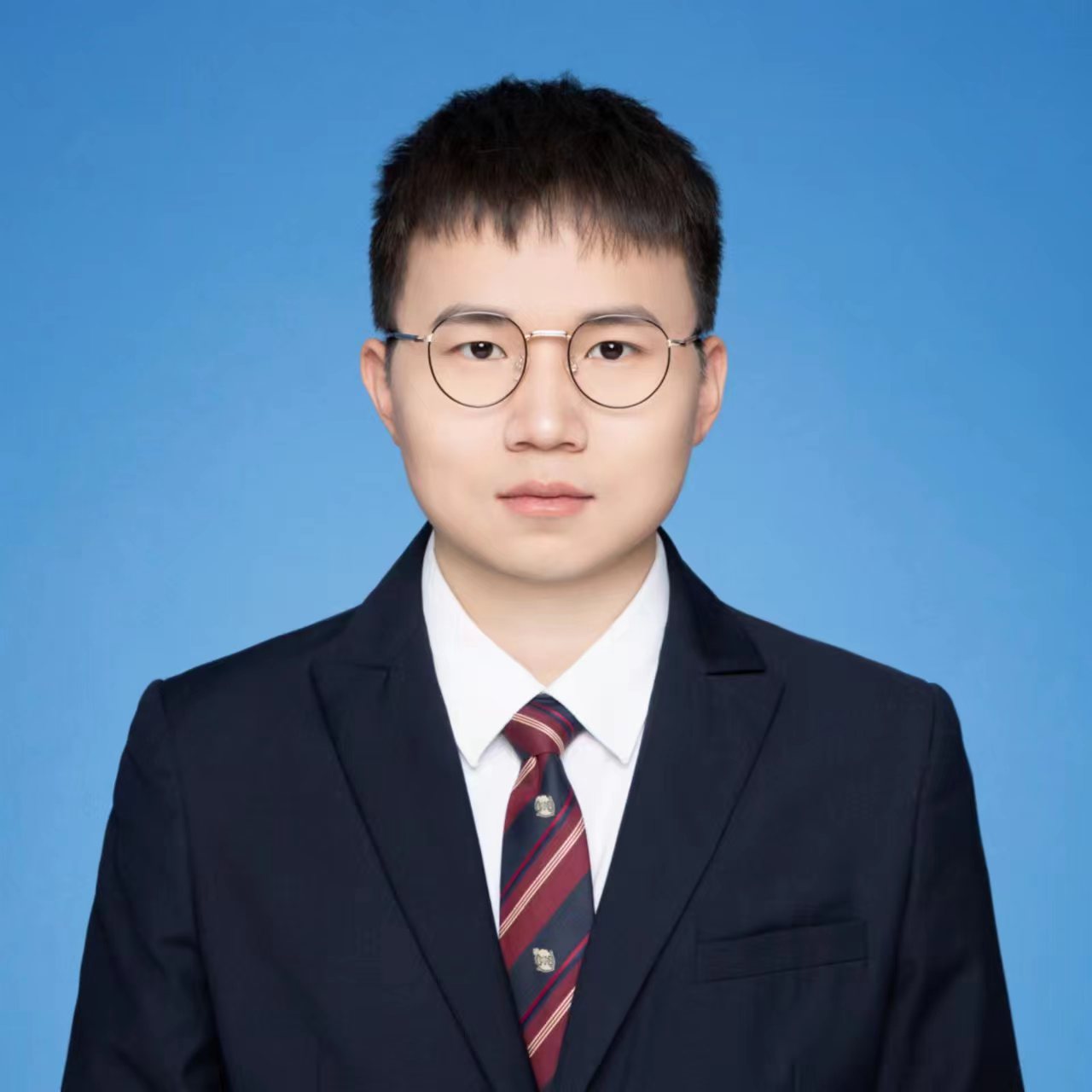
 Zheng Zhang
· 1 previous affiliation
- Current
- PhD student · 2020–2026
18 other authors named Zheng Zhang: Zheng Zhang (Harbin Institute of Technology · 791 papers), Zheng Zhang (University of California, Santa Barbara · 267 papers), Zheng Zhang (Amazon (United States) · New York University Shanghai · 91 papers), Zheng Zhang (Microsoft (United States) · 26 papers), Zheng Zhang (ByteDance (China) · 20 papers), and 13 more
Research Overview
Zheng Zhang focuses on fairness in machine learning, user modeling, and the trustworthiness of large language models. His early work developed robust cognitive diagnosis methods for intelligent education systems, addressing data sparsity and bias in student assessments. Recently, his research has expanded to ensure the safety, factuality, and equitable performance of retrieval-augmented generation and generative AI systems.
Research Trajectory
Zheng Zhang's early research explored foundational natural language processing techniques. He participated in the development of graph-based and cross-lingual methods in Explorations in Word Embeddings : graph-based word embedding learning and cross-lingual contextual word embedding learning, which sought to improve contextualized word representations across different languages.
By 2023, his focus shifted toward user modeling and intelligent education systems, particularly the challenge of cognitive diagnosis—the process of inferring a student's knowledge state from their interaction history. Recognizing that real-world educational platforms often suffer from sparse data, he contributed to Leveraging Transferable Knowledge Concept Graph Embedding for Cold-Start Cognitive Diagnosis to address zero-shot scenarios where student behavior logs are unavailable. This interest in cold-start problems continued with Zero-1-to-3: Domain-Level Zero-Shot Cognitive Diagnosis via One Batch of Early-Bird Students towards Three Diagnostic Objectives. By decoupling domain-shared and domain-specific student traits, this work advanced several interconnected research areas, including the direction of Modeling the Temporal Dynamics of Human Knowledge, the domain of Mitigating Negative Transfer via Feature Decoupling, and the broader area of Calibrating Intelligent Education Systems Without Historical Data.
A major theme in Zhang's trajectory is ensuring that these diagnostic models are not only accurate but also equitable. He led the development of Towards Accurate and Fair Cognitive Diagnosis via Monotonic Data Augmentation to mitigate biases caused by data sparsity. He further formalized this problem in Understanding and improving fairness in cognitive diagnosis, investigating how sensitive attributes like geographic region can skew diagnostic results. To synthesize the rapid advancements in this field, he co-authored A Survey of Models for Cognitive Diagnosis: New Developments and Future Directions.
Beyond education, Zhang has addressed fairness and data sparsity in broader user modeling and recommender systems. He introduced FairLISA: Fair User Modeling with Limited Sensitive Attributes Information to decorrelate user profiles from sensitive attributes even when explicit demographic labels are incomplete. He expanded on these equitable profiling techniques in Enhancing Fairness in Meta-learned User Modeling via Adaptive Sampling. Concurrently, he directed research into data augmentation for sparse environments, such as Cross-reconstructed Augmentation for Dual-target Cross-domain Recommendation and Intent Oriented Contrastive Learning for Sequential Recommendation, which captures dynamically changing user intents to improve sequential predictions.
Returning to educational applications with more sophisticated architectures, Zhang oversaw work in the area of Multimodal Behavioral Integration for Student Modeling through Collaborative Cognitive Diagnosis with Disentangled Representation Learning for Learner Modeling. As large language models (LLMs) became prevalent, he explored their utility in programming education. He collaborated on CoderAgent: Simulating Student Behavior for Personalized Programming Learning with Large Language Models to generate fine-grained practice data, and directed the development of Denoising Programming Knowledge Tracing with a Code Graph-based Tuning Adaptor.
Most recently, Zhang's focus has expanded to the fundamental trustworthiness, safety, and fairness of LLMs. He led The Other Side of the Coin: Exploring Fairness in Retrieval-Augmented Generation, investigating whether RAG paradigms inadvertently introduce new biases into generative outputs. He has also contributed to rigorous safety frameworks, participating in the design of OSCS: Online Selection with Provable FAR Control for LLM Safety to mathematically bound the false acceptance rate of malicious prompts, and CoFact: Conformal Factuality Guarantees for Language Models under Covariate Shift, which uses conformal prediction to maintain reliability even as user topics evolve over time.
Current Directions
Recent work investigates the intersection of generative AI, safety guarantees, and algorithmic fairness. The most recent papers in the evidence address the trustworthiness of large language models in dynamic and potentially adversarial environments. This includes developing statistical frameworks to guarantee factuality under covariate shift, ensuring strict control over false acceptance rates for malicious prompts, and auditing retrieval-augmented generation (RAG) systems to prevent the amplification of societal biases. Across these efforts, the overarching goal is to build robust, equitable AI systems that maintain provable reliability in real-world deployments.
Profile updated
Loading new papers…
Other researchers whose papers cluster into the same research directions — a proxy for overlapping technical interests and shared intellectual neighborhoods.
See something wrong? Report a mistake