

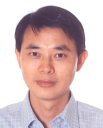
 Zheng-Hua Tan
· 6 previous affiliations
- Aalborg UniversitySince 2016
- Machine Learning Research Group Leader · Since 2021
- Full Professor · Since 2017
- Co-Head of the Centre for Acoustic Signal Processing Research (CASPR) · Since 2016
- Professor of Machine Learning and Speech Processing, Ph.D. · 2022–2025
- IEEE Signal Processing SocietySince 2019
- General Chair of IEEE ICASSP 2029 Copenhagen · Since 2025
- Member of the IEEE SPS Data Science Initiative · Since 2019
- Chair, Machine Learning for Signal Processing Technical Committee (MLSP TC) · 2021–2022
- Pioneer Centre for AISince 2021
- Co-Lead · Since 2021
- Visiting Professor · 2022
- Copenhagen Business School2020–2021
- Research Management Course · 2020–2021
- Shanghai Jiao Tong University1997–1999
- Ph.D., Communication and Information Systems · 1997–1999
Research Overview
Zheng-Hua Tan focuses on machine learning, noise-robust speech processing, and self-supervised audio representations. His early work addressed foundational challenges in speaker verification and spoofing detection, gradually expanding into statistical learning theory for dynamical systems. Currently, he investigates advanced neural architectures, including state space models and diffusion frameworks, to improve the efficiency and robustness of audio processing in uncontrolled environments.
Research Trajectory
Zheng-Hua Tan's early research explored knowledge representation, such as Fuzzy Metagraph and Its Combination with the Indexing Approach in Rule-Based Systems (2006). He subsequently transitioned toward audio analysis, addressing foundational challenges in A Joint Approach for Single-Channel Speaker Identification and Speech Separation (2012).
A major focus of his mid-2010s work was securing biometric systems, contributing significantly to the research direction of Spoofing Aware Speaker Verification. In Integrated Spoofing Countermeasures and Automatic Speaker Verification: An Evaluation on ASVspoof 2015, he and his collaborators evaluated the integration of spoofing detection with real-world verification systems, demonstrating that cascaded countermeasures could mitigate vulnerabilities to synthetic voices. This was followed by Spoofing Detection in Automatic Speaker Verification Systems Using DNN Classifiers and Dynamic Acoustic Features, which utilized deep neural networks to further secure these systems. Concurrently, he advanced techniques for the broader area of Speech Processing Robustness in Uncontrolled Acoustic Environments, introducing an unsupervised segment-based method in rVAD: An unsupervised segment-based robust voice activity detection method to handle difficult acoustic conditions.
Expanding into theoretical machine learning, Tan contributed to the area of Statistical Learning Theory for Dependent Dynamical Systems. He explored generalization bounds in PAC-Bayesian theory for stochastic LTI systems and later extended this framework to recurrent neural networks in PAC-Bayes Generalisation Bounds for Dynamical Systems including Stable RNNs.
Returning to speech processing, he investigated generative approaches for audio, particularly in the direction of Efficient Diffusion for Low Latency Audio Synthesis. He led the analysis of these models in Investigating the Design Space of Diffusion Models for Speech Enhancement, adapting frameworks from image generation to model transformations between clean and noisy speech. This research continued with Diffusion-Based Speech Enhancement in Matched and Mismatched Conditions Using a Heun-Based Sampler, which systematically assessed the robustness of diffusion models across varying acoustic conditions, touching on the area of Second Order Numerical Methods for Diffusion Model Sampling.
Tan's recent trajectory emphasizes self-supervised learning and efficient neural architectures. He guided the development of Masked Autoencoders with Multi-Window Local-Global Attention Are Better Audio Learners, introducing an attention mechanism that processes multiple resolution windows simultaneously to improve performance across diverse audio tasks. In Audio Mamba: Selective State Spaces for Self-Supervised Audio Representations, he replaced standard Transformer backbones with Mamba blocks, achieving substantial efficiency and performance gains for long audio sequences.
His work in 2025 continues to push the boundaries of robust speech processing and architectural efficiency. To address the need for large-scale benchmarking, his team introduced LibriVAD: A Scalable Open Dataset with Deep Learning Benchmarks for Voice Activity Detection, applying Vision Transformers to voice activity detection. He also focused on the area of Bridging the Performance Gap in Causal Signal Processing with Noise-Robust Target-Speaker Voice Activity Detection Through Self-Supervised Pretraining, utilizing denoising autoregressive predictive coding to improve performance in noisy environments.
Exploring alternatives to traditional Transformers, he evaluated extended LSTM networks for speech enhancement in xLSTM-SENet: xLSTM for Single-Channel Speech Enhancement. Similarly, he developed a highly efficient model that generalizes well to unseen acoustic environments in Exploring Resolution-Wise Shared Attention in Hybrid Mamba-U-Nets for Improved Cross-Corpus Speech Enhancement. He also refined masked autoencoders in AudioMAE++: learning better masked audio representations with SwiGLU FFNs, integrating macaron-style transformer blocks to enhance self-supervised audio representations. Finally, branching into control and estimation, he co-authored Optimal Sensor Scheduling and Selection for Continuous-Discrete Kalman Filtering with Auxiliary Dynamics, which models discrete sensor measurements as continuous rates to optimize scheduling via gradient-based methods.
Current Directions
Recent work investigates highly efficient neural architectures and self-supervised learning paradigms for robust audio processing. The most recent papers in the evidence address the limitations of standard Transformers by exploring alternative sequence modeling frameworks, such as Selective State Space Models (Mamba) and extended LSTMs (xLSTM), to achieve linear scaling and improved generalization in speech enhancement and representation learning. Additionally, current research focuses on scaling self-supervised pretraining techniques—such as masked autoencoders and denoising autoregressive predictive coding—to enhance voice activity detection in highly noisy, out-of-distribution acoustic environments. This architectural exploration is complemented by efforts to establish massive, standardized datasets that better evaluate deep learning models in real-world audio scenarios.
Profile updated
Loading new papers…
Other researchers whose papers cluster into the same research directions — a proxy for overlapping technical interests and shared intellectual neighborhoods.
See something wrong? Report a mistake