

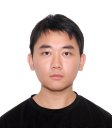
 Zhenbang Zhang
· 2 previous affiliations
- MS student · 2025–2027
- Shandong University2021–2025
- Undergrad student · 2021–2025
Research Overview
Zhenbang Zhang focuses on computational imaging, 3D registration for electron microscopy, and generative video processing. His work develops unsupervised optimization frameworks and frequency-domain techniques to correct distortions in biological imaging and align complex temporal data. Recently, he has expanded into generative video inbetweening, designing sampling methods that resolve motion conflicts in diffusion models.
Research Trajectory
The initial focus of Zhang’s documented research centers on the complex computational challenges of reconstructing 3D cellular structures from Series Section Electron Microscopy (ssEM). In ssEM, biological tissue is physically sliced into ultrathin sections and imaged sequentially. The physical sectioning process inevitably introduces artificial nonlinear distortions, such as stretching, tearing, and folding. The primary computational hurdle is distinguishing these technical artifacts from the natural, complex morphological variations of the biological structures themselves.
To address this, Zhang introduced novel filtering and optimization techniques that separate noise from true biological signals. In 2025, he developed A Gaussian Filter-Based 3D Registration Method for Series Section Electron Microscopy. Rather than relying purely on spatial feature matching, this approach treats the entire image stack as a signal in the frequency domain. By applying a 1D Gaussian filter along the z-axis (the depth of the stack), the method successfully decouples the high-frequency noise caused by artificial nonlinear distortions from the low-frequency signals that represent natural biological deformations. This frequency-domain modulation enables faster and more accurate 3D reconstructions of cellular structures. This work contributes to the research direction of Coarse to Fine Refinement for Motion Estimation and advances the broader area of Amortized Optimization for Real-Time Deformable Image Registration.
Building on the need for robust, large-scale tissue reconstruction, Zhang subsequently expanded his approach to incorporate continuous mathematical modeling. He developed NeuroTrajReg, detailed in Unsupervised Trajectory Optimization for 3D Registration in Serial Section Electron Microscopy using Neural ODEs. This unsupervised framework fundamentally redefines 3D registration for electron microscopy as a continuous trajectory optimization problem rather than a discrete slice-to-slice matching task. By combining the rapid convergence properties of Gauss-Seidel iterations with the flexible, continuous modeling capabilities of Neural Ordinary Differential Equations (ODEs), NeuroTrajReg effectively removes technical distortions while preserving the natural shapes of biological structures across massive image stacks. This methodology aligns with the research direction of Diffeomorphic Constraints for Physically Plausible Image Registration, ensuring that the mathematical transformations applied to the tissue do not result in physically impossible folding or tearing. Furthermore, by treating the sequence of slices as a continuous flow, the work intersects with the area of Global Temporal Optimization for Consistent Video Geometry and supports efforts in the research direction of Preserving High-Frequency Textures in Image Restoration.
In 2026, Zhang’s research trajectory demonstrated a shift from spatial alignment in microscopy to temporal alignment in generative models. Specifically, he began addressing the challenges of video inbetweening—the process of generating smooth, coherent intermediate frames between a given starting and ending frame. He introduced Motion-Residual Conflict-Aware Time Reversal for Generative Inbetweening, which presents MR-CATR, a plug-and-play sampling framework for diffusion models. In generative video inbetweening, running forward and backward denoising paths simultaneously often creates conflicting motion "priors," leading to visual artifacts like ghosting and jitter. MR-CATR resolves this by aligning the conflicting motion residuals into a single consensus axis during the sampling phase. Because it operates entirely during sampling, the framework eliminates these artifacts without requiring any additional model training. This contribution significantly advances the research direction of Bidirectional Constraints for Generative Video Inbetweening.
Current Directions
The most recent papers in the evidence indicate a strong focus on temporal consistency and optimization within generative video models. Recent work investigates how to resolve conflicting motion priors during the sampling phase of diffusion models, enabling high-quality video inbetweening without the need for computationally expensive retraining. This suggests an ongoing interest in developing training-free, plug-and-play optimization techniques that enforce physical and temporal plausibility. Across both his work in spatial imaging stacks for microscopy and his recent transition into generative video sequences, a unifying theme is the design of elegant mathematical constraints—whether through frequency-domain filtering, Neural ODEs, or consensus-axis projections—to extract coherent, continuous signals from complex, noisy data.
Profile updated
Loading new papers…
Other researchers whose papers cluster into the same research directions — a proxy for overlapping technical interests and shared intellectual neighborhoods.
See something wrong? Report a mistake