

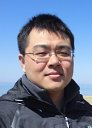
 Zhen Ming Jack Jiang
· 1 previous affiliation
- York UniversitySince 2013
- Associate Professor · Since 2013
- Current
Research Overview
Zhen Ming Jack Jiang focuses on software performance engineering, log analysis, and the maintenance of large-scale software systems. His early work explored the use of distributed computing for mining software repositories, while his more recent research investigates performance testing methodologies and empirical evaluations of code clone detection techniques.
Research Trajectory
Jiang’s research trajectory began with efforts to scale software engineering research using distributed systems. In 2009, he co-authored MapReduce as a general framework to support research in Mining Software Repositories (MSR), proposing the use of Hadoop to accelerate resource-intensive repository mining tasks. He continued to explore the intersection of big data and software engineering, later co-authoring Assisting developers of big data analytics applications when deploying on hadoop clouds, which addressed the challenges developers face when migrating analytics applications from small-scale sample environments to large-scale cloud deployments.
In parallel, a major theme emerged in Jiang's work around system execution logs and their role in software maintenance. In 2011, he co-authored An Exploratory Study of the Evolution of Communicated Information about the Execution of Large Software Systems, examining how developers use logs and system events to convey domain knowledge. Building on this foundation, Jiang led research as senior author on Understanding Log Lines Using Development Knowledge in 2014. This work directly addressed the difficulties practitioners face in interpreting complex log outputs, proposing methods to help operators unravel the meaning of logs during system maintenance and troubleshooting.
As software systems grew in complexity, Jiang also contributed to the field of software performance engineering. He participated as a collaborating author in research identifying inefficiencies in database abstractions, such as Finding and Evaluating the Performance Impact of Redundant Data Access for Applications that are Developed Using Object-Relational Mapping Frameworks. Additionally, he collaborated on industrial applications of performance testing, contributing to Analytics-Driven Load Testing: An Industrial Experience Report on Load Testing of Large-Scale Systems. This 2017 work documented the practical challenges and methodologies involved in simulating massive concurrent user loads to uncover performance bottlenecks in enterprise environments.
Current Directions
The most recent work in the evidence, dating to 2023, investigates empirical software engineering with a focus on code maintenance and vulnerability management. Specifically, Jiang's recent research as a principal investigator examines the efficacy of various code clone detection techniques. This involves systematically comparing how text-based, token-based, and abstract syntax tree (AST) methods perform across different software artifacts, helping to establish best practices for identifying code duplication in C-based projects.
Profile updated
Loading new papers…
Loading research neighbors…
See something wrong? Report a mistake