

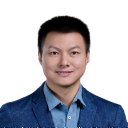
 Zhen Li
· 1 previous affiliation
- Beihang UniversitySince 2018
- Assistant Professor · Since 2018
17 other authors named Zhen Li: Zhen Li (WeRide.ai · 56 papers), Zhen Li (Chinese University of Hong Kong · 43 papers), Zhen Li (Alaya Lab · Beijing Institute of Technology · 15 papers), Zhen Li (Qingdao University · 12 papers), Zhen Li (Huazhong University of Science and Technology · 6 papers), and 12 more
Research Overview
Zhen Li focuses on 3D computer vision, autonomous driving perception, and computational biology. His early work established foundational methods for protein structure prediction and RGB-D scene understanding, evolving into large-scale 3D point cloud processing and multi-modal sensor fusion. Most recently, his research addresses sparse 3D perception for autonomous systems and generative modeling for biomolecular design.
Research Trajectory
Li’s research trajectory initially developed along two parallel tracks: computational biology and 3D visual scene understanding. In the biological domain, his early work addressed the challenges of protein sequence modeling. He introduced Protein Secondary Structure Prediction Using Cascaded Convolutional and Recurrent Neural Networks in 2016, contributing to the research direction of Modeling Long-Range Dependencies in Protein Sequences. Building on this foundation, he presented Folding Membrane Proteins by Deep Transfer Learning in 2017, advancing the domain of Structural Characterization of the Membrane Proteome. That same year, he contributed to Accurate De Novo Prediction of Protein Contact Map by Ultra-Deep Learning Model, an ultra-deep residual network approach that intersected with the broader area of Integrating Evolutionary Sequences with Geometric Protein Structures. He continued to refine these sequence-to-structure methodologies by proposing Transmembrane Topology Identification by Fusing Evolutionary and Co-evolutionary Information with Cascaded Bidirectional Transformers in 2019.
Concurrently, Li explored visual perception and spatial reasoning. He developed LSTM-CF: Unifying Context Modeling and Fusion with LSTMs for RGB-D Scene Labeling, which captured and fused contextual information from photometric and depth channels for semantic labeling. Expanding into volumetric data, he collaborated on High-Resolution Shape Completion Using Deep Neural Networks for Global Structure and Local Geometry Inference, a data-driven architecture that advanced the research area of Reconstructing Complete Geometry from Partial Point Clouds.
Moving into the 2020s, Li’s focus in computer vision shifted toward robust, large-scale point cloud processing and medical imaging. He was part of a team that developed PointASNL: Robust Point Clouds Processing Using Nonlocal Neural Networks With Adaptive Sampling, an end-to-end network designed to handle noise and outliers in 3D data. His group later introduced 2DPASS: 2D Priors Assisted Semantic Segmentation on LiDAR Point Clouds, leveraging cross-modal priors to improve LiDAR segmentation. In the medical domain, he participated in the creation of AMOS: A Large-Scale Abdominal Multi-Organ Benchmark for Versatile Medical Image Segmentation, providing a diverse clinical dataset to evaluate deep learning models. Alongside these vision projects, his lab continued to advance computational biology, developing Prior knowledge facilitates low homologous protein secondary structure prediction with DSM distillation.
By 2024, Li’s visual perception research became heavily oriented toward autonomous driving and multi-modal sensor fusion. His team presented the Two-Stage LVLM system: 1st Place Solution for ECCV 2024 Corner Case Scene Understanding Challenge, which utilized large vision-language models to generate perception descriptions and driving suggestions for complex scenarios. To bridge the gap between simple bounding boxes and dense scene reconstruction, he led research into Towards Flexible 3D Perception: Object-Centric Occupancy Completion Augments 3D Object Detection. His group also designed DV-3DLane: End-to-end Multi-modal 3D Lane Detection with Dual-view Representation, a framework that fused camera and LiDAR data across perspective and bird’s-eye views using deformable attention. Continuing this trajectory into 2025, he directed the development of SQS: Enhancing Sparse Perception Models via Query-based Splatting in Autonomous Driving, a pre-training framework that utilized 3D Gaussian Splatting to reconstruct scenes from sparse queries.
Most recently, Li has returned to biomolecular design with advanced generative techniques. His 2026 work explores RNA inverse folding in Learning Adaptive Topology with FiLM-Guided Distillation for Tertiary Structure-Based RNA Design. By moving away from rigid graph structures and leveraging foundation models, this work contributes to the research direction of Cross-Modal Distillation for Efficient and Robust Inference.
Current Directions
Li’s most recent research operates at the intersection of sparse 3D perception for autonomous systems and generative modeling for biological structures. In the autonomous driving domain, his work investigates query-centric perception models and multi-modal sensor fusion. By utilizing techniques like object-centric occupancy prediction and 3D Gaussian Splatting, his lab addresses the computational bottlenecks of dense scene reconstruction while improving detection accuracy in scenarios with limited labeled data or distant occlusions. His recent vision research also encompasses the broader area of 3D Spatial Reasoning in Multimodal Language Models, utilizing large vision-language architectures to interpret complex, corner-case driving environments.
Simultaneously, his work in computational biology focuses on the inverse design of molecular structures. The most recent papers in the evidence address the challenge of designing nucleotide sequences that fold into specific 3D RNA shapes. By integrating adaptive graph topologies and distillation techniques with large-scale foundation models, this research aims to create more flexible and accurate generative frameworks for biomolecular engineering.
Profile updated
Loading new papers…
Other researchers whose papers cluster into the same research directions — a proxy for overlapping technical interests and shared intellectual neighborhoods.
See something wrong? Report a mistake