

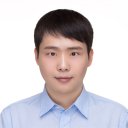
 Zhen Fang
· 1 previous affiliation
- University of Technology SydneySince 2018
- Assistant Professor · Since 2023
- Postdoc · 2021–2023
- PhD student · 2018–2021
1 other author named Zhen Fang: Zhen Fang (University of Science and Technology of China · 9 papers)
Research Overview
Zhen Fang focuses on statistical learning theory, transfer learning, and out-of-distribution generalization. His trajectory spans foundational theoretical bounds for open-set domain adaptation to the practical deployment of robust machine learning models. Most recently, his work addresses the theoretical underpinnings and reliability of large foundation models, including vision-language architectures and large language models.
Research Trajectory
Zhen Fang’s early research established theoretical foundations for adapting machine learning models across differing data distributions, particularly when the target environment contains unknown classes. In 2019, he introduced a framework for unsupervised open set domain adaptation (UOSDA) in Open Set Domain Adaptation: Theoretical Bound and Algorithm, which was later expanded into a comprehensive journal article, Open Set Domain Adaptation: Theoretical Bound and Algorithm. This work provided a learning bound and algorithm for scenarios where target domains feature classes absent from the source domain, contributing significantly to the broader area of Open Set and Universal Domain Adaptation. Building on this theoretical focus, he provided a formal generalization error bound for open-set learning in Learning Bounds for Open-Set Learning, proving that open-set estimation errors can match standard closed-set rates and introducing the Auxiliary Open-Set Risk (AOSR) algorithm to identify unknown classes at test time. During this period, he also collaborated on How Does the Combined Risk Affect the Performance of Unsupervised Domain Adaptation Approaches?, which analyzed the often-overlooked combined risk term in classical unsupervised domain adaptation bounds and its impact on target classifier performance.
Moving into 2022 and 2023, his focus expanded to the formal learnability of out-of-distribution (OOD) detection and semi-supervised adaptation. He investigated the probably approximately correct (PAC) learning theory of OOD detection in Is Out-of-Distribution Detection Learnable?, addressing an open problem regarding the necessary conditions for models to generalize to unseen distributions. This theoretical inquiry aligns with the research direction of Distinguishing Semantically Similar Outliers from Known Classes. He subsequently established generalization error bounds for semi-supervised heterogeneous domain adaptation in Semi-Supervised Heterogeneous Domain Adaptation: Theory and Algorithms, explaining how limited labeled data in a target domain can be effectively combined with heterogeneous source data. Concurrently, his research group addressed the challenge of catastrophic forgetting in sequential learning tasks, developing a pooled feature distillation loss in Continual Named Entity Recognition without Catastrophic Forgetting to balance the retention of old entity types with the acquisition of new ones.
By 2024, his work increasingly leveraged unlabeled data and advanced density estimation to improve OOD detection. He contributed to How Does Unlabeled Data Provably Help Out-of-Distribution Detection?, which introduced the Separate And Learn (SAL) framework. By applying singular value decomposition to gradient matrices, SAL filters candidate outliers from mixed "wild" data, offering rigorous theoretical guarantees for separability. His lab also proposed ConjNorm: Tractable Density Estimation for Out-of-Distribution Detection, advancing the ability of models to flag anomalous inputs that deviate from their training distributions.
In 2025 and 2026, his trajectory shifted toward the temporal dynamics of data and the reliability of large foundation models. To address concept drift in real-world data streams, his team developed FreKoo in Learning Robust Spectral Dynamics for Temporal Domain Generalization. This framework analyzes model parameter evolution in the frequency domain, separating predictable long-term trends from short-term noise to generalize to unseen future domains. He also directed research into the theoretical mechanisms of pretrained models, formulating An Information-theoretical Framework for Understanding Out-of-distribution Detection with Pretrained Vision-Language Models. This work provided a formal basis for the empirical success of models like CLIP in OOD tasks, advancing work in the area of Learning from What an Input Is Not.
Most recently, his research has tackled the safety and factual reliability of Large Language Models (LLMs). He guided the development of Targeted Reasoning Unlearning (TRU) in Explainable LLM Unlearning through Reasoning, a method that trains models with reasoning traces to precisely remove specific knowledge without degrading general intelligence or generating incoherent text. He also partnered on Beyond In-Domain Detection: SpikeScore for Cross-Domain Hallucination Detection, which detects LLM hallucinations in novel domains by measuring abrupt uncertainty spikes across multi-turn dialogues. Finally, his group explored multi-modal representation learning in Delving into Spectral Clustering with Vision-Language Representations, utilizing the semantic alignment of vision-language models to construct a Neural Tangent Kernel-based affinity matrix that significantly improves spectral clustering performance.
Current Directions
The most recent papers in the evidence indicate a strong focus on the reliability, safety, and theoretical grounding of large foundation models. A major current direction involves LLM unlearning and hallucination detection, where recent work investigates how to selectively erase knowledge using explainable reasoning traces and how to detect cross-domain factual errors by analyzing uncertainty fluctuations in multi-turn dialogues.
Additionally, current research explores the integration of Vision-Language Models (VLMs) into classical machine learning paradigms. This includes developing information-theoretical frameworks to explain why VLMs excel at out-of-distribution detection, as well as leveraging their rich semantic representations to enhance unsupervised tasks like spectral clustering. Finally, ongoing work addresses temporal domain generalization, investigating how spectral dynamics and frequency-domain analysis can help models adapt to continuous concept drift in time-series data.
Profile updated
Loading new papers…
Other researchers whose papers cluster into the same research directions — a proxy for overlapping technical interests and shared intellectual neighborhoods.
See something wrong? Report a mistake