

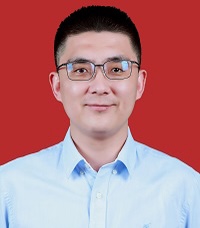
 Zhen Dong
· 1 previous affiliation
- Wuhan UniversitySince 2022
- Full Professor · Since 2022
3 other authors named Zhen Dong: Zhen Dong (Nvidia (United States) · University of California, Santa Barbara · 93 papers), Zhen Dong (Fudan University · 9 papers), Zhen Dong (China Central Depository & Clearing Co, Ltd · 2 papers)
Research Overview
Zhen Dong focuses on 3D computer vision, point cloud processing, and scene understanding, with particular emphasis on applications in intelligent transportation, digital twin cities, and robotics. His trajectory spans from early work on automated feature extraction from airborne laser scanning to robust point cloud registration and multi-task synthetic perception. Currently, he investigates spatial reasoning in 3D large language models and the integration of generative diffusion features for cross-modal knowledge transfer.
Research Trajectory
Dong’s early research established foundational methods for processing and extracting structural information from raw 3D data. In 2013, he developed techniques for the Automated Extraction of Building Outlines From Airborne Laser Scanning Point Clouds, utilizing a marked point process and Gibbs energy models to accurately delineate building footprints from aerial data. This focus on geometric accuracy naturally extended into the fundamental challenge of aligning disparate 3D scans. Contributing to the broader research area of Overcoming Local Minima in Iterative Point Registration, he introduced Iterative Global Similarity Points: A Robust Coarse-to-Fine Integration Solution for Pairwise 3D Point Cloud Registration (2018). This algorithm unified coarse and fine alignment within a single framework, leveraging a hybrid metric space to handle repetitive structures and uneven point densities.
As deep learning transformed 3D vision, Dong's work evolved to incorporate neural architectures for feature matching and geometric estimation. He participated in the development of Learnable Motion Coherence for Correspondence Pruning (2021), a network that filters putative image matches by enforcing motion coherence through a differentiable graph Laplacian. In the same year, he addressed the complexities of noisy and unevenly sampled 3D data with AdaFit: Rethinking Learning-based Normal Estimation on Point Clouds, which improved upon traditional weighted least squares surface fitting by adding an offset prediction mechanism. His research also expanded into the domain of Cross-Modal Knowledge Transfer for 3D Point Clouds. A key contribution in this area was his collaborative work on P2-Net: Joint Description and Detection of Local Features for Pixel and Point Matching (2021), which established a shared latent space to directly find correspondences between 2D image pixels and 3D point cloud points without relying on intermediate 3D reconstruction.
By 2023, Dong was synthesizing the field's advancements in Progress and perspectives of point cloud intelligence, while continuing to push the boundaries of specific 3D tasks. He contributed to RoReg: Pairwise Point Cloud Registration With Oriented Descriptors and Local Rotations (2023), a framework that explicitly incorporates descriptor orientations and estimated local rotations throughout the entire registration pipeline. Concurrently, he explored shape generation in Point Cloud Completion Via Skeleton-Detail Transformer (2023), utilizing a coarse-to-fine architecture that captures both long-distance skeletal correlations and local geometric details.
A significant portion of Dong's trajectory involves translating theoretical 3D vision into robust systems for real-world environments. He guided the creation of wearable mapping technologies, detailed in Real-time automated forest field inventory using a compact low-cost helmet-based laser scanning system (2023). To support further research in GNSS-denied environments, his team released WHU-Helmet: A Helmet-Based Multisensor SLAM Dataset for the Evaluation of Real-Time 3-D Mapping in Large-Scale GNSS-Denied Environments (2023). Addressing urban localization challenges, he proposed Reliable-loc: Robust sequential LiDAR global localization in large-scale street scenes based on verifiable cues (2024). His work in remote sensing also includes Investigating Dual-Source Satellite Image Data and ALS Data for Estimating Aboveground Biomass (2024) and the introduction of deep learning to traditional photogrammetry in DeepAAT: Deep Automated Aerial Triangulation for Fast UAV-based Mapping (2024).
Recognizing the limitations of single-task datasets in 3D vision, Dong directed efforts toward unified perception models. This resulted in the creation of comprehensive synthetic environments, introduced in VEnvision3D: A Synthetic Perception Dataset for 3D Multi-Task Model Research (2024) and further formalized in WHU-Synthetic: A Synthetic Perception Dataset for 3-D Multitask Model Research (2025). These datasets provide synchronized data for depth completion, segmentation, and reconstruction, enabling the training of end-to-end multi-task architectures. Simultaneously, he continued to advance cross-modal registration with FreeReg: Image-to-Point Cloud Registration Leveraging Pretrained Diffusion Models and Monocular Depth Estimators (2024), a zero-shot framework that bypasses complex metric learning by utilizing the internal representations of generative models. Most recently, his collaborative research has expanded into embodied AI and spatial reasoning. In SCoT: Teaching 3D-LLMs to Think Spatially with Million-scale CoT Annotations (2026), he helped develop a massive dataset of grounded reasoning traces, demonstrating that while Chain-of-Thought prompting aids high-level spatial planning, it requires careful calibration to avoid degrading basic perception tasks. Furthermore, Dong contributed to point cloud anomaly detection in non-industrial settings with Nature3D-AD: Geometry-Aware Feature Learning for Natural-Growth 3D Anomaly Detection (2026), introducing the NaturalGrowth benchmark alongside curvature-, density-, and spectral-aware attention mechanisms tailored to organic shapes.
Current Directions
The most recent papers in the evidence indicate a strong focus on integrating 3D computer vision with large-scale foundation models and multi-task learning paradigms. Dong is actively investigating how to endow 3D Large Language Models (3D-LLMs) with complex spatial reasoning and planning capabilities, moving beyond simple object recognition toward nuanced, grounded deliberation. Additionally, his work addresses the unification of disparate 3D vision tasks—such as segmentation, reconstruction, and place recognition—through the development of large-scale synthetic datasets that support end-to-end multi-task architectures. He also continues to explore zero-shot and cross-modal perception, leveraging the latent feature spaces of pretrained diffusion models to bridge the gap between 2D imagery and 3D point clouds without the need for extensive supervised training.
Profile updated
Loading new papers…
Other researchers whose papers cluster into the same research directions — a proxy for overlapping technical interests and shared intellectual neighborhoods.
See something wrong? Report a mistake