

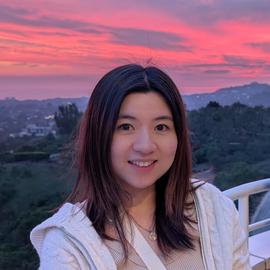
 Zhe Zeng
· 3 previous affiliations
- University of VirginiaSince 2025
- Assistant Professor · Since 2025
- New York University2024–2025
- Postdoc · 2024–2025
- PhD student · 2018–2024
Research Overview
Zhe Zeng focuses on neurosymbolic artificial intelligence, probabilistic machine learning, and reasoning under constraints. Her early work established foundational methods for weighted model integration and hybrid probabilistic inference, enabling models to handle complex logical and arithmetic constraints. Currently, she investigates trustworthy AI, developing techniques for constrained deep generative modeling, differentiable routing, and concept representation learning.
Research Trajectory
Zhe Zeng’s early research involved participation in distributed inference algorithms, specifically contributing to Stein Variational Message Passing for Continuous Graphical Models in 2018. This work advanced the area of Particle Methods for Multi-Modal Bayesian Inference and explored techniques for Mitigating Variance Collapse in High-Dimensional Particle Inference by utilizing methods in the research direction of Localized Repulsion and Mixture Guides in Stein Variational Inference.
Between 2019 and 2021, her focus shifted to the theoretical and algorithmic foundations of hybrid probabilistic inference. She introduced Efficient Search-Based Weighted Model Integration, improving inference over mixed discrete-continuous domains. She subsequently established formal boundaries for this approach in Probabilistic Inference with Algebraic Constraints: Theoretical Limits and Practical Approximations, proving that exact inference requires tree-shaped structures with logarithmic diameter. To address the practical scalability of these models, she developed message-passing techniques in Scaling up Hybrid Probabilistic Inference with Logical and Arithmetic Constraints via Message Passing. She also extended these theoretical guarantees to parameter learning for log-linear models in Is Parameter Learning via Weighted Model Integration Tractable?.
In 2023, her work began bridging exact probabilistic inference with deep learning architectures. She proposed Collapsed Inference for Bayesian Deep Learning, adapting weighted model integration to significantly improve the computational efficiency of Bayesian Neural Networks. In parallel, she addressed the intractability of generative models with A Unified Knowledge Distillation Framework for Deep Directed Graphical Models, utilizing the reparameterization trick to distill complex, multi-layered models into efficient student networks. She also directed research on incorporating strict domain rules into machine learning, introducing generalized methods in Gradient Estimation For Exactly-$k$ Constraints to enforce exact-count constraints across continuous and count data.
In 2024, she synthesized her overarching research vision in Neurosymbolic Learning and Reasoning for Trustworthy AI. Additionally, she collaborated on graph machine learning, participating in the development of Probabilistically Rewired Message-Passing Neural Networks. This work addresses information bottlenecks in noisy graphs and advances the research direction of Decoupled Graph Structure Refinement and Rewiring.
Returning to the challenge of strict constraints, she developed Deep Generative Models with Hard Linear Equality Constraints in 2025. This framework ensures that generated data strictly adheres to physical or mathematical rules by transforming the underlying distribution rather than relying on post-hoc corrections, contributing to the broader areas of Enforcing Hard Linear Constraints by Construction and Hard Constraints for Physically Consistent Neural Networks.
Her most recent work in 2026 expands into large language models, sparse architectures, and explainability. She guided research on Automatic Layer Selection for Hallucination Detection, introducing a training-free method to identify the most informative intermediate layers for assessing internal truth in language models. In the domain of sparse models, she oversaw the development of ProbMoE: Differentiable Probabilistic Routing for Mixture-of-Experts, which frames expert routing as a probabilistic inference problem to stabilize training and prevent expert collapse. Finally, she directed efforts in neurosymbolic integration and explainable AI with Unifying Concept Representation Learning, focusing on how neural backbones and symbolic reasoning can be bridged through the extraction of high-quality, interpretable concepts.
Current Directions
Based on her most recent research, Zeng’s current work focuses on scaling trustworthy AI mechanisms to modern, large-scale architectures. A primary theme is the development of constrained generative models that inherently respect physical laws and hard mathematical constraints by design. She is also actively investigating reliability in large language models, specifically designing intrinsic, training-free methods to detect and mitigate hallucinations by analyzing the internal geometry of the models' intermediate representations. Furthermore, her research explores probabilistic approaches to dynamic neural architectures, applying rigorous inference techniques to optimize routing in sparse models like Mixture-of-Experts. Across these domains, she continues to advance neurosymbolic concept learning, aiming to bridge perception and symbolic reasoning to create more robust and explainable AI systems.
Profile updated
| Title | Venue | Year |
|---|---|---|
| ProbMoE: Differentiable Probabilistic Routing for Mixture-of-Experts | ICML | 2026 |
| Unifying Concept Representation Learning | Proposals @ ICLR | 2026 |
| Automatic Layer Selection for Hallucination Detection | ICML | 2026 |
| The Clever Hans Mirage: A Comprehensive Survey on Spurious Correlations in Machine Learning | TMLR | 2025 |
| Deep Generative Models with Hard Linear Equality Constraints | arXiv | 2025 |
| Neurosymbolic Learning and Reasoning for Trustworthy AI | Dblp | 2024 |
| Probabilistically Rewired Message-Passing Neural Networks | ICLR | 2024 |
| Probabilistic Task-Adaptive Graph Rewiring | Differentiable Almost Everything @ ICML | 2023 |
| A Unified Approach to Count-Based Weakly Supervised Learning | NeurIPS | 2023 |
| Gradient Estimation For Exactly-$k$ Constraints | AI4Science @ NeurIPS | 2023 |
Loading new papers…
Other researchers whose papers cluster into the same research directions — a proxy for overlapping technical interests and shared intellectual neighborhoods.
See something wrong? Report a mistake