

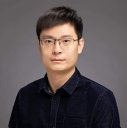
 Zhe Wang
· 1 previous affiliation
- Chinese Academy of SciencesSince 2021
- Associate Professor · Since 2021
23 other authors named Zhe Wang: Zhe Wang (Griffith University · 55 papers), Zhe Wang (Google (United States) · University College London · 43 papers), Zhe Wang (39 papers), Zhe Wang (East China University of Science and Technology · 36 papers), Zhe Wang (Sensetime (China) · SenseTime商汤科技 · 16 papers), and 18 more
Research Overview
Zhe Wang focuses on systems security, software debugging, and machine learning architectures. Early research addressed the non-determinism of concurrency bugs in multi-threaded environments through hardware-assisted techniques. More recently, the trajectory has expanded to include hardware-level vulnerability mitigation, symbolic execution, and diverse computational themes ranging from recommendation systems to code intelligence.
Research Trajectory
The available evidence presents a sparse but highly varied research trajectory spanning machine learning, software engineering, and systems security. Early associations in the corpus point to foundational machine learning topics, including work in the research direction Intra-class Compactness for Robust Feature Representations around 2010. This area focuses on organizing embedding spaces so that samples within the same category are tightly clustered, improving model robustness. By 2016, the evidence indicates participation in the area of Computer Vision in the Compressed Domain, which explores methods to optimize computationally expensive video analysis pipelines by calculating optical flow directly from compressed bitstreams rather than decoding raw frames.
By 2018, the documented focus shifted toward software engineering and debugging. As the first author of Using Local Clocks to Reproduce Concurrency Bugs, Wang led efforts to mitigate the non-determinism inherent in multi-threaded programs. Traditional record-and-replay approaches for exposing concurrency bugs often suffer from significant performance degradation due to the massive amount of recorded information and lengthy analysis times required. This work introduced an approach leveraging the hardware clocks available on modern processors to improve the efficiency and effectiveness of reproducing these complex bugs.
In subsequent years, the trajectory expanded into systems security and program analysis, characterized primarily by collaborative contributions. In 2021, Wang was a contributing co-author on SoftTRR: Protect Page Tables Against RowHammer Attacks using Software-only Target Row Refresh. This project addressed the severe threat of Rowhammer attacks that corrupt level-1 page tables to achieve kernel privilege escalation. The paper proposed a software-based defense mechanism that refreshes targeted rows upon detecting suspicious activity, aiming to overcome the security limitations of hardware-based ChipTRR, which can only track a limited number of rows. During this period, Wang also participated in advanced program analysis research, contributing as a middle author to Ferry: State-Aware Symbolic Execution for Exploring State-Dependent Program Paths in 2022.
Concurrently, the evidence indicates ongoing involvement in large-scale machine learning and recommendation architectures. Around 2020, this included the research direction Cross-Tower Interaction for Large-Scale Recommendation, addressing the efficiency-accuracy trade-offs in dual-encoder architectures used to handle millions of items in real-time systems.
Current Directions
The most recent evidence from 2022 and 2023 indicates a dual focus on systems security and advanced machine learning paradigms. On the systems side, recent collaborative work continues to address hardware-software security boundaries, particularly the ongoing refinement of software-only mitigations for Rowhammer attacks on x86 architectures.
Simultaneously, Wang is associated with emerging methodologies in artificial intelligence. This includes the research direction Scaling Code Intelligence via Seed-Grounded Synthetic Data, which explores how structured synthetic datasets can overcome the noise and formatting limitations of raw source code when fine-tuning large language models for programming tasks. Additionally, recent themes highlight ongoing work in recommendation systems, specifically the area of Wide and Deep Learning for Memorization and Generalization, which balances the learning of frequent historical correlations with the ability to generalize to new data. This is complemented by the theme Multimodal Feature Fusion for Recommender Systems, reflecting a shift away from arbitrary numerical placeholders toward systems that leverage the inherent semantic meaning of users and items.
Profile updated
| Title | Venue | Year |
|---|---|---|
| SoftTRR: Protect Page Tables against Rowhammer Attacks using Software-only Target Row Refresh | Usenix Annual Technical Conference | 2022 |
| Ferry: State-Aware Symbolic Execution for Exploring State-Dependent Program Paths | USENIX Security | 2022 |
| Using Local Clocks to Reproduce Concurrency Bugs | IEEE Trans. Software Eng | 2018 |
Loading new papers…
Other researchers whose papers cluster into the same research directions — a proxy for overlapping technical interests and shared intellectual neighborhoods.
See something wrong? Report a mistake