

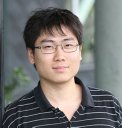
 Zhaohan Daniel Guo
· 3 previous affiliations
- Google (United Kingdom)Since 2019
- Research Scientist · Since 2019
- Carnegie Mellon University2013–2018
- PhD student · 2013–2018
- University of Toronto2009–2013
- Undergrad student · 2009–2013
Research Overview
Zhaohan Daniel Guo focuses on reinforcement learning (RL), representation learning, and the alignment of large language models (LLMs). His work spans the theoretical analysis of sample complexity in partially observable environments, the development of directed exploration strategies, and the optimization dynamics of self-supervised representation learning. Recently, his research has concentrated on the mathematical foundations of preference optimization and the scaling of non-contrastive learning methods for general-purpose representations.
Research Trajectory
Guo’s early research, beginning around 2014, addressed fundamental challenges in natural language processing and reinforcement learning theory. His initial work utilized recursive neural networks for semantic classification, emphasizing compositionality in continuous space representations. By 2016, his focus shifted toward the theoretical limits of RL in complex environments, specifically addressing the sample complexity of Partially Observable Markov Decision Processes (POMDPs). During this period, he contributed to the development of algorithms with polynomial bounds on performance, moving beyond the exponential complexity that previously characterized partially observable domains.
In the late 2010s, Guo transitioned toward improving the efficiency of RL agents in long-horizon and sparse-reward settings. This involved investigating off-policy evaluation (OPE) and exploration. He explored the use of "options"—temporally extended actions—to mitigate the variance issues inherent in importance sampling for long-horizon problems. He also developed methods for directed exploration that replaced traditional uncertainty bonuses with goal-conditioned policies, allowing agents to actively target and visit uncertain states. During this time, he also participated in large-scale benchmarking efforts, such as the development of Agent57, which achieved supra-human performance across the Atari suite by integrating diverse RL techniques.
From 2022 onward, Guo’s work has increasingly focused on the intersection of representation learning and model alignment. He has conducted extensive research into self-predictive learning, identifying the specific optimization dynamics—such as stop-gradients and predictor pacing—required to prevent representation collapse. This line of inquiry provided a theoretical link between self-prediction and spectral decomposition of environment dynamics. Most recently, his work has addressed the alignment of LLMs, specifically the transition from complex Reinforcement Learning from Human Feedback (RLHF) pipelines to more stable offline preference optimization methods. His current research also seeks to provide a unified theoretical framework for non-contrastive self-supervised learning, bridging the gap between mutual information maximization and efficient, scalable representation learning.
Representative Work
Guo’s contributions to reinforcement learning theory are exemplified by A PAC RL Algorithm for Episodic POMDPs. In this work, he addressed the difficulty of learning in partially observable environments, where existing sample complexity bounds were typically exponential relative to the episode length. By leveraging advances in the method of moments for latent variable model estimation, he developed an algorithm with a polynomial bound on the number of episodes required to reach near-optimal performance, specifically for a significant class of episodic POMDPs.
Addressing the challenges of evaluation without environment interaction, Using Options for Long-Horizon Off-Policy Evaluation investigates the limitations of importance sampling. Guo proposed that the exponential scaling of data requirements relative to the decision horizon could be mitigated by using policies over temporally extended actions. This approach allows for more robust off-policy evaluation in continuous state and action spaces, which is critical for domains where deploying a new policy for testing is prohibitively expensive or risky.
In the domain of exploration, Directed Exploration for Reinforcement Learning introduces a departure from the standard practice of adding uncertainty bonuses to reward functions. Guo argued that such bonuses create a "moving target" that can destabilize the learning process. Instead, he proposed learning a separate goal-conditioned policy designed to specifically target states with high uncertainty. This method facilitates faster and more robust exploration, particularly in environments where rewards are sparse and traditional exploration fails to provide sufficient signal.
Guo has also contributed significantly to the understanding of how agents learn internal representations. In Understanding Self-Predictive Learning for Reinforcement Learning, he examined why self-predictive models—which learn by predicting their own future latent states—do not simply collapse into trivial constant solutions. The research identified that the interaction between semi-gradient updates and the relative optimization speed of the predictor is essential. This work established that these specific architectural and optimization choices force the model to perform a spectral decomposition of the transition dynamics, providing a rigorous foundation for what had previously been an empirical success.
In the field of LLM alignment, Guo’s work on Generalized Preference Optimization: A Unified Approach to Offline Alignment addresses the complexity of fine-tuning models to match human values. While Direct Preference Optimization (DPO) had simplified the RLHF process by removing the need for an explicit reward model, it remained tied to specific approximations regarding pairwise preferences. Guo’s research provides a broader theoretical paradigm that encompasses various offline alignment objectives, offering a more unified understanding of how models can be aligned using collected preference data without the computational overhead of traditional RL.
His recent work on Representation Learning via Non-Contrastive Mutual Information attempts to reconcile two dominant paradigms in self-supervised learning: contrastive and non-contrastive methods. Contrastive methods are theoretically grounded in mutual information (MI) maximization but are computationally intensive due to the need for negative samples. Non-contrastive methods are more scalable but often lack a clear theoretical objective. Guo’s research demonstrates how non-contrastive objectives can be viewed through the lens of MI, providing a theoretical justification for efficient, scalable representation learning that avoids the pitfalls of model collapse.
Profile updated
Loading new papers…
Other researchers whose papers cluster into the same research directions — a proxy for overlapping technical interests and shared intellectual neighborhoods.
See something wrong? Report a mistake