

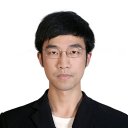
 Zhaodong Wang
· 3 previous affiliations
- Meta TBD labCurrent
- Current
- Meta (United States)2022–2024
- Researcher · 2022–2024
- Netflix (United States)2021–2022
- Researcher · 2021–2022
Research Overview
Zhaodong Wang focuses on the application of machine learning, optimization, and control theory to large-scale infrastructure and system engineering. His work addresses the efficiency and reliability of complex systems, ranging from transportation networks and logistics to modern cloud computing and wide-area networks (WAN). Currently, his research emphasizes the development of machine learning models for system optimization, including traffic engineering, network migration, and the generative modeling of system workloads to support hardware-software co-design.
Research Trajectory
The early phase of Wang’s research, spanning approximately 2015 to 2016, was grounded in control theory and operations research, with a specific focus on transportation and supply chain management. During this period, he investigated the dynamics of ordering policies and their impact on supply chain stability, as well as the use of longitudinal control systems in intelligent vehicles to mitigate environmental impacts. This work established a foundation in mathematical modeling and optimization that would later inform his approach to more complex computational systems.
By 2020, Wang’s focus shifted toward reinforcement learning (RL) and transfer learning, particularly in the context of improving the robustness and adaptability of autonomous agents. He addressed the "brittleness" of deep RL models by exploring Lipschitz Continuity for Robust Reinforcement Learning, a mathematical approach to ensuring that small changes in an agent's observations do not lead to catastrophic failures. Simultaneously, he investigated the challenges of Mitigating Negative Transfer in Lifelong Learning, where knowledge from a source task might hinder performance on a target task. This led to the development of Adaptive Weighting to Mitigate Negative Transfer, a method for dynamically adjusting the influence of prior knowledge based on task similarity.
During this mid-career period, Wang also applied these learning techniques to spatial and temporal problems. He explored Policy Transfer via Structural Mapping in Reinforcement Learning to enable agents to leverage underlying logical structures across different tasks. In the domain of urban logistics, he addressed the limitations of "greedy" assignment strategies through Future-Aware Dispatching for Dynamic Spatial Matching, which accounts for the long-term impact of current decisions on worker distribution. He also worked on Reinforcement Learning for Variable Duration Tasks, moving beyond discrete, fixed-interval time steps to better model asynchronous real-world environments.
In recent years (2022–2025), Wang has transitioned into the field of Machine Learning for Systems (ML for Systems), particularly within the context of cloud infrastructure. This work involves developing optimization models to improve the efficiency of large-scale data centers and networks. His recent contributions include the development of standardized execution traces for AI hardware benchmarking and the use of generative models to synthesize realistic system workloads. This current phase represents a synthesis of his earlier work in optimization and control with modern deep learning techniques, applied to the challenges of high-performance computing and network traffic engineering.
Current Directions
Wang’s current research is primarily focused on three areas: network optimization, system benchmarking, and generative modeling for system design. In the realm of networking, he has contributed to projects involving intent-driven routing configuration and efficient network migration for production datacenters. This includes work on traffic engineering for wide-area networks that can adapt to changing topologies, ensuring robust performance even as the underlying physical infrastructure evolves.
A significant portion of his recent work involves the use of Directed Acyclic Graphs (DAGs) to represent computational workloads. Because neural network architectures and compiler intermediate representations are natively DAGs, the ability to generate realistic, synthetic DAGs is critical for benchmarking systems without compromising intellectual property. Wang has collaborated on the development of autoregressive diffusion models that can capture both the high-level directional flow and the granular logical constraints of these graphs. This work supports the broader goal of hardware-software co-design, allowing researchers to simulate and optimize future systems using representative but privacy-preserving workloads.
Representative Work
Bounded growth of the bullwhip effect under a class of nonlinear ordering policies As the first author of this 2015 study, Wang analyzed the bullwhip effect—the phenomenon where small fluctuations in consumer demand cause increasingly large fluctuations in orders further up the supply chain. The paper examines a class of nonlinear ordering policies and provides mathematical bounds on the growth of this effect, contributing to the theoretical understanding of supply chain stability.
Emission Mitigation via Longitudinal Control of Intelligent Vehicles in a Congested Platoon In this first-author paper from 2015, Wang applied control theory to the problem of vehicle emissions in congested traffic. By developing longitudinal control strategies for intelligent vehicle platoons, the research demonstrates how automated driving systems can be optimized not just for safety and throughput, but also for environmental sustainability by reducing unnecessary acceleration and braking cycles.
Integrated Planning for Multiple Types of Locomotive Work Facilities Under Location, Routing, and Inventory Considerations Serving as the senior author, Wang oversaw this research into the complex logistics of railway management. The paper proposes an integrated planning framework that simultaneously considers the location of work facilities, the routing of locomotives, and inventory management, addressing a high-dimensional optimization problem common in large-scale transportation infrastructure.
On Solving a Class of Continuous Traffic Equilibrium Problems and Planning Facility Location Under Congestion In this 2022 first-author publication, Wang returned to traffic modeling to address the problem of facility location in the presence of congestion. The paper develops methods for solving continuous traffic equilibrium problems, providing a more realistic model for how the placement of new facilities (such as warehouses or service centers) affects and is affected by urban traffic patterns.
Transferable Neural WAN TE for Changing Topologies As a key contributor to this 2024 study, Wang addressed the challenge of Wide-Area Network (WAN) Traffic Engineering (TE). The research focuses on creating neural network-based TE models that are transferable across different network topologies. This allows for efficient traffic management even as the network structure changes due to failures or expansions, reducing the need for frequent and computationally expensive model retraining.
LayerDAG: A Layerwise Autoregressive Diffusion Model for Directed Acyclic Graph Generation Wang participated in the development of LayerDAG, a generative model presented at ICLR 2025. This work addresses the difficulty of generating realistic Directed Acyclic Graphs (DAGs) for system benchmarking. By decomposing the DAG into a sequence of bipartite graphs and using a combination of autoregressive generation and diffusion models, the framework captures the complex directional and logical dependencies required for hardware synthesis and compiler optimization.
Profile updated
Loading new papers…
Other researchers whose papers cluster into the same research directions — a proxy for overlapping technical interests and shared intellectual neighborhoods.
See something wrong? Report a mistake