

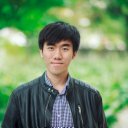
 Zhaocong Yuan
· 5 previous affiliations
- Qualcomm (United States)Since 2023
- Senior Machine Learning Engineer · Since 2023
- University of Toronto2015–2022
- Master of Applied Science (MASc), Aerospace science and Engineering · 2020–2022
- Bachelor’s Degree, Engineering Science · 2015–2019
- Nvidia (United States)2018–2019
- Deep Learning Intern · 2018–2019
- Software Engineer Intern · 2018
- Research Intern · 2017
Research Overview
Zhaocong Yuan focuses on the intersection of reinforcement learning, robotics, and the optimization of large-scale machine learning models for on-device deployment. His work addresses the challenges of safety and robustness in autonomous systems, as well as the efficiency constraints inherent in running generative models on edge hardware. Currently a Machine Learning Research Engineer at Qualcomm, Yuan’s research trajectory has evolved from developing standardized benchmarks for safe control to engineering adaptive frameworks for speculative decoding and memory-efficient neural network training.
Research Trajectory
Yuan’s academic foundations at the University of Toronto were centered on the reliability of autonomous agents. During his MASc at the Dynamic Systems Lab, he addressed a critical fragmentation in the field of robotics: the methodological divide between traditional control theory and modern reinforcement learning (RL). While control theory offers rigorous safety guarantees, it often struggles with high-dimensional state spaces; conversely, RL demonstrates high performance in complex environments but frequently lacks safety and robustness assurances. Yuan’s early work sought to bridge this gap by creating unified environments where these two paradigms could be compared and integrated. This period was characterized by a focus on "Sim-to-Real" transfer, where the primary objective was ensuring that agents trained in simulation could maintain safety constraints when deployed in physical, disturbance-prone environments.
Following his transition to industry at Qualcomm in 2023, Yuan’s focus shifted toward the computational bottlenecks of modern AI, specifically Small Language Models (SLMs) and multimodal foundation models. This shift reflects a broader movement in the field toward "on-device AI," where the goal is to move inference and fine-tuning from centralized servers to local hardware. His recent work addresses the latency and memory overhead of Large Language Models (LLMs) through techniques such as speculative decoding and forward-gradient training. In this domain, the research problems are defined by hardware constraints—specifically the need to minimize memory footprints and maximize throughput without sacrificing the accuracy of the underlying models. His current trajectory emphasizes adaptive systems that can personalize models to user data in real-time while maintaining the efficiency required for mobile and embedded platforms.
Current Directions
Yuan’s current research is concentrated on three primary pillars of efficient machine learning. The first is the optimization of LLM inference through speculative decoding. By utilizing smaller, faster "draft" models to predict tokens that a larger "target" model then verifies, this approach significantly reduces latency. Yuan’s contribution to this area involves making these systems more flexible, allowing draft models to function across different vocabularies and adapt to specific user domains.
The second pillar is on-device learning and personalization. Traditional backpropagation is memory-intensive because it requires storing intermediate activations. Yuan has participated in research exploring alternative training methodologies, such as forward-gradient methods, which allow for model updates on resource-constrained devices. This is particularly relevant for privacy-preserving AI, where user data should remain on the device rather than being sent to a cloud server for fine-tuning.
The third pillar involves the continued exploration of multimodal models and diffusion-based architectures. As generative AI moves beyond text, Yuan is investigating how these efficiency-focused techniques can be applied to vision and speech tasks, ensuring that multimodal foundation models can operate effectively within the power and thermal envelopes of mobile devices.
Representative Work
A central contribution to the field of safe autonomy is Safe-Control-Gym: A Unified Benchmark Suite for Safe Learning-Based Control and Reinforcement Learning in Robotics. As the lead author, Yuan developed this open-source framework to standardize the evaluation of safety-critical control algorithms. The suite provides a variety of robotic tasks—such as cart-pole and quadrotor stabilization—under diverse constraints and disturbances. By providing a common ground for both the control theory and RL communities, this work facilitated a more rigorous comparison of how different algorithms handle safety violations and environmental uncertainty. The project emphasized three pillars of safe autonomy: learning system dynamics, designing safety-aware reward functions or constraints, and certifying the resulting controllers.
In the domain of model robustness, Yuan contributed to Characterising the Robustness of Reinforcement Learning for Continuous Control using Disturbance Injection. This research utilized systematic fault injection to test the limits of deep RL agents in continuous action spaces. The study revealed a significant "robustness gap," demonstrating that while agents could often tolerate noise in their actions, they were highly susceptible to errors in observation and changes in underlying system dynamics. Yuan’s participation in this work helped highlight that specialized "robust" RL algorithms do not always provide a clear advantage over standard methods, suggesting a need for more sophisticated approaches to environmental uncertainty.
Yuan also participated in a comprehensive review of the field in Safe Learning in Robotics: From Learning-Based Control to Safe Reinforcement Learning. This paper serves as a roadmap for achieving safe robot autonomy, categorizing recent advances into learning dynamics, encouraging safety through optimization, and certifying controllers. The work argues for a unified approach that leverages the predictive power of machine learning alongside the formal guarantees of control theory, providing a conceptual framework for future research in the discipline.
Shifting toward efficient inference, Yuan played a significant role in the development of OmniDraft: A cross-vocabulary, online adaptive drafter for on-device speculative decoding. This work addresses two major limitations of traditional speculative decoding: the requirement that the draft and target models share the same vocabulary, and the static nature of the draft models. The OmniDraft framework introduces an online n-gram cache and hybrid distillation techniques, enabling a single, small draft model to accelerate various larger target models regardless of their vocabulary structure. Furthermore, the system adapts to user data in real-time, providing significant speedups (1.5x–2x) in domains like mathematical reasoning and coding, which is essential for responsive on-device AI applications.
Finally, Yuan contributed to the development of memory-efficient training techniques in Stepping Forward on the Last Mile. This research introduces QZO-FF, a method for training neural networks on edge devices using fixed-point forward gradients. By avoiding the memory-heavy requirements of backpropagation, the method allows for model personalization on devices with very limited RAM. The approach achieves a memory footprint nearly identical to that of inference, demonstrating that it is possible to personalize models on the "last mile" of deployment without the computational overhead typically associated with deep learning training.
Profile updated
Loading new papers…
Other researchers whose papers cluster into the same research directions — a proxy for overlapping technical interests and shared intellectual neighborhoods.
See something wrong? Report a mistake