

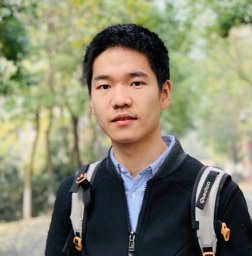
 Zequn Sun
· 1 previous affiliation
- Nanjing UniversitySince 2018
- Assistant Professor · Since 2026
- Postdoc · 2023–2025
- PhD student · 2018–2023
Research Overview
Zequn Sun focuses on knowledge graph representation learning, entity alignment, and the integration of symbolic knowledge with deep learning architectures. His trajectory spans foundational methods for multi-view and semi-supervised entity alignment to robust reasoning over incomplete data. Most recently, his work addresses the fusion of knowledge graphs with large language models for generalized, retrieval-augmented reasoning.
Research Trajectory
Starting in 2017, Sun's early research tackled the foundational challenges of aligning entities across heterogeneous knowledge graphs. He introduced Cross-Lingual Entity Alignment via Joint Attribute-Preserving Embedding to map entities across languages. Recognizing the scarcity of labeled training data in these tasks, he subsequently developed Bootstrapping Entity Alignment with Knowledge Graph Embedding, an iterative approach that labels likely alignments while mitigating error accumulation.
By 2019, his focus expanded to incorporate multiple facets of graph data. In Multi-view Knowledge Graph Embedding for Entity Alignment, he proposed a framework unifying entity names, relational structures, and attributes, advancing the research direction of Multi-Modal and Multi-View Fusion for Entity Alignment. Concurrently, he contributed to the area of Overcoming the Seed Alignment Bottleneck in Knowledge Graphs. To better capture relational roles, he also explored Learning to Exploit Long-term Relational Dependencies in Knowledge Graphs, contributing to the broader area of Representation Learning for Long Tail Entities in Knowledge Graphs.
As Graph Neural Networks (GNNs) became prominent, Sun addressed their limitations in handling non-isomorphic neighborhood structures across different schemas. He introduced Knowledge Graph Alignment Network with Gated Multi-Hop Neighborhood Aggregation to expand the structural overlap between counterpart entities. To consolidate the rapidly growing field, he led A Benchmarking Study of Embedding-based Entity Alignment for Knowledge Graphs, providing a comprehensive evaluation framework and open-source library that highlighted the strengths and limitations of existing methods.
Moving into 2021 and 2022, Sun's work shifted toward more realistic, noisy, and large-scale scenarios. He addressed the challenge of entities lacking counterparts in Knowing the No-match: Entity Alignment with Dangling Cases, advancing the research direction of Aligning Knowledge Graphs with Dangling Entities. To further reduce reliance on extensive supervision, he developed Ensemble Semi-supervised Entity Alignment via Cycle-Teaching, a framework where multiple alignment models iteratively exchange discovered entity pairs to filter noise. Addressing computational bottlenecks, he introduced Large-scale Entity Alignment via Knowledge Graph Merging, Partitioning and Embedding, which utilized centrality-based subgraph partitioning to scale GNNs to million-node graphs without sacrificing structural integrity.
In 2023, Sun focused on the theoretical underpinnings, robustness, and interpretability of knowledge representations. He bridged modern neural embeddings with classical graph matching in What Makes Entities Similar? A Similarity Flooding Perspective for Multi-sourced Knowledge Graph Embeddings, reframing embedding learning as a search for a similarity fixpoint. He also revisited practical alignment challenges in Revisiting Embedding-based Entity Alignment: A Robust and Adaptive Method, designing adaptive encoders to handle missing attributes and relations. To make these systems more transparent, he proposed Generating Explanations to Understand and Repair Embedding-based Entity Alignment, a framework that constructs matching subgraphs to explain and correct alignment decisions.
During this period, his research also explored knowledge transfer and neuro-symbolic integration. With collaborators, he developed Joint Pre-training and Local Re-training: Transferable Representation Learning on Multi-source Knowledge Graphs, a distillation process for transferring knowledge from massive graphs to smaller, task-specific ones, contributing to work in Sequential Path Encoding for Relational Graph Reasoning. Furthermore, he automated the integration of machine learning and logical reasoning in Enabling Abductive Learning to Exploit Knowledge Graph, mining task-specific rules from noisy data to reason through uncertainty.
Most recently, Sun's trajectory has converged on the intersection of knowledge graphs and large language models. He contributed to the area of Inductive Reasoning for Dynamic Knowledge Graphs by developing A Prompt-Based Knowledge Graph Foundation Model for Universal In-Context Reasoning, which utilizes prompt graphs to generalize reasoning across unseen entities and relations. Building on this, he introduced KGFR: A Foundation Retriever for Generalized Knowledge Graph Question Answering, a plug-and-play framework enabling language models to reason over massive, unseen graphs without dataset-specific fine-tuning. Expanding his focus to broader generative modeling, he also collaborated on WavefrontDiffusion: Dynamic Decoding Schedule for Improved Reasoning, which adapts decoding schedules in diffusion language models to follow the natural semantic flow of complex tasks.
Current Directions
The most recent papers in the evidence indicate a strong focus on integrating structured knowledge with large language models to enable generalized, zero-shot reasoning. Recent work investigates the development of knowledge graph foundation models that use prompt-based in-context learning to adapt to unseen entities and relations. Additionally, this research addresses retrieval-augmented generation by designing plug-and-play foundation retrievers that allow language models to query massive, unfamiliar knowledge graphs without requiring dataset-specific fine-tuning. Finally, recent contributions explore dynamic decoding schedules for diffusion language models, aiming to improve complex reasoning by aligning generation with natural semantic flow.
Profile updated
Loading new papers…
Other researchers whose papers cluster into the same research directions — a proxy for overlapping technical interests and shared intellectual neighborhoods.
See something wrong? Report a mistake