

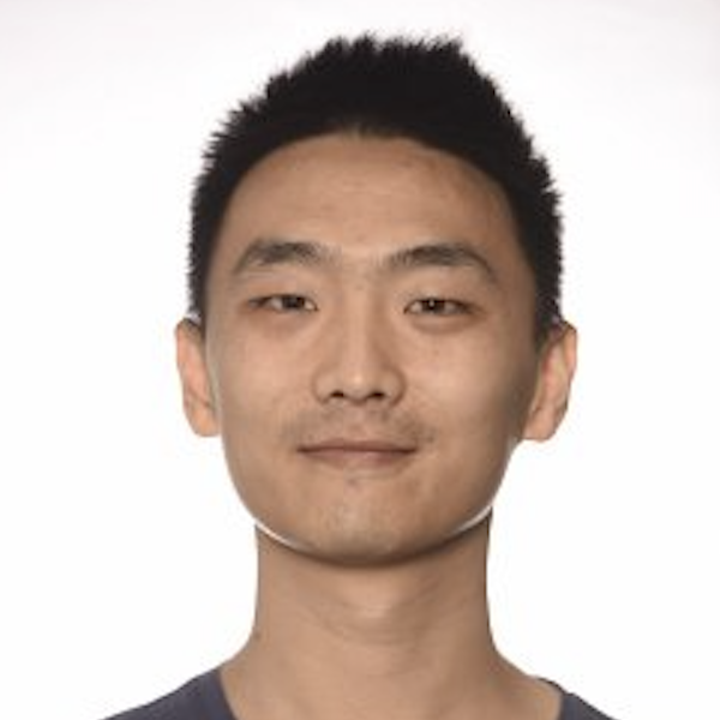
 Zelin Zang
· 4 previous affiliations
- Postdoc · Since 2024
- Westlake UniversityCurrent
- Current
- Intern · 2024
- Mayun University2020–2024
- PhD student · 2020–2024
Research Overview
Zelin Zang focuses on artificial intelligence for the life sciences, medical foundation models, and deep manifold learning. His trajectory spans fundamental representation learning and geometric deep learning, evolving toward scalable computational frameworks for single-cell biology and molecular modeling. Currently, his work addresses complex medical reasoning and diagnostic systems using multimodal large language models and multi-agent architectures.
Research Trajectory
Zang’s early research established foundational methods in representation learning and applied deep learning to clinical diagnostics. In 2022, he introduced DLME: Deep Local-Flatness Manifold Embedding, a framework designed to improve how machines learn low-dimensional representations of complex data. By incorporating a local flatness assumption and a smoother contrastive loss function, this work mitigated the structural distortions and local collapse frequently observed in traditional manifold learning. Concurrently, he contributed to the intersection of artificial intelligence and proteomics with Artificial intelligence defines protein-based classification of thyroid nodules. This research developed a neural network-based classifier utilizing a 19-protein biomarker panel to accurately distinguish between benign and malignant thyroid nodules from fine-needle aspirations, offering a high-throughput diagnostic tool to reduce unnecessary surgeries.
Expanding into temporal data modeling, he participated in standardizing evaluation protocols through OpenSTL: A Comprehensive Benchmark of Spatio-Temporal Predictive Learning. This 2023 benchmark categorized and evaluated methods for predicting future video frames, demonstrating the efficiency and accuracy of recurrent-free architectures in complex scenarios like weather forecasting.
A significant portion of Zang’s trajectory focuses on computational frameworks for biological data. He developed Deep Visualization (DV) in Structure-preserving visualization for single-cell RNA-Seq profiles using deep manifold transformation with batch-correction. This framework combined manifold learning with built-in batch correction to accurately map complex cellular relationships and developmental trajectories. This work advanced several key research areas, including the domain of Multimodal Foundation Models for Single Cell Biology, as well as geometric approaches like Overcoming Euclidean Distortion with Hyperbolic Embeddings and the broader area of Hyperbolic Embeddings for Hierarchical Representation Learning.
In 2024, he addressed the limitations of unsupervised contrastive learning with DiffAug: Enhance Unsupervised Contrastive Learning with Domain-Knowledge-Free Diffusion-based Data Augmentation. By utilizing conditional diffusion models to generate positive data samples without requiring domain expertise or labeled data, this approach iteratively improved data representations across both vision and biological domains.
Moving into 2025, Zang focused heavily on enhancing the reasoning capabilities of multimodal large language models (MLLMs) in medical contexts. He oversaw the development of MedLA: A Logic-Driven Multi-Agent Framework for Complex Medical Reasoning with Large Language Models, which transformed medical reasoning into an explicit, auditable logic tree based on classical syllogisms. By allowing agents to debate individual premises, the framework achieved substantial performance gains on diagnostic benchmarks. Building on this theme of structured reasoning, he introduced A Medical Multimodal Diagnostic Framework Integrating Vision-Language Models and Logic Tree Reasoning, which bridged the pattern-matching strengths of vision-language models with verifiable clinical logic generation to improve both diagnostic accuracy and interpretability.
To address the specific challenges of anatomical reasoning, he developed Anatomy-R1: Enhancing Anatomy Reasoning in Multimodal Large Language Models via Anatomical Similarity Curriculum and Group Diversity Augmentation. This reinforcement learning framework utilized a similarity-based curriculum to overcome vanishing gradients during medical AI training, significantly improving performance on surgical anatomy tasks. In the broader vision domain, he also introduced PCaM: A Progressive Focus Attention-Based Information Fusion Method for Improving Vision Transformer Domain Adaptation, a module designed to resolve foreground object mismatch by geometrically aligning features across domains.
Simultaneously, Zang’s recent work tackles complex hierarchical and evolutionary structures in biology. He developed Rider, a computational framework detailed in Expanding the RNA Virus Universe by Scalable Structure-Guided Discovery. By combining a lightweight protein language model with 3D structural validation, Rider dramatically accelerated the discovery of highly divergent RNA viruses in metagenomic datasets. For evolutionary modeling, he introduced MDTree: A Masked Dynamic Autoregressive Model for Phylogenetic Inference, which addressed the computational bottlenecks and exposure biases of traditional MCMC and fixed-order autoregressive methods when optimizing branch lengths and topologies.
To model cellular differentiation, he developed HDTree, a generative framework presented across two papers: Hierarchical Quantized Diffusion Based Tree Generation Method for Hierarchical Representation and Lineage Analysis and HDTree: Generative Modeling of Cellular Hierarchies for Robust Lineage Inference. By integrating hierarchical vector quantization with diffusion models and utilizing a unified shared codebook, HDTree provided superior stability and scalability for reconstructing complex biological lineages.
Continuing his contributions to single-cell and molecular biology into 2026, Zang participated in Departures: Distributional Transport for Single-Cell Perturbation Prediction with Neural Schrödinger Bridges, which approximated Schrödinger bridges to model unpaired single-cell perturbation data. He also collaborated on Learning Cell-Aware Hierarchical Multi-Modal Representations for Robust Molecular Modeling, further integrating chemical structure and biological context for robust molecular analysis. Additionally, Zang contributed to model editing frameworks that adapt predictors via experimental feedback, including WeightLoop: Weight-Space Programming with Experimental Feedback, which generates reusable parameter-editing programs to update model weights without gradient retraining, and HypoLoop: Revising Weight-Editing Plans from Scientific Feedback, which revises editable locations and fitting rules across successive experimental observations.
Current Directions
The most recent papers in the evidence indicate a dual focus on verifiable medical artificial intelligence and generative modeling for complex biological systems. In the medical domain, recent work investigates how to transform the opaque pattern-matching of multimodal large language models into structured, auditable reasoning. By employing logic-driven multi-agent frameworks and explicit logic tree generation, this research aims to bridge the gap between AI benchmarks and the rigorous verification required in clinical workflows.
Simultaneously, current research addresses the combinatorial complexity of evolutionary and cellular biology. Recent methodologies leverage quantized diffusion models and dynamic autoregression to reconstruct phylogenetic trees and cellular differentiation lineages with high stability. This is complemented by scalable, structure-guided approaches using protein language models to accelerate the discovery of novel RNA viruses and neural transport models to predict single-cell perturbation outcomes, reflecting a broader commitment to advancing AI for the life sciences.
Profile updated
Loading new papers…
Other researchers whose papers cluster into the same research directions — a proxy for overlapping technical interests and shared intellectual neighborhoods.
See something wrong? Report a mistake