

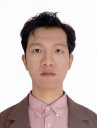
 Zecheng Tang
· 1 previous affiliation
- Soochow UniversitySince 2022
- PhD student · Since 2022
- Current
1 other author named Zecheng Tang: Zecheng Tang (Peking University · 1 paper)
Research Overview
Zecheng Tang focuses on foundation model architecture, long-sequence modeling, and multimodal generation. His trajectory spans from early work on language model detoxification and visual reasoning to the development of scalable vector graphic synthesis and video generation frameworks. Recently, his research emphasizes context extension, efficient preference optimization, and dynamic attention mechanisms for large language models.
Research Trajectory
Tang's early research addressed the temporal robustness and safety of language models. With collaborators, he investigated how lexical semantic change affects pre-trained models in Improving Temporal Generalization of Pre-trained Language Models with Lexical Semantic Change. To address safety constraints without degrading generation quality, he developed a step-by-step framework in Detoxify Language Model Step-by-Step, decomposing the detoxification process to maintain semantic consistency. During this period, he also explored generative modeling paradigms, analyzing training and inference gaps in Can Diffusion Model Achieve Better Performance in Text Generation ? Bridging the Gap between Training and Inference !. Expanding into multimodal systems, he participated in the development of Visual ChatGPT: Talking, Drawing and Editing with Visual Foundation Models. By integrating visual foundation models with a prompt manager, this work enabled multi-step natural language dialogue for visual reasoning, contributing to the research direction of Conversational Image Editing and Iterative Generation.
In 2024, Tang advanced the programmatic generation of visual content by reframing graphic design as a code generation task. He introduced LayoutNUWA: Revealing the Hidden Layout Expertise of Large Language Models, which represents layouts as HTML and SVG code to leverage the latent design knowledge of language models. Building on this approach, he developed StrokeNUWA—Tokenizing Strokes for Vector Graphic Synthesis. By treating vector graphics as sequences of semantic stroke tokens rather than pixel grids, this method accelerated inference and improved image quality, advancing the broader area of Programmatic Synthesis of Scalable Vector Graphics. Concurrently, Tang addressed the computational bottlenecks of long-context language models. With collaborators, he proposed MemLong: Memory-Augmented Retrieval for Long Text Modeling, a framework that utilizes an external retriever and a memory bank of key-value pairs to fetch historical information without quadratic computational costs, aligning with the research direction of Jointly Optimizing Retrieval and Generation.
Tang's research subsequently expanded into large-scale video generation and comprehensive model evaluation. He contributed to the engineering of a 30-billion parameter text-to-video model in the Step-Video-T2V Technical Report: The Practice, Challenges, and Future of Video Foundation Model, which combined a high-compression video autoencoder with a full-attention diffusion transformer to generate high-quality, 204-frame videos. In the domain of image synthesis, he participated in Qwen-Image-Layered: Towards Inherent Editability via Layer Decomposition, an end-to-end diffusion model that decomposes flat images into semantically disentangled transparent layers to facilitate precise editing without altering the broader image context.
Alongside these generative models, Tang focused heavily on the fidelity and alignment of long-context language models. He introduced L-CiteEval: A Suite for Evaluating Fidelity of Long-context Models to assess whether models truly rely on provided context rather than intrinsic pre-training knowledge across various context lengths. To standardize and accelerate such assessments, he developed LOOM-Scope: a comprehensive and efficient LOng-cOntext Model evaluation framework, which integrates inference acceleration techniques to reduce the computational burden of long-context benchmarking, cutting full-capability assessment times significantly.
To improve how models handle extended sequences, Tang explored efficient training and alignment strategies. He proposed LOGO --- Long cOntext aliGnment via efficient preference Optimization, utilizing reference-free preference optimization and positional synthesis to align long-context models with reduced data and compute requirements. Addressing the limitations of reward models in evaluating long inputs, he introduced LongRM: Revealing and Unlocking the Context Boundary of Reward Modeling. This multi-stage training strategy enables reward models to process up to 128K tokens, overcoming the severe accuracy degradation typically seen beyond standard context boundaries and contributing to the area of Staged Context Extension for Large Language Models.
Most recently, Tang has focused on dynamic architecture optimization and context denoising. In Elastic Attention: Test-time Adaptive Sparsity Ratios for Efficient Transformers, he designed an attention router that dynamically adjusts sparsity levels during inference, accelerating long-context tasks while maintaining accuracy. Further refining long-context reasoning, he authored Revisiting Long-context Modeling from Context Denoising Perspective, which utilizes gradient-based importance scores to identify and suppress irrelevant contextual noise during training.
Current Directions
The most recent papers in the evidence indicate a strong focus on optimizing the architecture and alignment of long-context language models. Tang's current work investigates methods for reducing computational overhead and contextual noise during inference and training. This includes developing dynamic, test-time adaptive sparsity mechanisms for transformers and employing gradient-based context denoising to suppress irrelevant information. Additionally, his recent research addresses the alignment of these models through efficient preference optimization and the extension of reward modeling capabilities to handle massive context windows, ensuring that models remain faithful and accurate when processing extensive documents.
Profile updated
Loading new papers…
Other researchers whose papers cluster into the same research directions — a proxy for overlapping technical interests and shared intellectual neighborhoods.
See something wrong? Report a mistake