

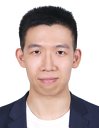
 Zanlin Ni
· 1 previous affiliation
- Tsinghua UniversitySince 2017
- PhD student · Since 2022
- Undergrad student · 2017–2021
Research Overview
Zanlin Ni focuses on efficient generative models, with a particular emphasis on discrete visual tokenization and diffusion language models. His research trajectory spans from early work in locally supervised deep learning to recent advancements in non-autoregressive generation and adaptive synthesis policies. Currently, he investigates the optimization of decoding strategies and reasoning capabilities in diffusion-based language models.
Research Trajectory
The early phase of his research addressed the inherent subjectivity of human evaluation in computer vision tasks. In Uncertainty-Aware Score Distribution Learning for Action Quality Assessment, he introduced a framework that models performance scores as probability distributions rather than single scalar points. By capturing the natural fuzziness of human judging, this approach established new performance benchmarks across sports and surgical datasets.
Following this, his focus shifted toward developing highly efficient training paradigms for deep neural networks. To address the massive memory requirements of standard end-to-end training, he developed InfoPro in Revisiting Locally Supervised Learning: an Alternative to End-to-end Training. This method divides deep networks into gradient-isolated modules, significantly reducing GPU memory usage while balancing reconstruction and task-specific losses to prevent information collapse. He later expanded on this foundational work in the journal article InfoPro: Locally Supervised Deep Learning by Maximizing Information Propagation, further advancing the research direction of Asynchronous Parallel Training via Decoupled Neural Modules. Continuing this theme of modular and efficient training, he proposed a novel divide-and-conquer strategy in Deep Incubation: Training Large Models by Divide-and-Conquering. By utilizing a pre-trained meta-model to guide the independent development of smaller network modules, this approach yielded substantial training speedups and accuracy improvements, contributing to the broader area of Implicit Deep Supervision through Dense Layer Connectivity.
By 2024, a major theme emerged in his work around efficient image synthesis, particularly utilizing non-autoregressive Transformers (NATs). Recognizing the performance gap between fast NATs and high-quality diffusion models, he introduced the AutoNAT framework in Revisiting Non-Autoregressive Transformers for Efficient Image Synthesis. This framework replaces hand-tuned heuristics with automated optimization strategies for training and inference. He further addressed the limitations of rigid scheduling rules in token-based generation by developing learnable generation policies in AdaNAT: Exploring Adaptive Policy for Token-Based Image Generation, allowing models to flexibly adapt to the diverse characteristics of individual samples. To better understand the underlying mechanisms of these architectures, he investigated progressive generation processes in ENAT: Rethinking Spatial-temporal Interactions in Token-based Image Synthesis, uncovering critical spatial-temporal interaction patterns that occur as latent tokens are incrementally revealed.
Alongside his primary focus on NATs, he participated in collaborative efforts addressing multimodal architectures and diffusion latent spaces. He contributed to LLaVA-UHD: An LMM Perceiving Any Aspect Ratio and High-Resolution Images, a large multimodal model that modularizes images into variable-sized slices to process high-resolution inputs efficiently. This work advanced the research area of Visual Token Compression for Efficient Multimodal Reasoning. Additionally, he collaborated on Smooth Diffusion: Crafting Smooth Latent Spaces in Diffusion Models, which exposed visual fluctuations resulting from minor latent variations and proposed methods to ensure steady output changes. This research contributed to the direction of Latent Space Continuity for Stable Generative Modeling and the related area of High Fidelity Latent Space Inversion for Image Editing.
Building on his prior work with adaptive policies, he generalized these concepts across various generative frameworks in AdaGen: Learning Adaptive Policy for Image Synthesis. This research addressed the proliferation of step-specific parameters in autoregressive, diffusion, and rectified flow models by replacing extensive trial-and-error scheduling with learned adaptive policies. He also continued to explore discrete visual tokenization in CODA: Repurposing Continuous VAEs for Discrete Tokenization, co-developing a framework that decouples compression from discretization to transform continuous VAEs into highly efficient discrete tokenizers.
Current Directions
The most recent papers in the evidence indicate a shift toward optimizing reasoning capabilities and decoding strategies in diffusion-based language models. Recent work investigates the "Flexibility Trap" inherent in Diffusion Large Language Models (dLLMs), where the theoretical capacity to generate tokens in arbitrary orders can inadvertently hinder complex logical reasoning by allowing models to bypass difficult logical forks. In The Flexibility Trap: Rethinking the Value of Arbitrary Order in Diffusion Language Models, he and his collaborators demonstrate that enforcing standard left-to-right training paradigms—via a minimalist approach termed JustGRPO—can resolve this issue. This direction highlights an ongoing focus on balancing generation flexibility with tractable sequence optimization, aiming to achieve robust reasoning performance on complex tasks while preserving the parallel decoding speed characteristic of diffusion models.
Profile updated
Loading new papers…
Other researchers whose papers cluster into the same research directions — a proxy for overlapping technical interests and shared intellectual neighborhoods.
See something wrong? Report a mistake