

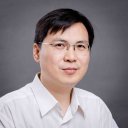
 Zaiwen Wen
· 1 previous affiliation
- Peking UniversityCurrent
- Current
- Full Professor · 2021–2025
- Associate Professor · 2013–2021
Research Overview
Zaiwen Wen focuses on large-scale mathematical optimization, the theoretical foundations of reinforcement learning, and automated formal theorem proving. His trajectory spans from foundational algorithms for semidefinite programming and nonlinear optimization to scalable second-order methods for deep neural networks. Most recently, his work addresses memory-efficient training for large language models and the integration of artificial intelligence with formal mathematical verification.
Research Trajectory
His early work concentrated on developing foundational algorithms for complex optimization challenges. He introduced A Line Search Multigrid Method for Large-Scale Nonlinear Optimization and subsequently designed Alternating direction augmented Lagrangian methods for semidefinite programming, utilizing a dual augmented Lagrangian approach to handle standard form SDPs efficiently. Expanding into sparse recovery, he developed A Fast Algorithm for Sparse Reconstruction Based on Shrinkage, Subspace Optimization, and Continuation. To address the computational bottlenecks of singular value decompositions in matrix completion, he proposed Solving a low-rank factorization model for matrix completion by a nonlinear successive over-relaxation algorithm. He also tackled non-convex constraints with A feasible method for optimization with orthogonality constraints, applying a Cayley transform-based update scheme to preserve orthogonality and spherical constraints during iterations with lower computational overhead.
As machine learning models grew in scale, his focus expanded to include the research direction of Scalable Second-Order Optimization for Neural Networks and the broader area of Semismooth Newton Methods for Nonsmooth Optimization. With collaborators, he participated in developing A Stochastic Semismooth Newton Method for Nonsmooth Nonconvex Optimization, which combined stochastic gradient and Hessian information to achieve robust convergence on challenging machine learning tasks. Continuing in this vein, he contributed to An Efficient Fisher Matrix Approximation Method for Large-Scale Neural Network Optimization, proposing a matrix-product approximate Fisher matrix to significantly reduce the size of the matrix requiring inversion in second-order methods.
In the domain of reinforcement learning, he contributed to bridging the gap between empirical success and theoretical guarantees. He collaborated on An Improved Finite-time Analysis of Temporal Difference Learning with Deep Neural Networks, utilizing subspace analysis to prove improved sample complexity bounds for TD learning. He later directed research establishing non-asymptotic linear convergence rates in Non-Asymptotic Global Convergence of PPO-Clip. Addressing the computational demands of modern architectures, his group introduced A Memory Efficient Randomized Subspace Optimization Method for Training Large Language Models, a framework that decomposes high-dimensional training into random subproblems to simultaneously reduce activation memory and communication overhead.
His recent trajectory heavily emphasizes the area of Bridging Informal Mathematical Intuition and Formal Verification. He led the development of SITA: A Framework for Structure-to-Instance Theorem Autoformalization, which translates abstract mathematical theories into verified Lean code through an iterative correction loop. This was followed by OptProver: Bridging Olympiad and Optimization through Continual Training in Formal Theorem Proving, a model combining expert iteration with utility-aware preference learning to solve optimization proofs without catastrophic forgetting. Scaling these efforts, his team built M2F: Automated Formalization of Mathematical Literature at Scale, treating formalization as a software compilation problem to convert extensive mathematical texts into a comprehensive Lean 4 library.
Simultaneously, he has advanced the research direction of Neural Heuristics for Combinatorial Optimization. He directed work on LMask: Learn to Solve Constrained Routing Problems with Lazy Masking, introducing a decoding algorithm for highly restricted routing tasks like the Traveling Salesman Problem with Time Windows. To evaluate such systems, his group released Constructing Industrial-Scale Optimization Modeling Benchmark, revealing the performance gap between toy problems and real-world industrial applications for language models. Furthering algorithmic solutions for these complex tasks, he oversaw A Customized Augmented Lagrangian Method for Block-Structured Integer Programming, which leverages block coordinate descent for applications like train timetabling. Finally, synthesizing his interests in reasoning and optimization, he led the creation of ReasFlow: Assisting Reasoning-Centric Scientific Discovery in Applied Mathematics via a Knowledge-Based Multi-Agent System, automating theoretical reasoning and proof verification to assist scientific discovery in applied mathematics.
Current Directions
The most recent papers in the evidence indicate a strong focus on the intersection of artificial intelligence and rigorous mathematical reasoning. Current work investigates large-scale autoformalization, developing frameworks to translate complex, research-level mathematics and literature into formally verified code using systems like Lean 4. Alongside this, there is an active emphasis on applying neural heuristics and multi-agent systems to combinatorial optimization and industrial-scale integer programming. This includes building robust benchmarks to test natural-language-to-optimization models and designing specialized algorithms to solve highly constrained routing and scheduling problems.
Profile updated
Loading new papers…
Other researchers whose papers cluster into the same research directions — a proxy for overlapping technical interests and shared intellectual neighborhoods.
See something wrong? Report a mistake