

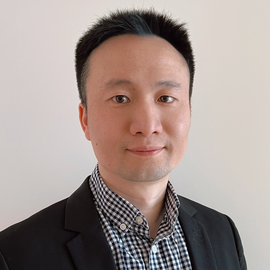
 Zaiqiao Meng
· 4 previous affiliations
- Full Professor · Since 2026
- University of Glasgow2019–2025
- Lecturer · 2022–2025
- Postdoc · 2019–2020
- University of Cambridge2020–2022
- Postdoc · 2020–2022
- Sun Yat-sen University2014–2018
- PhD student · 2014–2018
Research Overview
Zaiqiao Meng focuses on natural language processing, information retrieval, and the integration of large language models with knowledge graphs. His early work explored network embeddings and robust recommender systems before shifting toward retrieval-augmented generation and complex reasoning. Currently, he investigates self-evolving AI agents and multimodal learning, with a particular emphasis on biomedical applications and clinical reasoning.
Research Trajectory
Meng’s early research concentrated on representation learning for complex networks. In 2019, he explored methods for embedding heterogeneous network data, beginning with Co-Embedding Attributed Networks. He expanded on this by developing Semi-supervisedly Co-embedding Attributed Networks, which utilized deep generative models and semi-supervised variational auto-encoders to collaboratively learn low-dimensional vector representations of both nodes and attributes in partially labeled datasets.
By 2022, his focus broadened to include natural language understanding and recommender systems. To address the "anisotropy" problem in language models—where token representations cluster into narrow, less-discriminative spaces—he co-developed TaCL: Improving BERT Pre-training with Token-aware Contrastive Learning. This approach employed a student-teacher framework to contrast masked tokens against unmasked counterparts, yielding more semantically rich embeddings. Concurrently, he contributed to the area of Denoising Implicit Feedback for Robust Recommendation. With collaborators, he introduced Learning Robust Recommenders through Cross-Model Agreement, a framework designed to identify noise in implicit feedback by analyzing the disagreement between different recommendation models.
As large language models became more prominent, Meng’s work shifted toward improving their reasoning capabilities and factual grounding. In 2024, he advanced the broader area of Iterative Retrieval Augmented Generation for Multi Hop Reasoning with TRACE the Evidence: Constructing Knowledge-Grounded Reasoning Chains for Retrieval-Augmented Generation. This framework transformed noisy retrieved documents into structured knowledge graphs, enabling models to build autoregressive reasoning chains of factual triples to navigate complex queries.
In 2025, Meng’s trajectory branched into three highly active, interconnected domains: biomedical artificial intelligence, autonomous agent workflows, and evaluation methodologies.
In the biomedical domain, his research addresses the critical need for factual accuracy and longitudinal understanding. He investigated the limitations of model editing in Can We Edit LLMs for Long-Tail Biomedical Knowledge?, identifying that the prevalence of one-to-many relationships in medical data severely hinders the learning of rare facts. To maintain factual consistency during extended patient interviews, he introduced Triplet-Structured Knowledge Integration for Multi-Turn Medical Reasoning, which dynamically converts clinical dialogue into a structured knowledge graph injected back into the language model. He also made significant contributions to the research direction of Temporal Reasoning for Tracking Disease Progression. His work Libra: Leveraging Temporal Images for Biomedical Radiology Analysis presented a temporal-aware multimodal model that generates chest X-ray reports by comparing current and prior scans. To further reduce hallucinations in radiology models, he developed CCD: Mitigating Hallucinations in Radiology MLLMs via Clinical Contrastive Decoding, a training-free inference strategy that uses expert models to steer outputs toward clinical reality.
Simultaneously, Meng has been a key contributor to the research direction of Automated Discovery of Multi-Agent Workflows. He helped formalize this emerging field with A Comprehensive Survey of Self-Evolving AI Agents: A New Paradigm Bridging Foundation Models and Lifelong Agentic Systems, which mapped the transition from static, manually configured systems to autonomous agents capable of refining their own tools and memory. He operationalized these concepts in EvoAgentX: An Automated Framework for Evolving Agentic Workflows, utilizing evolutionary algorithms to iteratively optimize multi-agent topologies and prompts. This self-evolving approach was specifically applied to software engineering in SEW: Self-Evolving Agentic Workflows for Automated Code Generation, allowing systems to automatically adapt their architectures to complex coding challenges.
Finally, Meng continues to refine the infrastructure and evaluation of AI systems. He contributed to retrieval tooling with Constructing and Evaluating Declarative RAG Pipelines in PyTerrier. Examining the limits of agentic complexity, he co-authored The Power of Simplicity in LLM-Based Event Forecasting, which demonstrated that simpler predictive approaches often outperform highly complex, iterative reasoning frameworks in forecasting tasks. He also challenged standard evaluation metrics in Time to Revist Exact Match, advocating for regression-based metrics that better account for the magnitude and plausibility of temporal reasoning errors.
Current Directions
Recent work investigates the automation and optimization of multi-agent systems, moving beyond static, hand-crafted workflows toward self-evolving architectures. This includes developing frameworks that use evolutionary algorithms to iteratively refine agent prompts, tools, and interaction topologies for complex reasoning and coding tasks.
Concurrently, his research addresses critical reliability challenges in biomedical artificial intelligence. This involves designing temporal-aware multimodal models for radiology that can reason across longitudinal patient data, as well as integrating dynamic knowledge graphs into large language models to maintain factual consistency and mitigate hallucinations during multi-turn clinical interactions. Finally, he is exploring more robust evaluation methodologies, including regression-based metrics for temporal reasoning and declarative pipelines for retrieval-augmented generation.
Profile updated
Loading new papers…
Other researchers whose papers cluster into the same research directions — a proxy for overlapping technical interests and shared intellectual neighborhoods.
See something wrong? Report a mistake